


More news on this day
Hundreds of flights across Europe faced disruption as a fresh wave of operational problems led to 63 cancellations and 2,778 delays at 13 major airports, with Munich among the hardest hit according to live tracking data and regional disruption reports.
Get the latest news straight to your inbox!
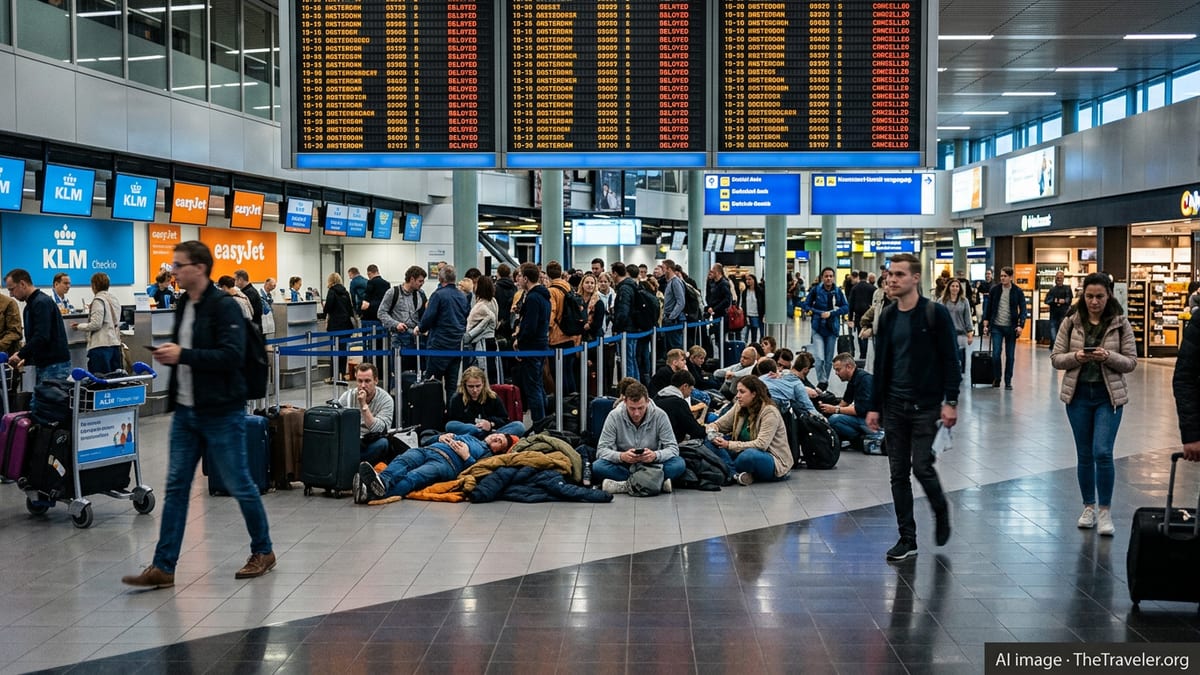
Munich and Key Hubs Struggle With Summer Congestion
Munich Airport, one of Europe’s busiest hubs, again found itself near the center of continent-wide disruption, with data from real-time airport delay trackers showing elevated average delay times across arrivals and departures. Publicly available airport-disruption dashboards indicated that Munich’s delays were part of a wider pattern affecting German and neighboring hubs, rather than an isolated operational issue.
Although Munich’s current summer schedule includes tens of thousands of flights to more than 200 destinations, network performance has been under strain. Published airport planning information shows a dense holiday timetable running through August and early September, leaving relatively little slack when staffing, weather, or upstream technical issues reduce capacity.
According to regional analytics and historical records, Munich has faced similar pressure in previous winters, when snow and ice led to large-scale cancellations. The latest spike in delays, however, is tied more to congestion and network ripple effects than to severe weather, highlighting how vulnerable peak-season operations can be even under largely clear skies.
Travelers connecting through Munich reported longer-than-usual taxi times, tighter connection windows, and late-evening arrivals as airlines worked to reset aircraft rotations. Despite the operational challenges, most flights continued to operate, but often significantly behind schedule.
Thirteen Airports Share the Burden of 63 Cancellations
Monitoring platforms that aggregate real-time performance across Europe’s airports show that the 63 cancellations and 2,778 delays were spread across a cluster of 13 large hubs, including Munich, major London and Paris airports, and key holiday gateways in Spain and Italy. Rather than one airport suffering a localized breakdown, the data points to a regional wave of knock-on disruptions.
On the same day, disruption maps for Europe displayed a patchwork of high delay scores, with Geneva, Brussels, Milan, Barcelona, Palma de Mallorca, Dublin, and several Spanish coastal airports all displaying above-average delay minutes. This pattern suggests that small bottlenecks at several control centers and ground-handling operations combined into a broader slowdown, affecting both low-cost and full-service carriers.
Comparisons with earlier disruptive days this summer, as compiled by passenger-rights and compensation platforms, show that while the headline cancellation figure in this instance remained relatively modest, the sheer volume of delayed flights placed a significant burden on airport infrastructure. Crowded stands, late turnarounds, and missed crew connections all contributed to the elevated delay count.
Network statistics from recent weeks also indicate that overall arrival punctuality across Europe has dipped compared with last year, even as departure performance improved slightly, signaling that airborne flow restrictions and downstream congestion remain stubborn challenges for airlines and air navigation providers.
Strikes, Staffing Gaps, and Network Knocks-on
Recent disruption analyses across Europe point to multiple underlying causes for the wave of delays and cancellations, ranging from local staffing constraints to industrial action in air traffic control. A Norway-based air traffic controller strike earlier in the week triggered 150 cancellations and more than 2,100 delays across the continent, illustrating how a national labor dispute can ripple through airports thousands of kilometers away.
Reports from regional aviation outlets show that airports such as Oslo, London Gatwick, Paris Charles de Gaulle, Amsterdam Schiphol, and Rome Fiumicino all experienced secondary effects from that action, with dozens of flights rearranged or slowed by knock-on scheduling issues. Even after official strike periods ended, residual delay patterns persisted as airlines repositioned crews and aircraft.
Longer-term data from European aviation bodies underscores how en-route staffing and air traffic flow management restrictions have become a leading source of delay minutes. Recent network briefings show that average all-causes delay per flight has trended higher during peak summer months compared with off-season periods, driven largely by constrained air traffic management capacity on the busiest days.
These structural pressures sit on top of routine weather-related slowdowns and periodic IT issues. Earlier high-profile outages in airline and airport systems forced some carriers to resort to manual check-in and ticketing processes, which subsequently reduced throughput and increased the risk of missed slots across the wider network.
Passenger Impact and Rights Under EU261
The latest figures mean that tens of thousands of travelers experienced some form of disruption, from modest departure delays to missed onward connections. Consumer-rights organizations tracking daily operations have urged passengers to document their experiences carefully, noting that compensation may be available in certain circumstances under EU261 and equivalent UK regulations.
Guidance from passenger-assistance companies explains that travelers on flights departing from EU or UK airports, or flying to the region on EU or UK carriers, may be entitled to fixed-sum compensation if arrival is delayed by three hours or more, or if a flight is canceled on short notice and no satisfactory rerouting is offered. However, eligibility still depends on the root cause of the disruption.
Where problems stem from extraordinary circumstances, such as severe weather or airspace closures, airlines are generally not required to pay compensation, although they are expected to provide care. This typically includes food, refreshments, communication assistance, and hotel accommodation where necessary, particularly when passengers are stranded overnight.
For operational issues linked to staffing, scheduling, or certain technical difficulties within the airline’s control, passengers may have a stronger claim. Rights groups recommend that affected travelers keep boarding passes, booking confirmations, and any written communication from the airline, as well as screenshots from independent tracking tools showing delay and cancellation times.
What Travelers Can Expect in the Coming Weeks
European aviation trend reports suggest that high traffic volumes will continue through the end of the summer season, especially around late-August and early-September holiday peaks. With many airports already nearing capacity during busy travel days, even minor disruptions can translate quickly into elevated delay statistics.
Some airports and airlines have adjusted schedules, increased staffing, or changed turnaround procedures to ease pressure, but independent analyses conclude that the network as a whole remains vulnerable to sudden shocks. These include industrial action, localized storms, and technical outages in key air traffic control centers.
Travel advisories from passenger-rights organizations and airport information portals recommend that travelers allow extra time for check-in and security, monitor flight status closely via both airline apps and third-party tracking tools, and prepare for potential last-minute gate or schedule changes. For those with critical connections, building longer transfer windows and considering earlier departures remains a prudent strategy.
Given the persistence of high delay levels across multiple hubs, passengers planning itineraries through Munich and the other affected airports may find that flexibility, thorough preparation, and awareness of their rights are increasingly essential parts of flying in Europe’s peak season.
Flightradar24 Europe Airport Disruption Map
EUROCONTROL European Aviation Overview
AviNews: Norway Air Traffic Controller Strike Disruption
AirHelp: Recent Europe Flight Disruption and Passenger Rights