


More news on this day
Rome Fiumicino Airport is facing renewed scrutiny after passengers arriving from Egypt reported that their checked luggage never appeared on the belt, with some suitcases later traced to the island of Lampedusa, leaving travelers without clothing or essentials at the height of the summer holiday period.
Get the latest news straight to your inbox!
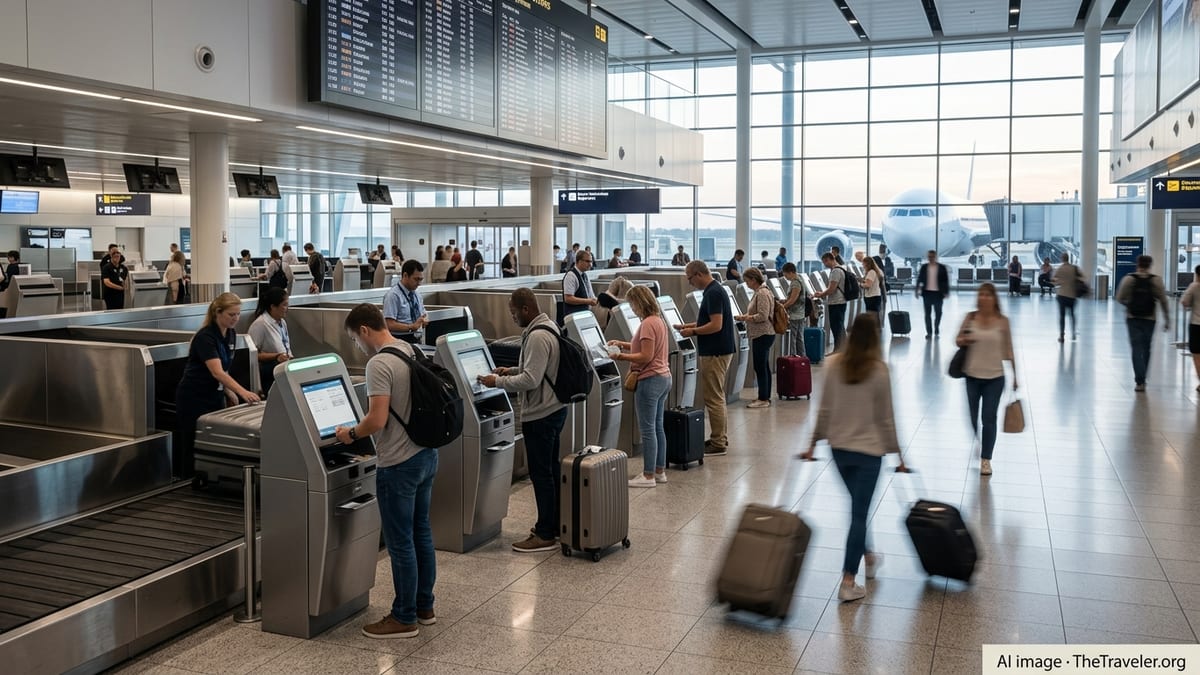
Confusion at Baggage Claim After Wizz Air Arrival
Reports from Italian media indicate that a Wizz Air flight from Marsa Alam in Egypt landed punctually at Rome Fiumicino on August 28, but dozens of passengers were left waiting at the carousel with no sign of their checked bags. Coverage from multiple outlets describes around 80 travelers discovering that their luggage had not been unloaded from the aircraft before it departed again from the airport.
According to published coverage, the aircraft continued its rotation with the bags still in the hold, and the luggage was subsequently identified at Lampedusa Airport. Passengers arriving in Rome, however, remained without their belongings, facing the start of their trips with no clothing, medicines, or basic necessities. The episode quickly drew attention on social and traditional media, with images of passengers standing amid empty baggage belts and crowds around assistance desks.
Separate local reporting from the Lazio area describes at least one couple returning from Egypt who discovered that, after a regular landing and unloading at Fiumicino, their suitcases were mistakenly loaded onto another flight bound for Lampedusa. That account highlights the complexity of sorting operations in peak season, where any error can leave luggage on the wrong aircraft and passengers scrambling to understand how, and when, their property will be returned.
Peak Summer Strain on Rome’s Main Hub
The incident comes during one of the busiest periods of the year for Fiumicino, Italy’s main international gateway. Airport operator documents show that Leonardo da Vinci Airport has invested heavily in baggage systems and has received multiple quality awards in recent years, yet the current disruption underlines how vulnerable even modern hubs can be when passenger volumes, staffing, and ground handling operations are under pressure.
European network data for 2025 published by Eurocontrol notes that industrial action involving baggage and ground handlers in Italy has periodically affected Rome airports, including Fiumicino. While there is no indication that strikes directly caused the latest mishandling episodes, the broader pattern of operational stress across the region provides context for why baggage delivery has become a recurring concern for travelers.
In addition to baggage issues, passengers using Fiumicino earlier in August also dealt with a temporary suspension of rail services between central Rome and the airport after a trackside fire. Information from the rail infrastructure manager shows that service has since returned to normal, but such disruptions can complicate onward travel for passengers already contending with delayed or missing luggage, increasing frustration and logistical challenges.
Growing Chorus of Traveler Complaints
Beyond the latest Egyptian route incident, travel forums and social media feeds have featured a steady stream of complaints related to mishandled luggage in Rome during the 2026 summer season. In several widely shared posts, users describe arriving at Fiumicino to find long queues at lost baggage counters and storage rooms filled with unclaimed suitcases, with some passengers redirected to search through piles of luggage themselves.
One recent account from a traveler in Rome describes being advised that delayed bags were somewhere in the airport, corroborated by personal tracking devices, yet facing days of calls and minimal updates before the luggage was finally delivered. Another post recounts an experience where a family arriving in the Italian capital had baggage delayed and then returned damaged, adding costs and insurance claims to an already stressful trip.
Such testimonies, although anecdotal, align with broader industry statistics indicating that mishandled baggage remains a persistent issue worldwide. Travelers heading to Rome are increasingly sharing tips on tracking devices, spare clothing in carry-on bags, and detailed documentation of contents to support any compensation claims, reflecting a general expectation that luggage may not always arrive as planned.
What Passengers Can Do When Bags Go Missing
For travelers caught in the current wave of baggage problems at Fiumicino, Italian civil aviation guidance outlines clear procedural steps. Information from the national aviation authority notes that, when checked luggage fails to arrive, passengers must file a report before leaving the baggage reclaim area, typically known as a Property Irregularity Report, providing contact details and the baggage tag number.
Under European and international rules, airlines are generally responsible for locating and returning checked luggage and may be required to reimburse passengers for essential purchases during the delay, within specific monetary limits. Publicly available guidance stresses the importance of keeping receipts for clothing, toiletries, and other necessary items, as these documents are often required when seeking reimbursement or compensation.
Travel insurance providers and some credit card issuers also offer coverage for delayed, lost, or damaged baggage, subject to policy conditions and caps. Consumer advocates frequently recommend that passengers check coverage details before travel, photograph the contents of their suitcases, and use digital trackers where possible to speed up the process of locating bags, particularly in large hubs such as Fiumicino where storage facilities for unclaimed luggage can be extensive.
Reputation at Stake as Rome Welcomes Tourists
The sight of stranded luggage and frustrated passengers at Italy’s busiest airport carries broader implications for the country’s tourism image at a time when Rome is experiencing strong visitor demand. Fiumicino has been highlighted in recent corporate reports as a flagship hub for service quality and sustainability projects, including upgrades to terminals and baggage facilities.
However, repeated headlines about mishandled bags, large stockpiles of unclaimed suitcases, and travelers beginning vacations without basic belongings risk undermining that reputation. For visitors arriving for short city breaks, even a delay of 24 to 48 hours in receiving luggage can derail plans, reducing spending in the local hospitality sector and prompting some to reconsider future itineraries through Rome.
As the summer season continues, further attention is likely to focus on how airlines and ground handlers operating at Fiumicino manage baggage flows, communicate with passengers, and clear any backlogs. Observers note that the outcome will be crucial both for those currently missing their belongings and for the airport’s standing among Europe’s major gateways.
Corriere della Sera coverage of Wizz Air baggage incident at Fiumicino
La Repubblica report on stranded luggage and passengers in Rome
Sky TG24 overview of bags diverted from Fiumicino to Lampedusa
ENAC guidance on delayed or missing checked baggage
Eurocontrol Network Operations Report 2025, including notes on Italian airport disruptions