


More news on this day
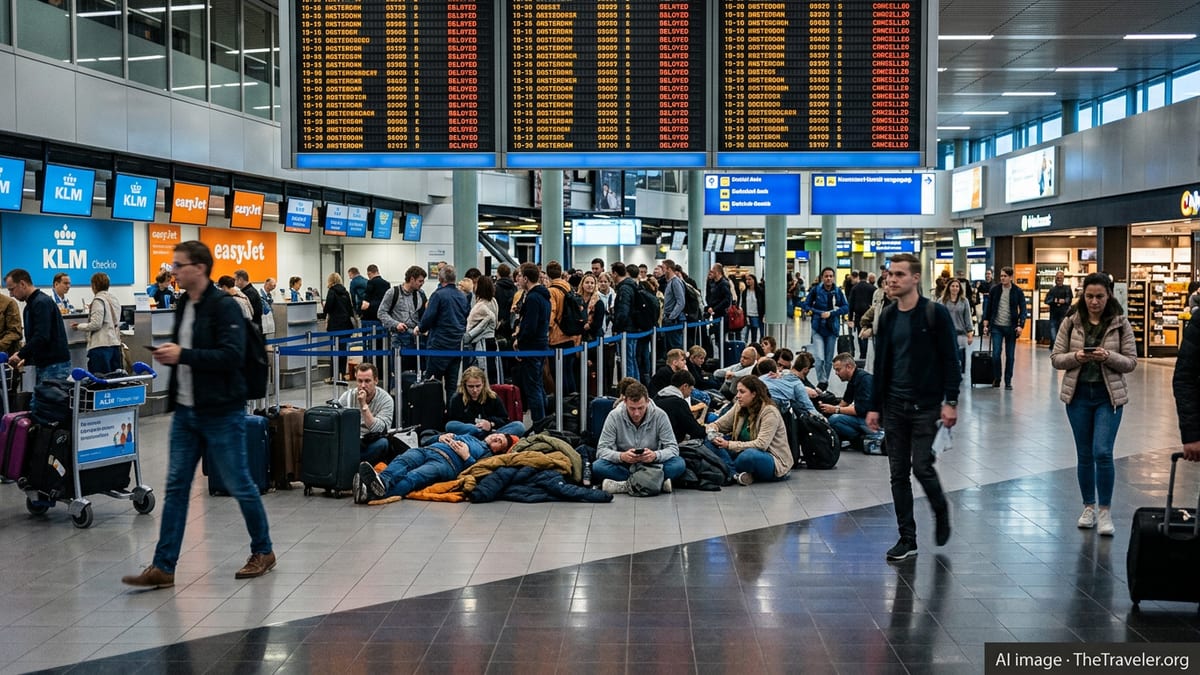
Major European hubs in the Netherlands, France, the United Kingdom and the Nordic countries faced a fresh wave of aviation disruption, with more than 40 flight cancellations and well over 100 delays reported across the KLM, Air France, British Airways and SAS networks, stranding and rerouting passengers as the busy summer travel season gathers pace.
Get the latest news straight to your inbox!
Widespread Disruptions Across Western and Northern Europe
Publicly available flight-tracking dashboards and disruption-monitoring services indicate that a cluster of cancellations and delays has hit services operated by KLM, Air France, British Airways and SAS, affecting departures and arrivals across Amsterdam, Paris, London and key Nordic gateways. In total, reports point to 41 flights canceled and at least 141 delayed within a short time window, creating a ripple effect through already congested summer schedules.
Amsterdam Schiphol and other major Dutch airports have seen KLM cancel and reschedule a series of intra-European flights, including links to Scandinavian cities. Data compiled by passenger rights platforms shows recent KLM services between Amsterdam and Nordic capitals such as Oslo being marked as canceled, pushing travelers onto later departures or alternative routings via partner carriers.
In France, Air France operations at Paris airports are reported to be contributing to the disruption picture, with knock-on delays to regional and medium-haul routes. Capacity pressures at key hubs, combined with tight aircraft and crew rotations, mean that relatively small schedule shocks can escalate into widespread punctuality problems, particularly on high-frequency intra-European corridors.
In the United Kingdom, British Airways services at London Heathrow and other London airports are again under pressure. Historic data from earlier in the year already showed the carrier as one of the most exposed to congestion at Heathrow, and fresh delays and cancellations are reinforcing the strain on its dense short-haul network linking the UK with France, the Netherlands and Scandinavia.
Nordic Airports Struggle With Cascading Delays
Airports across Sweden, Denmark and Norway have emerged as some of the most heavily affected by the latest wave of irregular operations. Scandinavian Airlines (SAS), which connects Nordic capitals to major hubs in continental Europe and the UK, has recorded a series of cancellations and delayed departures on both domestic and international legs, according to disruption trackers and airport information feeds.
At Stockholm Arlanda, recent records highlight canceled SAS services on key domestic sectors, underlining how quickly regional networks can seize up when a single rotation is removed from the schedule. Once aircraft and crews are out of position, subsequent flights are forced into long delays or cancellations, limiting travel options for passengers moving between Nordic cities or onward to the rest of Europe.
Copenhagen and Oslo have also reported elevated levels of delays, with some travelers bound for long-haul destinations seeing their journeys disrupted at the first intra-European stage. Rebooking onto alternative connections through Amsterdam, Paris or London can be difficult during peak periods, particularly when several airlines are facing simultaneous schedule disruption across the same geographic area.
Norwegian and Danish consumer forums and social media posts reflect the scale of the inconvenience, with travelers reporting missed connections, overnight stays and last-minute itinerary changes as airlines work through backlogs and try to restore regular operations.
Summer Crowds Expose Structural Fragilities
Aviation analysts note that the timing of the latest disruption, coinciding with the build-up to the main European summer holiday season, is magnifying its impact. Airlines such as KLM, Air France, British Airways and SAS entered 2026 with ambitious capacity plans after several years of demand recovery, but hub congestion, staffing constraints and intermittent air traffic control restrictions have left limited room for schedule recovery when things go wrong.
Data on network size published for KLM shows the carrier serving close to 170 international destinations from Amsterdam, while Air France and British Airways maintain comparably extensive European and intercontinental networks from Paris and London. The interconnected nature of these networks means that a canceled or heavily delayed short-haul sector in northern Europe can disrupt passengers heading to destinations far beyond the region, including North America, the Middle East and Asia.
For SAS, the continued reshaping of its business after restructuring has added another layer of complexity. The carrier remains a vital link for travelers in Sweden, Denmark and Norway, yet its operations must navigate both local weather and infrastructure challenges and dependencies on partners in larger alliance hubs. When disruption unfolds simultaneously at multiple partner hubs, the options for re-routing can narrow rapidly.
Observers point out that while European aviation recovered strongly in passenger numbers, investment in staffing, ground handling and air traffic management has not always kept pace. As a result, peak travel days are more vulnerable to extended queues at security, baggage handling delays and slow aircraft turnarounds, all of which contribute to late departures and missed slot times.
Passenger Impact and EU261 Rights
The disruption has immediate and visible consequences for travelers, ranging from missed holidays and business meetings to additional accommodation and transport costs. Some passengers report being informed of cancellations only hours before departure, while others encounter rolling delays that grow from minor schedule slips into missed connections and unexpected stopovers.
Under European Union regulation EU261, passengers on flights departing from EU and EEA airports, or operated by EU and EEA carriers, may be entitled to compensation and assistance in the event of long delays, cancellations or denied boarding, provided certain conditions are met. Publicly accessible guidance explains that eligibility can depend on factors such as the length of the delay on arrival, the distance of the flight and whether the disruption was caused by circumstances within the airline’s control.
Consumer-rights organizations and legal assistance platforms emphasize that passengers affected by cancellations and long delays should retain boarding passes, booking confirmations and any written notices of disruption. These documents can be necessary when submitting claims directly to airlines or through third-party services that specialize in EU261 compensation and reimbursement.
However, recent experiences shared by travelers in Sweden, Denmark and Norway indicate that navigating claims processes can be challenging. Time limits to file claims differ between jurisdictions, and passengers sometimes discover that airlines and intermediaries dispute whether specific disruptions qualify as extraordinary circumstances, prolonging the resolution of compensation requests.
Airlines Offer Rebooking and Refund Options Amid Ongoing Volatility
In response to the persistent volatility, airlines within the affected networks are maintaining or updating flexible rebooking and refund options for disrupted travelers. Information published on KLM and Air France customer pages outlines general policies such as the ability to rebook onto later dates or alternative routes when flights are canceled or significantly delayed, as well as the possibility of requesting refunds when journeys are no longer possible or practical.
SAS and British Airways have comparable guidance on their customer information channels, advising passengers whose flights are disrupted about how to seek new itineraries or refunds. In many cases, rebooking within the same cabin class on the next available flight remains the primary solution, although high load factors during the summer period can mean that replacement seats are offered only much later in the day or on subsequent days.
Travel commentators suggest that passengers with imminent itineraries through Amsterdam, Paris, London, Copenhagen, Oslo or Stockholm should monitor their bookings closely, using airline apps and airport information boards for any sign of schedule changes. Check-in deadlines, security waiting times and boarding procedures can become more stringent during disruption, so arriving early at the airport is widely recommended.
While the current wave of 41 cancellations and 141 delays may represent a modest share of total daily flights across Europe, the concentration of problems in some of the continent’s most important hubs, and among four of its largest carrier groups, underscores how sensitive the aviation system remains to pressure. With the core summer travel weeks still ahead, both airlines and passengers are bracing for further periods of instability, even as efforts continue to stabilize operations and rebuild confidence in European air travel reliability.