

More news on this day
Air travel across Canada faced another day of heavy disruption as major hubs in Montreal, Ottawa, Vancouver, Toronto, Edmonton, and Quebec City reported 367 delayed flights and 48 cancellations, affecting operations at airlines such as Air Canada, Republic, Jazz, Porter, Endeavor Air, and several smaller regional carriers.
Get the latest news straight to your inbox!
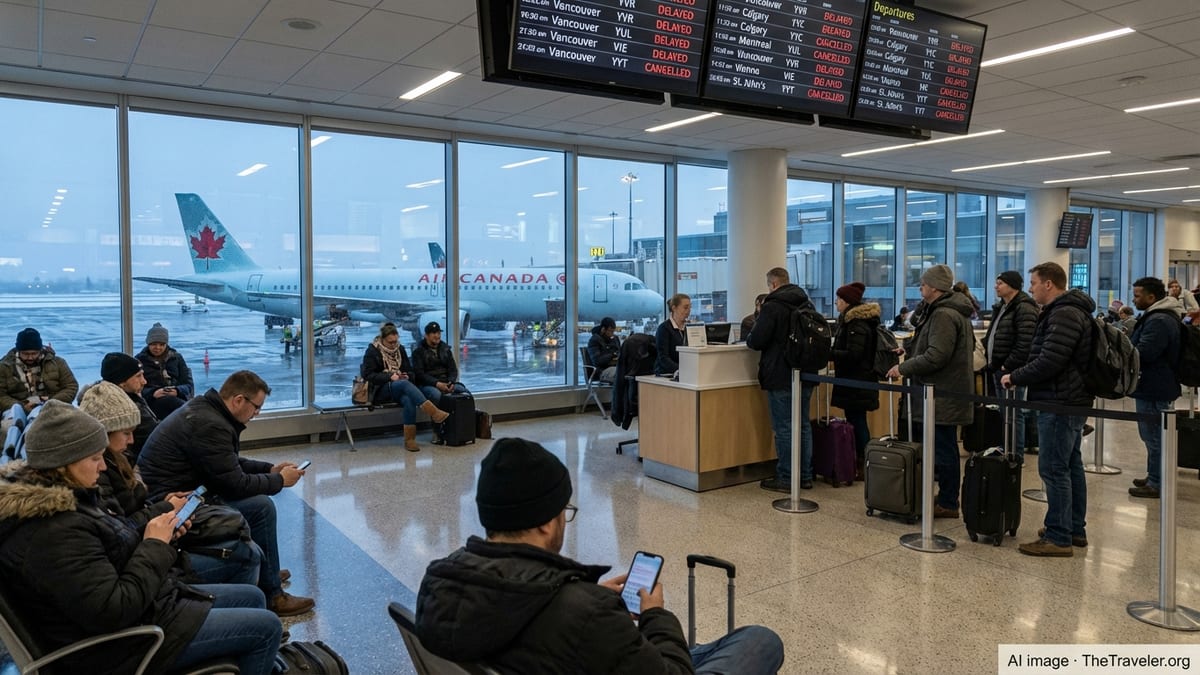
Major Canadian Hubs Struggle With Same-Day Disruptions
Publicly available airport status boards and flight tracking dashboards showed a widespread impact across Canada’s busiest corridors, with delays and cancellations concentrated around Montreal, Ottawa, Vancouver, Toronto, Edmonton, and Quebec City. The pattern affected both domestic and transborder routes, creating knock-on effects for connections within Canada and to the United States and Europe.
Montreal and Toronto handled some of the heaviest disruption, a continuation of the volatility seen in recent months when both airports repeatedly appeared among Canada’s most delay-prone hubs. Earlier data from similar disruption days indicated that hub carriers such as Air Canada often logged the greatest number of affected flights, while regional and international partners saw their operations constrained when aircraft and crews could not be turned around on time.
Vancouver and Edmonton also reported elevated delay levels, adding pressure to western Canada’s key domestic links and long-haul departures. In Quebec City and Ottawa, smaller overall schedules meant that even a relatively modest number of delayed departures had an outsized effect on travelers, particularly those relying on onward connections through Toronto or Montreal.
The overall tally of 367 delays and 48 cancellations underscores how even a single day of operational strain can ripple through a tightly scheduled national network, especially where peak-hour traffic is already near capacity.
Air Canada, Porter, Jazz and Partners Bear the Brunt
The disruption struck a broad mix of carriers, though the largest impacts were seen among airlines with dense domestic networks or strong reliance on Canadian hubs. Air Canada and its regional partner Jazz, which together operate a significant share of departures from Montreal, Toronto, Vancouver, Ottawa, and Edmonton, experienced widespread schedule changes as late-arriving aircraft cascaded into subsequent rotations.
Porter Airlines, which has been expanding its footprint across Eastern and Central Canada, also faced mounting delays on high-frequency shuttle routes linking Toronto with Ottawa, Montreal, and other business destinations. On previous spike days, published airport statistics showed that even a handful of cancellations at smaller urban airports could substantially affect Porter's business-focused clientele by reducing options during peak hours.
Republic and Endeavor Air, which operate flights under major U.S. carrier brands, saw cross-border services disrupted when Canadian arrivals and departures fell out of sync with U.S. hub schedules. These regional operators depend on tight timing to maintain connections, so delays in Canadian airspace translated into missed links and rebookings for passengers heading to onward U.S. and international destinations.
Other regional and international airlines serving the affected airports were not spared, with schedule data indicating that carriers ranging from low-cost entrants to long-haul operators had to adjust departure times or substitute aircraft, adding complexity for airport ground handling and passenger services.
Operational Strains Add to an Already Fragile Network
The latest wave of delays and cancellations came against a backdrop of continuing strain on Canada’s aviation system. Recent reporting has highlighted ongoing air traffic controller shortages at Nav Canada, the private, non-profit corporation responsible for managing the country’s airspace. Public statements and coverage have pointed to a staffing shortfall numbering in the hundreds, raising concerns about the system’s capacity to absorb spikes in demand or unexpected disruptions.
Separate coverage of earlier disruption days across Canadian hubs has also pointed to vulnerabilities in airline staffing, aircraft availability, and airport ground operations. On some occasions, outages affecting flight-planning communications systems have contributed to backlogs, while at other times weather and upstream delays at connecting hubs triggered widespread knock-on impacts.
While the precise trigger behind today’s figures of 367 delayed and 48 cancelled flights varied by route and carrier, the overall pattern fits with a broader narrative of limited resilience in the system. When multiple hubs experience congestion at the same time, even routine issues like late inbound aircraft or short-lived technical slowdowns can quickly escalate into a nationwide disruption.
Analysts following previous episodes have noted that, for travelers, the distinction between delays linked to staffing, technology, or weather matters less than the cumulative effect on reliability. Each new day of abnormal operations adds to a perception that Canada’s aviation network continues to operate close to its limits during peak travel periods.
Travelers Face Missed Connections, Rebookings and Longer Journey Times
The immediate consequences for passengers were evident in longer-than-usual lines at check-in and security, missed connections, and same-day rebookings. Flight tracking and passenger reports indicated that itineraries involving connections through Toronto Pearson, Montreal-Trudeau, and Vancouver were especially vulnerable as delay minutes accumulated through the day.
Domestic travelers saw popular business and leisure routes depart late or disappear from departure boards as cancellations mounted, forcing some to accept rerouting through alternative hubs or travel on later flights. For those heading to or returning from the United States and overseas, delayed departures from Canadian gateways risked missed onward flights, in some cases meaning overnight stays or lengthy rebookings on already busy services.
Previous episodes of similar scale have shown that once delays exceed a certain threshold in the mid-morning and early afternoon, recovery within the same operational day becomes difficult. Aircraft and crew end up out of position, and available slack in the schedule is quickly exhausted. The pattern observed today appeared to follow that same trajectory, with delays persisting well into the evening banks at several major airports.
Passenger advocates have repeatedly argued that clearer communication about the causes of disruptions and available compensation rights is critical, particularly when cancellations are not directly linked to severe weather. Today’s disruptions are likely to renew scrutiny of how airlines and airports handle real-time information, rebooking options, and duty-of-care obligations for affected travelers.
Focus Turns to Summer Readiness and System Resilience
With the busy summer travel season approaching, the latest surge of delays and cancellations across Montreal, Ottawa, Vancouver, Toronto, Edmonton, and Quebec City raises questions about whether Canada’s aviation system is adequately prepared for sustained peak demand. Past patterns suggest that early-summer disruption days often serve as an early warning for the months ahead.
Industry observers looking at recent operational data have highlighted the need for coordinated planning between airlines, airports, and Nav Canada to ensure sufficient staffing, robust contingency plans for technical outages, and more realistic scheduling that allows additional buffer time for turnarounds. Without such measures, a recurrence of high-impact days featuring hundreds of delays and dozens of cancellations appears likely.
Today’s figures of 367 delayed and 48 cancelled flights illustrate how quickly pressure can build when multiple hubs experience strain at the same time. For travelers, the most practical takeaway from recent experience is the growing importance of flexible itineraries, longer connection windows, and close monitoring of flight status on days when early-morning operations begin to slip.
As airlines and aviation authorities review performance data from this latest disruption, attention will center on whether promised investments in staffing, infrastructure, and technology are translating into tangible improvements in reliability, or whether Canada’s air travel system will continue to face recurring episodes of large-scale schedule instability.