

More news on this day
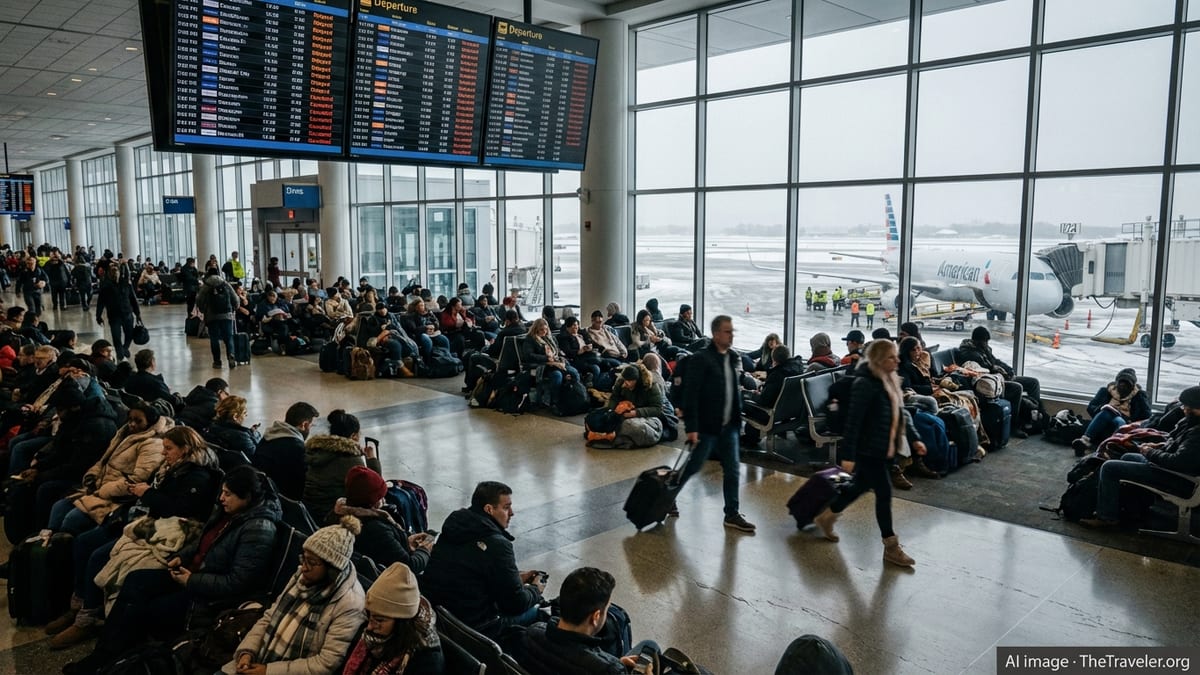
Hundreds of travelers at Philadelphia International Airport faced cascading disruption on June 23 as American Airlines and regional partners PSA Airlines, Republic Airways, and Jazz recorded a cluster of cancellations and more than 180 delays affecting flights to major U.S. and Canadian cities.
Get the latest news straight to your inbox!
Philadelphia Emerges as a Hotspot in Wider Network Turbulence
Publicly available flight-tracking data and operational dashboards for June 23 indicate that 12 flight cancellations and approximately 181 delays tied to American Airlines and its regional affiliates were linked to operations at Philadelphia International Airport. The disruptions affected both domestic and cross-border routes, leaving passengers contending with missed connections, long lines at customer-service desks, and extended waits on the concourse.
The pattern in Philadelphia formed part of a broader day of strain across parts of the U.S. aviation system. Industry trackers and travel advisories show that regional carriers such as PSA Airlines and Republic Airways, which operate many American Eagle-branded flights, have been particularly exposed when weather, crew scheduling, or airspace constraints tighten capacity. As a key transatlantic and East Coast connecting point in American’s network, Philadelphia can quickly feel knock-on effects when conditions deteriorate at other hubs.
Analysts following U.S. airline operations note that the hub-and-spoke model used by American and its regional partners can magnify small glitches into widespread disruption. When one spoke city experiences ground delay programs or equipment constraints, aircraft and crews may fail to arrive in position for later departures, feeding into the cancellation and delay totals recorded at Philadelphia.
Key Routes Affected: Toronto, Montreal, Miami, Boston, Atlanta, Indianapolis
Flight-status boards and schedule data for June 23 show that services linking Philadelphia with several major cities were among the most affected. Connections to Toronto and Montreal, commonly operated by regional partners under codeshare or feeder agreements, saw schedule reductions and timing changes that forced passengers to rebook on later departures or alternative routings through other hubs.
Southbound services to Miami also experienced disruption. Miami is one of American’s critical gateways to Latin America and the Caribbean, so delays on the Philadelphia–Miami corridor increased the risk of missed onward connections to leisure destinations and regional business centers. Some travelers attempting to reach sun destinations reported via social media and travel forums that they were obliged to overnight or reroute through other hubs after late-running Philadelphia departures.
On the U.S. East Coast, the heavily traveled Philadelphia–Boston route was hit by rolling delays, reflecting a broader pattern of congestion affecting New England and Mid-Atlantic airspace. Farther south, links to Atlanta encountered issues as the nation’s busiest airport juggled its own traffic challenges. To the west, flights between Philadelphia and Indianapolis registered schedule disruptions that contributed to the day’s overall tally of 181 delays connected with the American and regional operations at Philadelphia.
Because many of these routes are high-frequency, even a modest number of outright cancellations can reverberate through the day’s remaining departures. A canceled morning flight to Boston or Toronto, for example, can compress demand onto later services already operating with limited spare capacity, leaving stranded travelers competing for a smaller pool of available seats.
Weather, Airspace Restrictions, and Crew Positioning Complicate Recovery
Operational summaries and published travel alerts for late June highlight several contributing factors behind the turbulence facing American and its partner airlines. Seasonal thunderstorms across the Eastern United States, combined with temporary airspace restrictions tied to large public events, have periodically reduced takeoff and landing rates at key airports, including Philadelphia, Boston, and other East Coast gateways.
When air traffic managers impose flow restrictions, airlines must slow their schedules, which can cascade into ground holds, diversions, and missed aircraft rotations. For regional carriers such as PSA Airlines, Republic, and Jazz, which often operate tight turnarounds with smaller fleets, a single prolonged ground stop or weather diversion can remove an aircraft and crew from position for multiple later segments.
Crew-rest rules and staffing constraints can also play a role. Once crews exceed duty-hour limits because of earlier delays, flights later in the day may be forced to cancel if replacement crews are not readily available. Recent discussion on traveler forums has drawn attention to the difficulty some carriers face in quickly repositioning pilots and flight attendants when storms or airspace closures fragment the network, a challenge that appears to have affected portions of American’s regional operation around Philadelphia.
These conditions make operational recovery slower, even after the immediate weather system or traffic restriction has passed. Aircraft and crews may need several rotations to return to their planned positions, prolonging the impact into the evening schedule and, at times, into the following day.
Passenger Experience: Long Lines, Tight Connections, and Limited Options
Reports from passengers on social media and in travel community discussions on June 23 describe crowded gate areas, long waits for assistance, and confusion over rebooking options at Philadelphia International Airport. With multiple cancellations on a single carrier and its affiliates, travelers seeking same-day alternatives faced limited choices, particularly on popular city pairs such as Philadelphia to Miami and Philadelphia to Boston.
Some travelers reported that rolling delays, where departure times were repeatedly pushed back in small increments, made it difficult to judge whether to wait out a late flight or proactively request rebooking. This pattern has been a repeated source of frustration for frequent flyers, who say it complicates decisions about hotel stays, ground transport, and onward connections.
Consumer advocates generally advise passengers caught in disruption clusters like Philadelphia’s June 23 event to monitor airline apps closely, enable push notifications, and periodically refresh flight-status pages from independent trackers. When large numbers of flights on the same carrier are affected, online and mobile channels often provide faster access to rebooking options than airport ticket counters, which can quickly develop substantial queues.
Travelers connecting onward to international destinations face particular risk when delay totals climb. A seemingly modest one- or two-hour pushback on a Philadelphia departure to hubs such as Toronto or Miami can be enough to disrupt long-haul itineraries that close check-in and boarding well before scheduled departure time.
What Travelers Can Do on Disruption-Prone Days
Travel professionals and experienced flyers suggest several strategies for passengers traveling through Philadelphia and similar hubs when widespread delays and cancellations begin to appear on departure boards. Booking the first flight of the day on critical routes, avoiding tight minimum connection times, and selecting itineraries with multiple daily alternatives can all help reduce the risk of being stranded if an early segment cancels.
On days when thunderstorms or airspace restrictions are forecast along the East Coast, observers recommend keeping carry-on luggage light in case rapid rebooking requires a tight connection or a brisk terminal change. Passengers with flexible schedules sometimes benefit from volunteering to move to earlier or later flights when advised by gate agents, securing confirmed seats before disruption peaks.
Travel alerts issued by major airlines for affected dates can offer additional flexibility, such as waivers of change fees or fare differences within a defined travel window. Monitoring these advisories for routes touching Philadelphia, Toronto, Montreal, Miami, Boston, Atlanta, and Indianapolis may allow travelers to adjust plans proactively when large-scale operational challenges appear likely.
While the 12 cancellations and 181 delays tied to American and its regional partners at Philadelphia on June 23 represent only a fraction of the day’s total U.S. air traffic, the concentration at a single important hub underscores how quickly localized issues can reshape travel plans for hundreds of passengers in a single afternoon.