


More news on this day
Flights at Israel’s Ben Gurion Airport have largely resumed after a disruptive staff walkout and days of severe congestion, but airlines and airport managers are warning that luggage handling remains fragile and some checked bags may be left behind.
Get the latest news straight to your inbox!
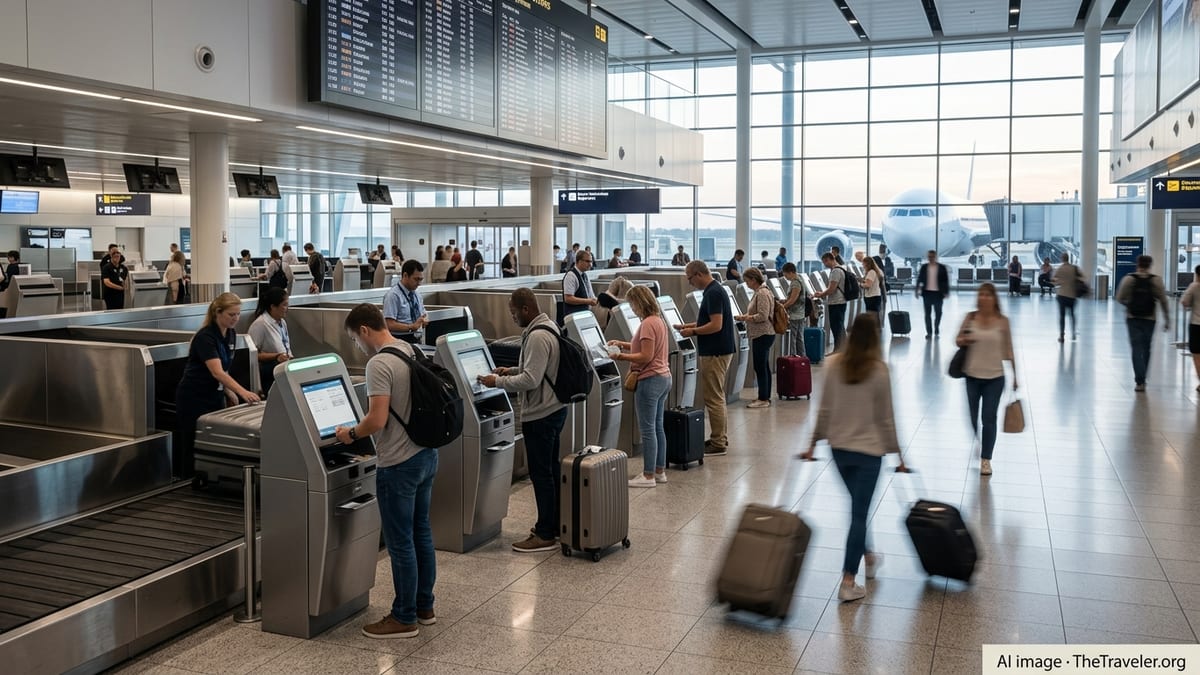
Operations Restart After Surprise Strike Halts Traffic
Flight schedules at Ben Gurion International Airport began recovering on August 20, 2026, after a sudden labor dispute and staff strike led to hours of suspended check in, grounded departures and diverted arrivals. Published coverage indicates that departure counters were closed for part of the day as baggage systems reached capacity, prompting a formal classification of the situation as a crisis event.
Reports from Israeli media describe how the halt came on one of the busiest travel days of the year, with nearly 100,000 passengers and about 600 flights scheduled to pass through the country’s main gateway. As congestion built up, aircraft remained parked waiting for stand space, and arriving travelers faced long queues at passport control and baggage claim.
According to open reports, flights began to resume in stages later that afternoon under an adjusted timetable designed to clear the backlog. However, the restart did not immediately resolve the most problematic bottleneck: the airport’s overburdened baggage system and limited ground staffing.
National coverage notes that the incident follows a summer of already heavy traffic at Ben Gurion, which has been operating near or above previous peak volumes. Airports Authority planning documents had already flagged 2026 as a challenging year for capacity, with growing passenger numbers testing infrastructure and labor resources.
Airlines Prioritize Getting Planes Airborne Over Carrying Bags
As the strike ended and traffic returned, airlines and the Israel Airports Authority began advising that many flights might operate without most or all checked baggage. Television and online reports cited internal briefings warning that, to prevent a wider collapse of the schedule, carriers would prioritize flying passengers and only load bags where ground conditions allowed.
Coverage by national news outlets indicates that some Thursday departures left Ben Gurion with suitcases still stacked near check in counters, to be forwarded on later flights or via alternative routings. Aviation analysts quoted in that reporting noted that this approach, while highly disruptive for affected passengers, is often used during acute staffing or system failures to avoid complete network shutdowns and cascading cancellations.
Publicly available explanations of airport operating rules emphasize that crew duty time limits create additional pressure to move aircraft as soon as possible once airside operations resume. If crews wait on the ground for hours while ramp and baggage teams clear backlogs, they may time out and become legally unable to operate flights, forcing cancellations even after a strike ends.
This combination of staffing shortages, duty time constraints and a saturated baggage handling system has led airlines to describe the current phase as one of “partial recovery,” where aircraft movements are restarted but ancillary services, especially checked luggage, are still subject to substantial disruption.
Passengers Face Long Queues and Risk of Delayed Luggage
For travelers, the most visible impact has been extended waiting times and uncertainty over whether bags will arrive with them. In the days leading up to and immediately following the strike, passengers described waiting between ninety minutes and several hours by the baggage carousels, with some flights reportedly delivering only a portion of the checked luggage and forwarding the rest later.
Local media from the arrivals hall have highlighted crowded baggage claim areas and security screening points, with lines snaking through terminal corridors. On the departures side, images circulated showing rows of tagged suitcases queued for loading, as staff worked through an accumulated backlog from earlier in the week and overnight operations.
Guidance published by airports and airlines in similar disruption scenarios encourages passengers to pack essential items in cabin baggage, including medication, important documents and valuables, as checked bags have a higher chance of being delayed or mishandled when systems are under strain. Travelers heading to Ben Gurion in the coming days are being urged in local coverage to monitor airline notifications closely, arrive at the airport only within the time frame specified by their carrier, and be prepared for the possibility that their checked luggage might follow on a later flight.
Travel forums and social media comments referenced in recent reporting also suggest that some passengers connecting onward from Israel may face additional complications, such as missed baggage transfers or limited tracking information until the backlog is fully cleared.
Airport Managers Deploy Emergency Measures but Warn of Ongoing Strain
In response to the crisis, the Israel Airports Authority has announced that senior managers are being assigned to operational shifts on the terminal floor to reinforce front line teams. A statement highlighted in business media says that management personnel will assist with check in, passenger flow and other tasks as needed, in an effort to stabilize service levels while negotiations with workers continue in the background.
Despite these measures, the authority has cautioned that congestion will not disappear immediately. Domestic coverage over the weekend reported that hundreds of flights and tens of thousands of passengers are compressed into peak travel windows, and that the baggage system in particular remains close to saturation. Analysts have pointed to longer term warnings in annual reports that the airport is approaching the limits of its existing infrastructure during the August holiday rush.
Industry observers note that recovery from such a severe spike in unprocessed luggage can take several days, even after staff return to duty. Suitcases left behind on earlier flights must be matched with their owners, re-tagged and routed via available cargo space on subsequent services, a process that requires coordination between the airport, airlines and ground handling companies.
Travel experts cited in local coverage suggest that until the volume of daily passengers drops back from peak-summer levels, Ben Gurion is likely to operate with narrowed margins, leaving little room for further operational shocks without renewed disruption.
What Travelers Should Expect in the Coming Days
As of August 23, 2026, public updates from the Airports Authority and airlines indicate that most scheduled flights are operating, but with ongoing delays and adjustments. Carriers are encouraging passengers to verify flight status repeatedly on the day of travel and to pay attention to specific instructions on arrival times, as some airlines seek to stagger passenger flows to avoid overwhelming security and check in areas.
Open information from the authority also stresses that, where possible, travelers should limit checked baggage and ensure that any critical items are carried in hand luggage. While some airlines have indicated that they expect baggage handling to gradually normalize, they continue to warn that bags may be offloaded when flights are heavily delayed or when ramp staff are forced to prioritize aircraft turnaround times.
For inbound travelers whose bags do not appear on the carousel, standard lost luggage procedures remain in place, including filing a report with the airline before leaving the customs area. However, given the scale of the current backlog, processing and delivery times are likely to exceed typical norms, and tracking updates may be slower than usual.
Overall, publicly available data and on the ground reporting suggest that Ben Gurion is transitioning from acute shutdown to a prolonged period of strained but functioning operations. For passengers, that means flights are increasingly taking off and landing, yet the risk of parting ways with their luggage, at least temporarily, remains significantly higher than in a normal travel week.
Jerusalem Post coverage of the Ben Gurion strike and flight resumptions
Israel National News report on airport chaos and passenger volumes
Globes update on Airports Authority emergency staffing measures