


More news on this day
Passengers travelling through London Gatwick on Sunday, August 23, are facing a patchwork of delays and cancellations, with multiple easyJet services among those disrupted across the day’s schedules.
Get the latest news straight to your inbox!
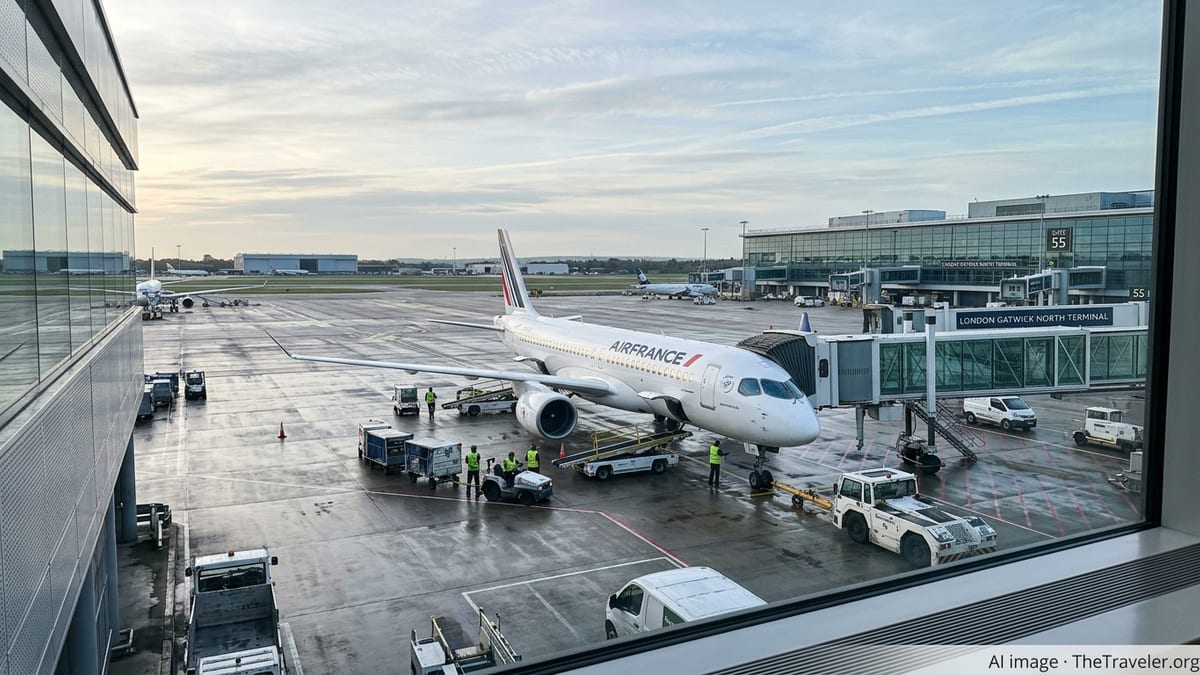
Disruption builds across Sunday schedules
Live departure and arrival boards for London Gatwick on Sunday, August 23, show a mixed operational picture, with many services running close to schedule but a noticeable number facing extended delays or cancellation. Publicly available flight-tracking data indicates that disruption is spread through the day rather than concentrated in a single peak period, affecting both short-haul and leisure routes.
Traffic data compiled by independent trackers and airport-information platforms suggests that Gatwick’s operations on August 23 are broadly stable compared with previous busy summer Sundays, yet with enough irregularity to create knock-on effects for some airlines and routes. Where delays occur, they typically range from moderate hold-ups of around 30 to 60 minutes to more substantial schedule changes on selected flights.
These variations are significant for passengers with onward connections or tightly timed plans, particularly on popular holiday routes to Mediterranean destinations. Even when flights are ultimately operated, extended waits at the gate or in departure lounges can lead to missed ground transfers and altered accommodation arrangements at the far end of the journey.
Analysts following the airport’s performance note that Gatwick has seen periodic spikes in delays in recent years linked to factors such as weather systems and wider European air traffic control constraints. Background reports on 2024 performance highlight how adverse conditions and wider network pressures can quickly ripple through a single day’s schedule, creating the type of scattered disruption visible again this Sunday.
Multiple easyJet flights among affected services
easyJet, Gatwick’s largest short-haul operator, features prominently in today’s traffic picture, with a high volume of departures and arrivals across European city and holiday routes. Flight-status pages for several easyJet services linked to Gatwick on Sunday, August 23, show instances of delays and adjusted timings, illustrating how even a limited number of late-running rotations can reverberate across an airline’s schedule.
For example, tracking data for easyJet flight U28427 between London Gatwick and Nice on August 23 lists the service as delayed, with departure indicated as around 38 minutes behind the original scheduled time and a correspondingly altered arrival. Elsewhere in the network, route listings show easyJet operating multiple services to Mediterranean destinations such as Olbia and Rhodes on this date, flights which are particularly sensitive to any disruption because they often run close to capacity in late August.
In addition to same-day schedule changes, recent days have seen separate passenger reports online describing last-minute cancellations on easyJet flights between Turkey and the UK, resulting in rebookings several days later and to different UK airports. While those individual cases relate to services outside Gatwick and specific dates, they underline the broader context in which today’s delays are unfolding: airlines running dense summer schedules where a cancellation or heavily delayed sector can have downstream impacts for crews, aircraft positioning and later legs.
easyJet’s own digital flight tracker for the period around August 23 lists dozens of Gatwick-linked services in close succession. With such a tightly packed programme, even modest disruption to one or two rotations can force timetable reshuffles, particularly on popular late-summer leisure routes that leave comparatively little spare capacity for last-minute recovery.
Likely causes and wider operational context
While live boards and flight-tracking feeds are focused on displaying current status rather than root causes, recent reports and historic analyses give a useful indication of the pressures that can generate the sort of disruptions visible at Gatwick today. Previous summers have seen the airport affected by adverse weather patterns across Europe, capacity constraints in regional airspace, and crew-availability challenges at individual airlines, all of which can accumulate into significant day-of-operation changes.
Industry and regulatory documents examining Gatwick’s performance in earlier years highlight how weather has repeatedly been a major driver of delay across the wider European network, including at the airport itself. Separate briefings on UK airspace have also documented how staffing or capacity issues in air traffic control sectors can force flow restrictions, holding patterns and extended routings for flights to and from Gatwick, sometimes resulting in the “delay not determined” messages occasionally recorded in live tracking discussions.
Social media and specialist flight-tracking communities have, in recent weeks, discussed a series of unusual operational events affecting Gatwick, including occasions when arriving flights have been held or diverted because of limited runway availability or emergency responses. Although these specific episodes relate to earlier dates in July and August, they illustrate how quickly a busy single-runway airport can be pushed to its limits and how even isolated incidents can sow delays that persist through subsequent schedules.
Against that background, the pattern of August 23 disruption appears consistent with the complex operating environment typical of late-summer weekends, in which multiple potential bottlenecks can interact. From passengers’ point of view, however, the technical distinction between a delay driven by weather, airspace capacity or airline resourcing is often less important than the practical consequence of missed connections, curtailed holidays or unplanned nights away from home.
What today’s disruption means for passengers
For travellers using Gatwick on Sunday, August 23, the immediate effect of the current wave of delays and scattered cancellations is increased uncertainty. Published schedules no longer fully reflect real-time operations, making it essential for passengers to rely on live departure boards, airline apps and flight-tracking tools to monitor changes throughout the day. This is particularly crucial for those with early-morning departures, late-evening returns or tight same-day connections.
Experience from recent online passenger accounts suggests that when flights are cancelled or heavily delayed, rebooking options during the peak summer period can be limited. On busy leisure routes, alternative services may already be heavily booked, meaning that some travellers are offered re-routes via different UK airports or on dates several days later than originally planned. This can add significant costs for accommodation, local transport and missed work or family commitments once travellers finally return.
Passengers affected by delays or cancellations on August 23 are also navigating a complex landscape of air-passenger rights and airline policies. Public guidance on compensation and care entitlements under UK and European regulations sets out circumstances in which travellers may be able to claim refunds, re-routing or fixed-sum payments, but assessing eligibility often depends on knowing the precise cause of a disruption and whether it is deemed within an airline’s control. That assessment can be particularly challenging on days where wider network factors, such as air traffic control restrictions, play a role.
Travel advisers commonly recommend that passengers retain boarding passes, booking confirmations and any written notices from airlines about schedule changes, as these can be important in supporting later claims. They also stress the value of checking travel insurance wording in advance, since policies vary significantly in how they respond to extended delays or enforced overnight stays resulting from aviation disruption.
How to stay informed during ongoing disruption
With operational conditions at Gatwick liable to evolve through the rest of Sunday, staying closely informed remains the best strategy for travellers. Publicly accessible departure and arrival boards, along with airline-specific trackers and third-party flight-status services, offer live snapshots of how particular flights are performing relative to timetable, often updating within minutes as new information becomes available.
For easyJet customers, the airline’s online flight tracker and mobile app remain key reference points for gate assignments, revised departure times and the status of return legs. Combined with independent services that collate historical and live data for individual flight numbers, these tools allow passengers to build a clearer picture of whether a delay appears to be lengthening, stabilising or improving.
Travelers planning to use Gatwick later on August 23 or in the following days may also wish to monitor broader aviation news feeds covering the airport and its airlines. Recent media-centre updates from Gatwick and industry bulletins provide context on traffic levels, route expansions and operational priorities heading into the late-summer period, information that can help set expectations about how resilient schedules are likely to be in the face of further weather or airspace challenges.
As the day progresses, the extent of Sunday’s disruption for easyJet and other Gatwick carriers will become clearer in the pattern of arrivals and departures logged across tracking sites. For now, passengers are being advised by travel commentators to build additional time into their journeys where possible and to keep monitoring the latest information until they are safely airborne or back on the ground.
London Gatwick live departures board – Departra
easyJet flight U28427 London Gatwick to Nice status – Flightera