


More news on this day
The United States has strengthened its travel advisory for Ecuador as violent crime, kidnappings and gang-related unrest intensify in several regions, prompting a stark “do not travel” warning for some parts of the country and tighter restrictions for others.
Get the latest news straight to your inbox!
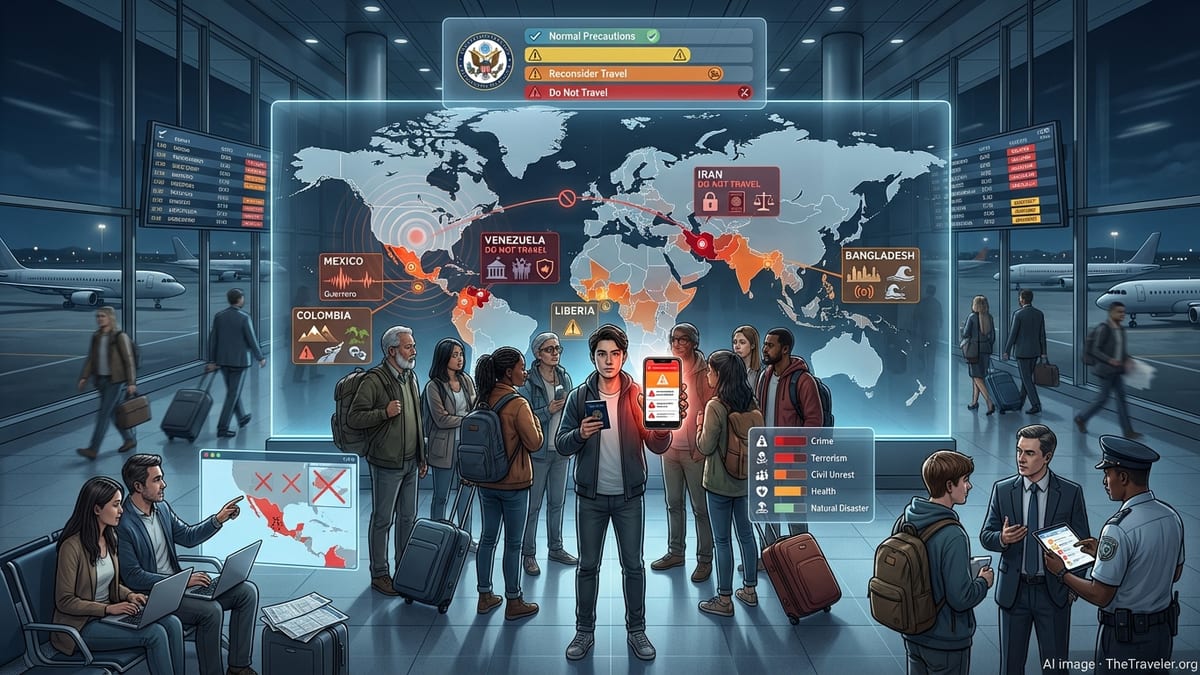
Advisory Raised Amid Escalating Security Crisis
The latest U.S. State Department advisory for Ecuador highlights a deteriorating security landscape driven by powerful criminal gangs, drug trafficking networks and persistent prison violence. Publicly available guidance on the department’s website shows that several areas are now designated Level 4, the highest advisory level, where Americans are urged not to travel due to a greater likelihood of life‑threatening risks and limited ability of U.S. authorities to assist in an emergency.
In January 2024 Ecuador’s internal security crisis reached a new peak after the escape of a prominent gang leader in Guayaquil, followed by coordinated attacks, prison riots and a nationally declared state of emergency. Subsequent reporting on the 2024–present internal armed conflict describes how gangs leveraged the disruption to expand territorial control and to contest lucrative drug routes through coastal ports and border regions.
International monitoring groups note that homicide rates have risen sharply in recent years, particularly in coastal provinces and major urban centers. Analysts tracking the crisis link the surge to rival groups competing for access to cocaine trafficking corridors that connect Colombia and Peru with Pacific shipping routes and onward markets in North America and Europe.
The travel advisory’s escalation aligns with similar warnings issued by other governments, which describe a “grave security crisis” in Ecuador and caution that violence can escalate with little warning, including in cities that also serve as major air gateways for tourists.
‘Do Not Travel’ Zones and Restricted Regions
Current U.S. guidance identifies specific parts of Ecuador as areas where travel should be avoided altogether. Publicly available advisory language singles out the city of Durán in Guayas Province as a location where travel is not recommended for any reason because of the risk of crime and what the advisory categorizes as terrorism.
The advisory also underscores long‑standing prohibitions and restrictions near the northern border with Colombia. Archived U.S. travel information, together with more recent partner‑country advisories, indicate that areas within roughly 20 kilometers of the Colombian frontier in Esmeraldas, Carchi and Sucumbíos Provinces are considered extremely high‑risk due to drug trafficking, the presence of armed groups and a history of kidnappings and armed attacks.
U.S. government personnel are subject to strict internal travel controls in these northern regions, reflecting the heightened threat environment. Where staff movements require special authorization, the public advisory typically interprets those limitations as a signal that emergency assistance to private U.S. citizens could be delayed or impossible in a crisis.
Other locations frequently flagged in regional security analyses include port districts and outlying neighborhoods of Guayaquil, segments of the Pacific coast and key highway corridors linking coastal cities to the highlands. Separate assessments by foreign ministries and private risk consultancies recommend that travelers avoid non‑essential trips to cities such as Guayaquil and Esmeraldas and to several smaller coastal hubs where gang rivalries have intensified.
Crime, Kidnappings and Risks to Travelers
Increased levels of violent crime underpin the strengthened U.S. warning. According to open‑source security assessments and foreign travel advisories, Ecuador has experienced steep rises in homicides, extortion, armed robberies and explosive attacks since 2021, with many incidents attributed to organized crime. International crime surveys and media coverage describe how gangs have extended their activities from prisons and ports into urban neighborhoods, commercial districts and transport routes.
Kidnapping has become a more visible concern. Travel advisories from multiple governments report a rise in both traditional kidnappings and so‑called “express kidnappings,” in which victims are seized for short periods and forced to withdraw cash or transfer funds. The United Kingdom’s official advice, for instance, explicitly notes that kidnapping rates have increased and warns that criminals may target foreigners, sometimes after using drugs such as scopolamine to incapacitate victims.
Reports also document cases of carjackings, bus robberies, thefts at ATMs and assaults in nightlife districts, particularly after dark. Visitors are frequently cautioned to avoid displaying valuables, to use only vetted transportation services and to remain alert in crowded public places such as intercity bus terminals and markets.
While many international visitors continue to travel without incident, analysts stress that the overall risk profile has shifted. Comparative risk bulletins published in 2024 and 2025 now categorize Ecuador as an elevated‑risk destination, noting that sudden flare‑ups of violence, targeted assassinations and clashes between security forces and gangs can occur with limited warning and may spill into areas not previously viewed as sensitive.
Tourism Corridors in a Country Under Strain
The stricter U.S. advisory has raised questions for travelers planning trips to classic Ecuadorian destinations such as Quito, Cuenca, the Avenue of the Volcanoes, the Amazon basin and the Galápagos Islands. Tourism boards and industry bodies emphasize that the country remains open to visitors, but they acknowledge that the security crisis has changed operating conditions, particularly on the mainland.
According to Ecuador’s official tourism portal, core visitor services in Quito and the Galápagos continue to operate, with additional screening and security measures at airports and access points. Local authorities in the Galápagos have publicized steps to profile higher‑risk arrivals and to coordinate with police and migration officials, presenting the islands as a comparatively stable enclave despite turmoil elsewhere.
International coverage from early 2024 portrays a contrast between heavily policed yet functioning tourist districts and other parts of the country facing sporadic curfews, military patrols and visible gang influence. Travel industry reports describe how some operators have re‑routed itineraries to reduce time in Guayaquil, favoring connections through Quito when possible, and have expanded security briefings for guests.
Several foreign ministries advise travelers who choose to visit Ecuador to enroll in consular alert systems, monitor local media closely, stay in reputable accommodations and seek current local advice about specific neighborhoods and routes. The overarching message across multiple advisories is that conditions are fluid and that what appears calm in daytime or in one part of a city can shift rapidly elsewhere.
How Travelers Can Respond to the New Warning
The U.S. State Department generally advises that Americans heed Level 4 “do not travel” designations by avoiding those areas entirely and by reconsidering non‑essential trips to regions under Level 3 “reconsider travel” guidance. For those already in affected zones, the department’s public materials recommend leaving as soon as it is safe to do so, while staying alert to potential transportation disruptions and security checkpoints.
Safety frameworks published by the department explain that Level 4 is reserved for destinations where there is a greater likelihood of life‑threatening risks and where U.S. assistance may be significantly constrained. These documents note that local conditions can change quickly and that travelers retain responsibility for their own security decisions based on the most up‑to‑date information available.
Risk specialists encourage would‑be visitors to Ecuador to undertake detailed pre‑trip planning, including reviewing the full text of travel advisories from their home governments, confirming insurance coverage for civil unrest or terrorism‑related incidents and establishing contingency plans for itinerary changes. They also suggest maintaining a low profile, avoiding demonstrations and political gatherings, and limiting night‑time movements in urban areas.
For travelers prioritizing the Galápagos or other nature‑focused experiences, many tour companies continue to offer programs while explicitly acknowledging the broader security context. Industry updates stress that decisions should be individualized, taking into account personal risk tolerance, flexibility and the possibility of unexpected changes as Ecuador’s authorities and communities navigate an ongoing internal conflict.
U.S. State Department: Ecuador Travel Advisory
UK Foreign Travel Advice: Ecuador