


More news on this day
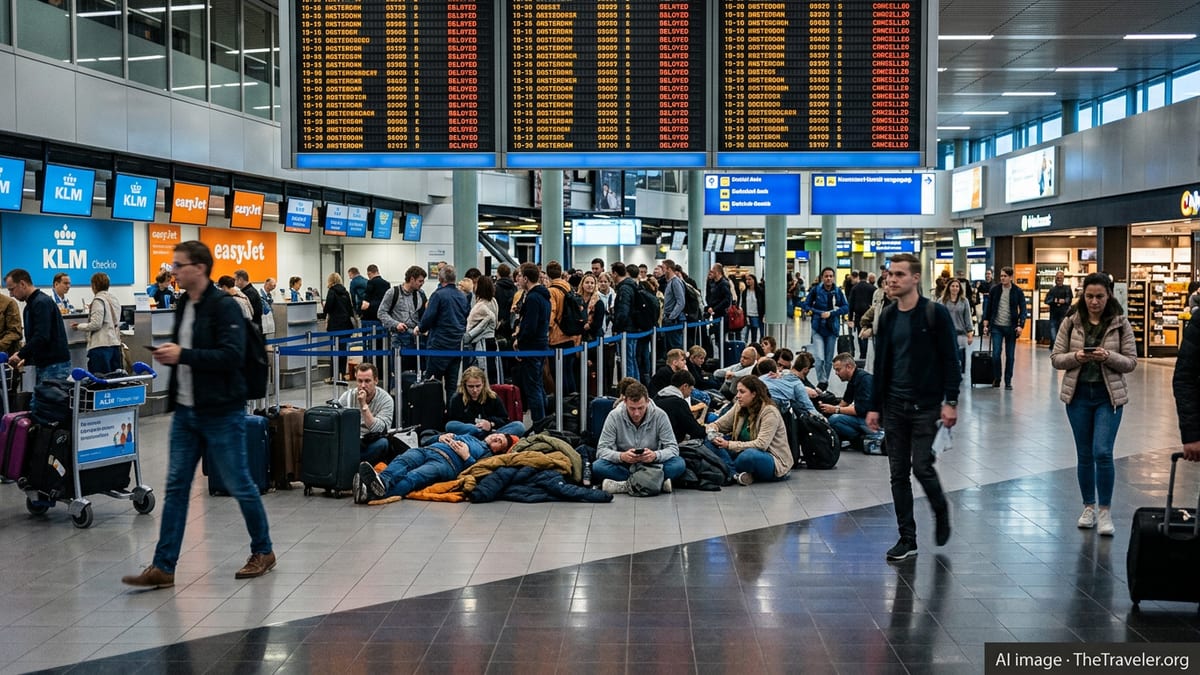
Thousands of air travelers across Europe faced hours-long queues, missed connections, and sudden itinerary changes this week as a new wave of delays and cancellations swept through major hubs from Portugal to Germany, with data indicating at least 2,018 flights delayed and 208 cancelled in a single day.
Get the latest news straight to your inbox!
General Strike and Operational Strains Trigger Fresh Disruptions
Publicly available travel alerts and tracking data point to a convergence of factors driving the latest round of disruption. In Portugal, a nationwide strike on Wednesday 3 June 2026 led to widespread schedule changes at Lisbon and Porto, with several airlines warning of potential cancellations and advising passengers to rebook or request refunds ahead of time. Carriers operating into the country, including large network airlines, signaled that services to and from Lisbon Humberto Delgado Airport and Porto Airport would not operate as planned for much of the day.
The impact in Portugal added to existing pressure on Europe’s aviation system. Reports from industry monitoring platforms show that carriers across the continent have already been trimming summer schedules in response to higher fuel prices and staffing constraints, particularly in ground handling and maintenance. Although some airlines insist their peak-season operations remain intact, others have preemptively removed thousands of flights from the timetable in an effort to avoid last-minute chaos and conserve jet fuel.
At the same time, Europe’s main hubs continue to operate close to capacity. Recent punctuality reports for March 2026 show that key airports such as Lisbon, London Heathrow, Amsterdam and Frankfurt are already handling dense schedules with mixed on-time performance, leaving little margin when adverse weather, strikes or technical issues occur. In this context, a single day featuring more than 2,000 delays and just over 200 cancellations across the region underscores how quickly disruption can ripple through the network once operations are strained.
The latest wave of delays and cancellations did not stem from a single extraordinary event but rather from a combination of localized strikes, earlier schedule cuts and knock-on effects from previous operational days. That pattern complicates planning for passengers, who increasingly find that even flights not directly affected by industrial action can be disrupted by aircraft and crews arriving late from elsewhere in the network.
Major Carriers from Iberia to Lufthansa Feel the Strain
Among the hardest-hit names in this week’s disruption were large European groups such as Lufthansa and International Airlines Group, the parent company of Iberia, British Airways and Aer Lingus. Publicly available route and schedule information shows that Lufthansa is already in the midst of a significant restructuring, including the closure of its CityLine subsidiary and the removal of older aircraft from service, a move that has been accompanied by the announced reduction of tens of thousands of flights over the summer period. Those structural cuts, combined with intermittent pilot and cabin crew labor disputes, have amplified the impact when day-to-day operational issues arise.
In southern Europe, Iberia continues to operate an extensive network from Madrid and secondary points including Lisbon and Porto, serving intra-European routes as well as long haul links to the Americas. EU261 claim platforms tracking disruptions for Iberia list a growing number of delayed and cancelled services in recent weeks, particularly on short haul legs where aircraft utilization is high. While the airline maintains that its summer schedule is largely intact, individual flights to and from Portugal and other regional gateways have nonetheless been subject to last-minute changes.
British Airways has also adjusted parts of its 2026 European program, especially to and from German airports, according to published schedule summaries. Travelers connecting via London report shortened connection windows and rebooked departures as the carrier streamlines its operations around Heathrow and Gatwick. Within the same corporate group, Aer Lingus continues to serve continental destinations including France, Croatia, Greece, the Netherlands and Germany, even as it winds down separate operations from Manchester. The dense interlinking of these networks means disruptions at a hub such as London or Madrid can quickly spill across the wider IAG portfolio.
Other full service and low cost airlines, from KLM and Air France to easyJet and regional carriers, also report elevated levels of disruption this week. Some have pointed to resource constraints in air traffic control and airport services, while others highlight the lingering impact of earlier industrial actions, particularly in Germany and parts of Eastern Europe. The result for passengers is similar regardless of carrier: longer queues at check-in and security, overcrowded departure lounges, and limited options to rebook at short notice.
Lisbon, Porto, Munich and Athens Among Key Hotspots
The pattern of disruption this week has been especially visible at several major hubs and regional gateways. Lisbon and Porto, already under pressure from the general strike in Portugal, saw a series of delays and cancellations across multiple airlines, including network and low cost operators. Tracking sites recorded irregular operations on routes linking these cities with other European hubs such as Munich, Amsterdam and Paris, with some flights operating significantly behind schedule while others were cancelled outright.
Munich, one of Lufthansa’s primary bases, has also been affected by a recent wave of cancellations. Airports and compensation portals list multiple disrupted services to and from the Bavarian hub in early June, covering a wide range of carriers from Lufthansa and its regional affiliates to international partners and competitors. Earlier in March, a separate episode involving pilots led to the cancellation of at least ten Lufthansa flights on a single day between Munich, Frankfurt and other European cities, illustrating the sensitivity of the network to staffing and industrial issues.
Further southeast, Athens has emerged as another focal point as summer traffic builds. Data from European punctuality reports show that the Greek capital handles a robust mix of full service and leisure airlines, including flag carrier services, low cost operators and seasonal charters from across the continent. With airlines such as Aegean, Iberia, Aer Lingus, British Airways and others operating into Athens, even minor disruptions elsewhere in the region can cascade into knock-on delays in the eastern Mediterranean.
Although not at the very top of delay rankings, airports such as Amsterdam Schiphol, London Gatwick, Dublin and Barcelona are also experiencing congestion as airlines concentrate capacity on core holiday routes. Collectively, these hubs form the backbone of intra-European travel to beach and city destinations in Portugal, Spain, Greece and Croatia, making them particularly sensitive to any operational shock that reverberates through the system.
Impact on Travelers Across Western and Central Europe
The immediate impact of this week’s disruptions has been felt by passengers in Portugal, France, England, Spain, Croatia, Greece, Hungary, the Netherlands and beyond. With at least 2,018 flights delayed and 208 cancelled in a single day, tens of thousands of travelers have faced missed holidays, business appointments and family events. Reports from social media platforms and passenger forums describe long lines at customer service desks, limited hotel availability near major airports and difficulties securing alternative flights within a reasonable timeframe.
For many, the disruption has also translated into unexpected expenses. When cancellations and long delays occur at short notice, passengers frequently find themselves paying for meals, overnight stays and new transport arrangements out of pocket before seeking reimbursement. Families traveling at the start of school holidays are especially affected, as peak-season load factors leave few empty seats for same-day rebooking. Travelers connecting between short haul and long haul flights via hubs in Lisbon, London or Munich are particularly vulnerable when an initial leg arrives late.
The disruption has not been limited to leisure travelers. Business passengers and air cargo customers have also reported schedule reliability concerns, with some companies reconsidering tight same-day itineraries and time-sensitive shipments routed via the most congested hubs. While punctuality data for March indicated generally robust on-time performance at many of Europe’s largest airports, the recent spate of delays and cancellations demonstrates how quickly conditions can change once operational buffers are eroded by strikes, staffing issues or adverse weather.
In several countries, national consumer organizations and travel industry groups are reminding passengers of their rights under EU Regulation 261, which sets out compensation and assistance obligations when flights are significantly delayed or cancelled for reasons within an airline’s control. Specialist compensation services and law firms report increased interest in potential claims related to recent disruptions, particularly for flights that were cancelled or delayed by more than three hours without extraordinary circumstances such as severe weather.
What Passengers Can Do as Summer Peaks
With the main summer travel period now under way, analysts and passenger advocates suggest that travelers build more flexibility into their plans to reduce the risk of severe disruption. This includes allowing longer connection times between flights, especially when transiting through busy hubs like Lisbon, London, Amsterdam, Frankfurt and Munich. Choosing earlier departures in the day, when feasible, can also provide more rebooking options if the original flight is delayed or cancelled.
Monitoring flight status closely in the days and hours before departure is increasingly important. Airlines, airports and independent tracking platforms provide real-time updates, which can alert passengers to emerging issues such as strikes, severe weather or technical problems. When disruption is anticipated, many carriers now allow free date or route changes, or offer vouchers and refunds, so acting early may increase the chances of securing a workable alternative.
Passengers are also encouraged by consumer advocates to keep detailed records when disruptions occur, including boarding passes, booking confirmations, receipts for meals and accommodation, and screenshots of delay notifications. These documents can prove important when seeking refunds, compensation or reimbursement of out-of-pocket expenses. Under EU rules, eligibility often depends on the length of the delay, the distance of the flight and whether the airline is responsible for the cause of the disruption.
Despite the current turbulence, European aviation remains on track to carry record numbers of passengers this summer, with airlines emphasizing that the vast majority of flights still operate as scheduled. However, the experience of this week, with more than two thousand delays and over two hundred cancellations in a single day, underscores how fragile the system can be when multiple pressures converge. For travelers planning trips across Portugal, France, England, Spain, Croatia, Greece, Hungary, the Netherlands and neighboring countries, a cautious approach and an awareness of their rights may prove essential in navigating the busy months ahead.