


More news on this day
Air travel across the United States has been plunged into fresh turmoil as a series of disruptive events, from severe weather and power outages to air traffic control constraints and airline technology issues, combined to trigger hundreds of flight cancellations and thousands of delays, snarling key hubs and stranding travelers at the outset of the busy summer season.
Get the latest news straight to your inbox!
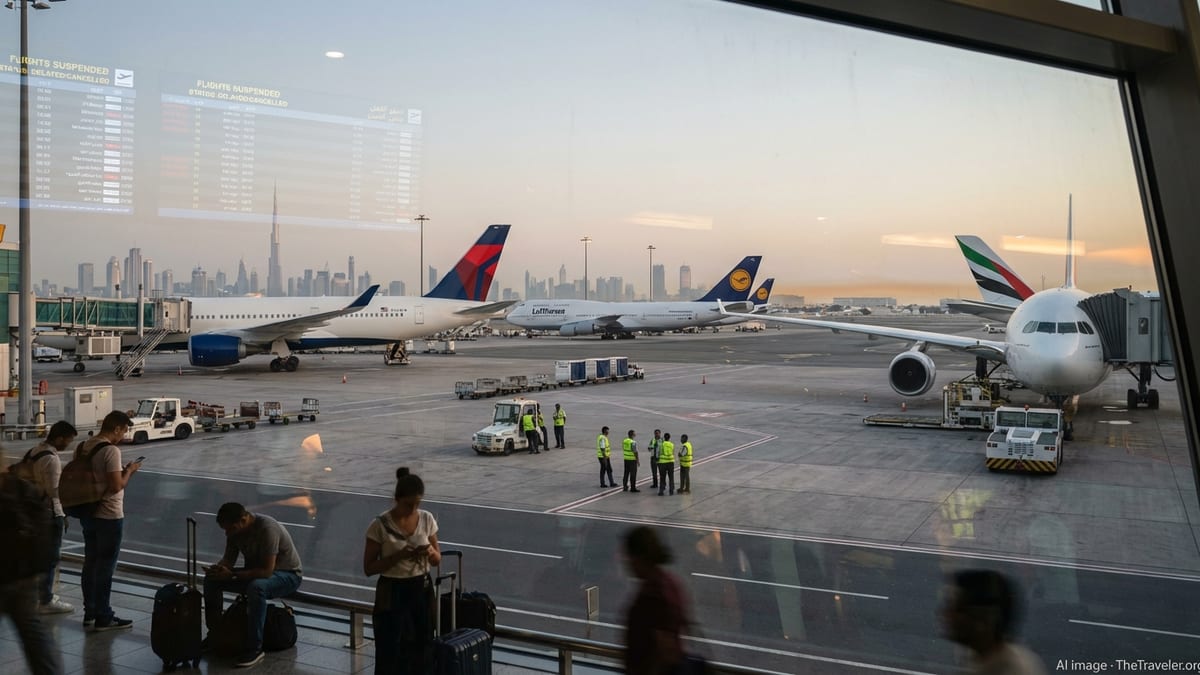
Sudden Wave of Cancellations Leaves Travelers Stranded
Recent days have seen a sharp spike in disruptions across the US air network, with publicly available flight-tracking data showing hundreds of cancellations and several thousand delays nationwide on June 1, 2026 alone. Reports indicate that major carriers including American, Delta, United and a cluster of regional affiliates were forced to scrub flights and significantly slow operations, leaving passengers facing extensive queues, missed connections and unexpected overnight stays at airports.
Flight statistics published by tracking services show that the pattern of disruption has continued into early June, with daily tallies of cancellations remaining in the hundreds and delays in the thousands across US airports. On June 6, live data continued to show hundreds of flights canceled globally, with US airports accounting for a substantial share. For many travelers, particularly those attempting tight connections through major hubs, even a single canceled flight has cascaded into multi-day itinerary overhauls.
Travel advocacy groups and passenger rights platforms report that the June 1 breakdown was one of the most disruptive single days so far in 2026 outside of major winter storms, describing a “brutal” mix of cancellations and delays that effectively paralyzed parts of the US network for much of the day. The episode has renewed scrutiny of how quickly domestic airlines and infrastructure can unravel when multiple stressors hit at once.
Weather, Power Failures and Ground Stops Collide
The latest travel chaos has not been driven by a single cause, but rather by overlapping vulnerabilities. Earlier in 2026, a powerful February blizzard led to the cancellation of more than 8,000 US flights over a two-day period, with northeast hubs bearing the brunt of the storm. The same system brought widespread power outages and local travel bans, underscoring how quickly normal operations can collapse when extreme weather aligns with already stretched airline schedules.
More recently, localized infrastructure failures have exposed additional weak points. In March, a significant power outage at Denver International Airport prompted carriers to issue travel waivers and adjust schedules as on-site systems and passenger processing were constrained. Around the same time, an equipment and air traffic control issue affecting facilities that oversee traffic at Washington-area airports led to ground stops at Baltimore/Washington, Reagan National and Dulles, temporarily halting departures and trapping aircraft and crews out of position.
Technology and systems outages have also played a role. In March, a brief but high-profile stoppage of JetBlue flights followed a short system outage that required a temporary nationwide ground stop for the airline. While that disruption lasted less than an hour, it demonstrated how even relatively minor glitches can trigger immediate and far-reaching operational knock-on effects, as aircraft and crews quickly fall out of place within already tight daily rotations.
Airlines Under Pressure as Summer Peak Begins
The summer of 2026 is shaping up as a critical test for US carriers. Industry commentary and operational updates point to strong demand, with airlines increasing schedules at major hubs while still contending with air traffic control staffing constraints, ongoing runway and radar work, and a complex global security environment. Federal data shows that the overall US cancellation rate so far this year remains comparatively low at around 1.3 percent, but headline-grabbing meltdowns are eroding traveler confidence.
Individual airlines have faced concentrated operational stress. Online tracking of daily performance has highlighted repeated clusters of cancellations at specific carriers on certain days in May and early June, particularly at large connecting hubs. Discussion in aviation and traveler forums attributes some of the volatility to crew scheduling challenges, technology upgrades and the fine balance between aggressive capacity growth and resilience against disruptions.
Route reshuffling is adding another layer of uncertainty. Schedule filings show that JetBlue, for instance, is planning to discontinue several routes from July 2026, including multiple services from Newark. While these are not sudden cancellations on the scale seen in major meltdowns, they illustrate how carriers are constantly adjusting networks in response to cost pressures, regulatory limits at congested airports and changing demand, leaving some travelers with fewer nonstop options and higher exposure to missed connections at alternative hubs.
Regulators Emphasize Capacity Limits and Safety Constraints
Federal aviation planners are simultaneously trying to keep the system operating smoothly while imposing caps where necessary. Orders limiting arrivals and departures at Newark Liberty International Airport have been extended through late October 2026, reflecting runway construction and air traffic control constraints that have required slower flows of traffic into one of the busiest gateways in the country. Policy documents indicate that authorities are also considering further measures at other heavily used airports if demand continues to rise faster than controller staffing and infrastructure.
Daily traffic outlooks published by the Federal Aviation Administration highlight how often ground delays and potential ground stops are now built into planning at key hubs such as Denver, Miami, Houston and major New York-area airports. These tools are designed to keep overall safety margins intact, but they also mean that even routine afternoon thunderstorms can translate into extended holding patterns, airport congestion and eventual cancellations when the system has no slack left.
At the same time, recent general statements by federal transportation officials stress that weather remains the dominant factor behind delays and cancellations nationwide, even as attention focuses on infrastructure and staffing. Publicly available information notes that the reliability of national airspace equipment remains high, but that any outage or major storm can still force widespread rerouting, reduced capacity and rapid schedule thinning, especially during already crowded holiday or event periods.
What Passengers Can Expect in the Weeks Ahead
With the official start of the peak summer travel season approaching, analysts and passenger advocates warn that the type of mass disruption seen on June 1 could reappear whenever severe storms, power issues or technology failures intersect with already heavy schedules. Experiences shared by travelers after the February blizzard, Denver outage and Washington-area ground stops point to long security and customer service lines, difficulty rebooking, and challenges in securing hotel rooms and meal vouchers when airports are overwhelmed.
Guides prepared by consumer organizations recommend that travelers monitor flight status frequently, build additional buffer time into connections, and pay close attention to alerts from both airlines and airports, particularly when flying through major hubs that are prone to summer thunderstorms or are subject to known capacity constraints. Some platforms advising affected passengers after the June 1 disruption have emphasized the importance of written confirmation of disruption details, which may be necessary for compensation claims or travel insurance.
For now, live data shows the system still experiencing daily strain, with hundreds of cancellations and thousands of delays continuing to dot the national map. While most flights are operating as scheduled, the recent wave of incidents has highlighted how quickly US air travel can shift from routine to gridlock, leaving passengers feeling that even a single failure in weather, infrastructure or technology can spiral into a terrifying level of paralysis across the network.