


More news on this day
Flybondi passengers across Argentina and Brazil faced another difficult travel day as five cancellations and multiple delays at Buenos Aires’ Jorge Newbery Airport disrupted connections to major hubs including Córdoba and São Paulo, according to live flight-tracking boards and local media reports on Tuesday.
Get the latest news straight to your inbox!
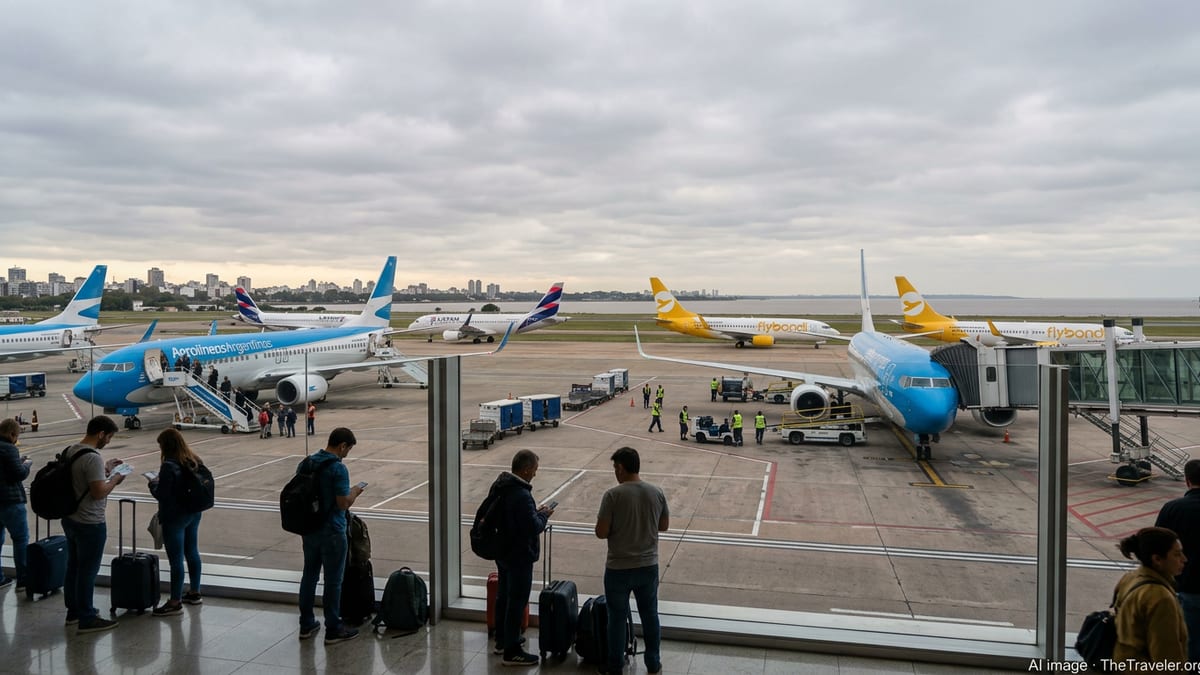
Operational Strain at Aeroparque Hits Low Cost Carrier Hard
Jorge Newbery Airport, known locally as Aeroparque, has been coping with a new wave of irregular operations in early June, with more than 40 delays and several cancellations reported across domestic and regional flights. Within that broader disruption, Flybondi’s program on Tuesday included at least five cancellations and a series of late departures, reducing options for budget-conscious travelers who rely on the carrier’s dense schedule from the city airport.
Publicly available information shows that the latest problems unfolded across the morning and afternoon banks of flights, when Aeroparque typically handles high volumes of departures to key Argentine cities. With Flybondi operating a reduced fleet in recent weeks, each grounded aircraft has an outsized effect on the day’s rotations, making it more difficult to recover from even short delays.
Flight-status boards indicated that some Flybondi services from Aeroparque never left the gate, while others departed well behind schedule after inbound aircraft arrived late or required additional checks. The resulting bottleneck left passengers waiting in crowded departure areas as crews and ground handlers attempted to re-sequence aircraft and rebook disrupted travelers where seats were available.
The pattern fits into a wider reliability challenge for the airline. Recent coverage in Argentine media has highlighted a sharp increase in cancellations and delays attributed to Flybondi over the past year, as the ultra low cost carrier adjusts its network and staffing in response to financial pressures and fleet constraints.
Key Domestic Link Between Buenos Aires and Córdoba Disrupted
Among the routes most affected by Tuesday’s disruptions was the busy corridor between Buenos Aires and Córdoba, a trunk link in Argentina’s domestic network. Aeroparque serves as a primary hub for flights to the central city, and Flybondi typically markets multiple daily frequencies on the pairing aimed at both business and leisure travelers.
Reports from flight-tracking platforms and local aviation observers indicated that at least one Buenos Aires to Córdoba service was cancelled outright, with another heavily delayed, triggering knock-on effects for return sectors later in the day. When an early rotation fails to depart on time, subsequent flights using the same aircraft can fall progressively further behind schedule, amplifying the impact on passengers who may be connecting onward or attempting to complete same-day trips.
Travelers on the Córdoba route have already been reporting longer-than-usual journey times in recent weeks as airlines contend with operational challenges and occasional weather constraints. Tuesday’s events extended those frustrations, with some passengers facing rebookings onto evening departures or alternative carriers, while others opted to adjust plans and travel on later dates.
For Argentina’s second city, reductions or interruptions in service from Aeroparque can have economic implications beyond tourism, affecting corporate travel, government movements and visits to the region’s universities and industrial hubs. Each cancelled flight removes a significant number of available seats from a route that typically registers strong demand year-round.
Regional Services to São Paulo Suffer Knock-on Effects
The wave of Flybondi disruptions at Aeroparque also reverberated across the Río de la Plata and beyond, touching regional services to São Paulo, one of South America’s busiest international aviation markets. Buenos Aires to São Paulo flights link two major financial and tourism centers, and low cost options have become increasingly important for price-sensitive travelers and small businesses shuttling between Argentina and Brazil.
According to publicly available schedules, Flybondi typically operates Aeroparque departures to São Paulo’s Guarulhos International Airport. When multiple Aeroparque sectors are delayed or cancelled, aircraft and crews intended for Brazil-bound flights can be left out of position, creating a risk of late departures, shortened turnaround times, or last-minute cancellations on the cross-border leg.
On Tuesday, at least one Flybondi service connecting Buenos Aires and São Paulo experienced a substantial delay attributed to the earlier operational bottleneck at Aeroparque. Longer waits at check-in and boarding were reported as ground staff processed disrupted itineraries and accommodated passengers from scrubbed domestic segments where possible.
Regional travelers already face a complex landscape on the Argentina–Brazil corridor, with varying baggage rules, fare conditions and service standards across carriers. Additional uncertainty around departure times and same-day connections adds another layer of complexity, encouraging some passengers to plan longer connection windows or choose airlines perceived as more resilient to day-of-operations disruptions.
Chronic Reliability Concerns Put Flybondi Under Scrutiny
Tuesday’s cancellations and delays did not occur in isolation. Over recent months, Flybondi has been at the center of mounting criticism from travelers and labor groups as reports of large numbers of cancellations and delayed flights accumulated. Local press coverage, citing industry data, has described a pattern of operational strain, including days when the airline operated with as few as one or two active aircraft from Aeroparque.
Industry analyses published in Argentine outlets indicate that, between mid-2025 and mid-2026, Flybondi logged thousands of cancellations, affecting several hundred thousand passengers across its network. Observers have linked the difficulties to fleet reductions, ongoing maintenance needs and financial restructuring that included temporary staff suspensions and route adjustments.
The situation has prompted the emergence of online tools and informal trackers that attempt to monitor Flybondi’s on-time performance and historical irregularities route by route. These publicly accessible dashboards, combined with frequent traveler reports on social media, have helped build a detailed picture of reliability on sectors such as Aeroparque to Córdoba and Aeroparque to various Patagonian cities.
While operational data show that all airlines in Argentina occasionally face disruptions related to weather, air traffic control constraints or labor actions, Flybondi’s figures have drawn particular attention given its role as a prominent low cost option and hub carrier at Aeroparque. For travelers, the main concern centers on the predictability of getting from point A to point B on the scheduled day, especially when alternative options are limited or significantly more expensive.
What Travelers Can Expect in the Coming Weeks
The latest disruptions at Jorge Newbery Airport arrive as Argentine aviation braces for additional operational challenges over the coming months. Separate from Flybondi’s internal situation, Aeroparque itself is set to undergo maintenance-related closures later in the year, with advance warnings that several days of shutdown could affect hundreds of flights and tens of thousands of passengers.
For now, publicly available schedules suggest that Flybondi will continue operating a thinner program from Aeroparque compared with earlier periods, increasing the likelihood that any individual aircraft issue or external disruption may cascade quickly across its network. Travelers booking domestic or regional trips that rely on tight connections through Buenos Aires may wish to allow longer buffers or consider itineraries that minimize same-day transfers between multiple flights.
Consumer advocates in Argentina have been reminding passengers that local regulations provide for assistance, rebooking and, in some cases, compensation when flights are cancelled or heavily delayed. However, experiences shared publicly show that securing refunds or alternative arrangements can take time, particularly when call centers and customer-service channels are under strain.
As Tuesday’s five cancellations and numerous delays demonstrate, the combination of a constrained fleet, heavy reliance on a single hub and broader congestion at Aeroparque can quickly translate into a difficult travel day for Flybondi customers. With Argentina’s winter travel period approaching, many observers will be watching closely to see whether the carrier can stabilize its operation and restore confidence on key routes linking Buenos Aires with Córdoba, São Paulo and other major destinations.