


More news on this day
Travelers across Brazil faced a difficult start to the week as GOL Linhas, Azul Brazilian Airlines, and EuroAtlantic Airways grounded six flights and reported multiple delays on Tuesday, disrupting some of the country’s busiest routes through São Paulo and Campinas.
Get the latest news straight to your inbox!
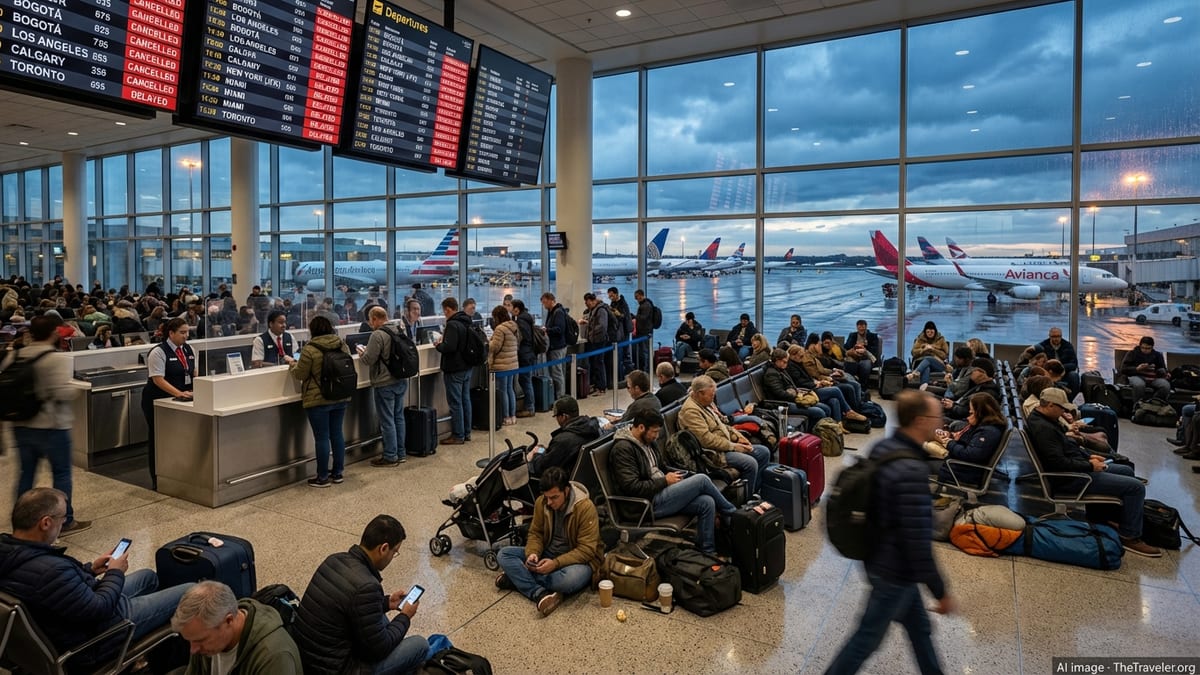
Groundings Ripple Across São Paulo and Campinas
According to publicly available flight tracking data and local media coverage for June 9, six flights operated by a mix of Brazilian and European carriers, including GOL Linhas, Azul Brazilian Airlines, and EuroAtlantic Airways, were grounded across the São Paulo airspace. The disruptions were concentrated at São Paulo’s Congonhas and Guarulhos airports, along with Viracopos International Airport in Campinas, which together form the backbone of Brazil’s domestic and regional air network.
Reports indicate that the grounded flights involved both domestic and international services, affecting connections between São Paulo and major Brazilian cities such as Brasília, Salvador, Porto Alegre, and Natal, as well as longer haul links to North America and Europe routed through Campinas and Guarulhos. At Congonhas alone, independent travel coverage cited six cancellations and around 150 delays on Tuesday, underscoring the scale of the operational strain on carriers such as GOL and Azul.
Azul’s operations from Viracopos, a key hub for the airline, were also affected. In recent days, local news outlets highlighted a technical incident involving an Azul flight to Orlando that was forced to return to Campinas, illustrating how equipment or routing issues can quickly cascade into network-wide delays when schedules are tightly timed.
For EuroAtlantic Airways, which typically operates long haul charter and wet lease services for other carriers, the grounding of selected flights removed essential capacity on certain international corridors. The combined impact of suspended services from all three airlines reduced options for travelers trying to move through Brazil’s largest metropolitan region and onward to overseas destinations.
Congonhas and Guarulhos See Heavy Delays
São Paulo’s inner city Congonhas Airport, a crucial domestic hub, experienced some of the most visible knock-on effects. Travel industry monitoring sites reported that by midday Tuesday, Congonhas had registered approximately 150 delayed flights and six cancellations, disrupting a wide range of services primarily operated by LATAM, GOL, and Azul. With limited runway capacity and strict operating hours, even short interruptions at Congonhas can lead to extended queues for takeoff and landing.
At Guarulhos, the region’s main international gateway, the pattern was similar but more dispersed across terminals. Published flight data showed a series of prolonged delays on routes linking São Paulo with Brazil’s Northeast, including services such as GOL’s Natal to Guarulhos rotation, as aircraft and crews were repositioned to cope with earlier disruptions. Some departures left significantly behind schedule, forcing passengers to rebook missed connections to onward international flights.
The broader São Paulo airspace has recently seen interruptions tied to technical issues in approach control, as reflected in local aviation discussions and earlier media reports. While the immediate cause of Tuesday’s disruptions was not tied to a single publicly confirmed event, observers noted that any reduction in air traffic management capacity or runway throughput at Guarulhos or Congonhas tends to reverberate quickly across airline networks that operate near capacity during peak travel periods.
As the day progressed, schedules gradually stabilized, but residual delays persisted into the evening wave of departures and arrivals. Travelers with late day flights reported adjusted boarding times and aircraft swaps as airlines attempted to restore rotations and avoid overnight stranding of crews and planes away from their home bases.
Campinas Hub Under Pressure at Viracopos
In Campinas, Viracopos International Airport, Azul’s primary hub, also came under pressure as delays at São Paulo’s city airports fed into the broader regional network. Although Viracopos continued to operate, disruptions to aircraft rotations and the need for unscheduled maintenance checks contributed to irregular timings on some departures and arrivals.
Azul’s long haul services from Viracopos, including transatlantic routes to destinations like Lisbon and North America, are particularly sensitive to schedule slippage. Publicly available performance data show that these flights already contend with average delays measured in dozens of minutes, and any additional constraint in the system can push them beyond their planned departure windows, reducing flexibility for subsequent sectors.
Viracopos airport management had previously signaled preparations for elevated passenger volumes during early June holidays, highlighting the importance of smooth coordination with airlines based there. When multiple carriers, including Azul and wet lease operators such as EuroAtlantic, face concurrent operational challenges, the margin to absorb disruptions narrows, increasing the likelihood of passengers encountering missed connections or extended waits in the terminal.
Despite the strain, the Campinas hub remained a viable alternative routing point for some travelers able to shift between São Paulo’s three major airports. However, ground transfers between Viracopos, Guarulhos, and Congonhas can be lengthy, and on a day with rolling delays, many passengers opted to remain at their original departure points and wait out rebooked flights.
Passenger Experience and Rebooking Challenges
For travelers booked on GOL, Azul, and EuroAtlantic services on June 9, the immediate impact was a mix of last minute schedule changes, gate holds, and, in some cases, outright cancellations. Passengers connecting through São Paulo and Campinas, particularly those with separate tickets across different airline groups, faced the highest risk of missed onward flights due to limited rebooking protections.
Publicly available travel advisories and consumer guidance emphasize that Brazilian aviation regulations provide specific protections when disruptions stem from factors within an airline’s control, including rebooking options, meal vouchers, and lodging under certain conditions. When delays are driven by airspace restrictions or weather, carriers typically retain more flexibility, but many still offer voluntary rebooking solutions to preserve customer goodwill and decongest crowded terminals.
On Tuesday, aviation forums and travel discussion boards began to fill with reports of extended queues at customer service counters in Guarulhos and Congonhas, as passengers sought alternative flights on later departures operated by the same carriers or by partners. Some travelers reportedly chose to purchase new tickets on competing airlines to avoid overnight stays, particularly when critical international connections were at stake.
As the day’s operations continued, airlines incrementally rebuilt their schedules, but stranded passengers faced the possibility that remaining seats on evening and next day flights would be limited, especially on Brazil’s busiest corridors between São Paulo, Brasília, Belo Horizonte, and the major coastal capitals.
What Travelers Should Watch in the Coming Days
While Tuesday’s six grounded flights represent a small fraction of the total daily operations in São Paulo and Campinas, the pattern of cascading delays underscores the fragility of heavily utilized air corridors in Brazil’s southeast. Travel analysts note that even modest interruptions can lead to several days of uneven performance as airlines work to reposition aircraft and reset crew schedules.
In the short term, publicly available flight data suggest that carriers such as GOL and Azul are attempting to maintain full or near full schedules at Congonhas, Guarulhos, and Viracopos. However, travelers booked through these hubs over the next several days may continue to experience minor timing adjustments as airlines clear residual backlogs and complete maintenance checks on aircraft that were taken out of rotation.
Consumer advocates typically recommend that passengers monitor real time flight status through airline channels and airport information boards, build extra time into itineraries involving tight domestic to international connections, and keep essential items in carry on luggage in case checked bags are delayed on misaligned aircraft. For travelers transiting between São Paulo’s three airports, allowing generous buffer time for ground transfers remains advisable, particularly during peak traffic hours.
The latest disruptions at São Paulo and Campinas add to a series of recent operational challenges in the region’s airspace, reinforcing the importance for travelers of flexible planning and close monitoring of flight information whenever routing through Brazil’s busiest aviation hubs.