

More news on this day
Saudi Arabia’s domestic aviation shake up is accelerating as low cost carrier flynas prepares to open a full operations base in Al Qassim, transforming Prince Naif bin Abdulaziz International Airport from a largely regional gateway into a launch pad for new routes and emerging adventure tourism across the kingdom and beyond.
Get the latest news straight to your inbox!
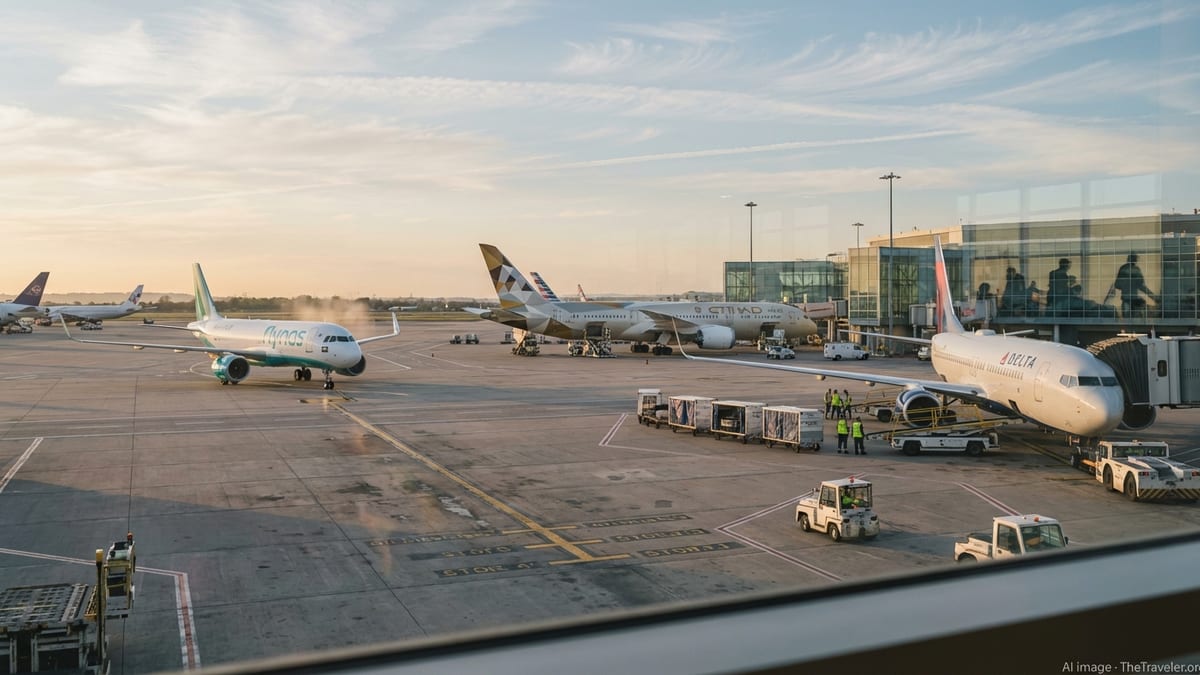
Sixth flynas hub signals a new phase in Saudi air connectivity
Publicly available announcements show that flynas will establish its sixth Saudi hub at Prince Naif bin Abdulaziz International Airport in Al Qassim from July 2026, in partnership with airport operator Cluster2. The move makes flynas the first Saudi carrier to operate from six distinct bases nationwide, underlining the scale of the network build out now under way.
The new Al Qassim hub will open with at least five routes, including international services to Istanbul and Trabzon in Turkey and to Cairo via Sphinx International Airport, alongside domestic links to Abha in the south and Dammam on the Gulf coast. Industry route trackers indicate that frequencies are expected to ramp up as the base matures, positioning Al Qassim as a mid kingdom alternative to Riyadh and Jeddah for both outbound residents and inbound visitors.
According to aviation data summarised by Saudi regulators, the kingdom handled around 140 million passengers in 2025, with air traffic growth outpacing regional averages. Within this context, carriers such as flynas are being encouraged to open new points of sale and diversify away from the traditional coastal and pilgrimage gateways, part of a broader strategy to spread economic benefits more evenly across Saudi regions.
Al Qassim’s elevation to hub status follows a sequence of base launches by flynas in cities including Abha and Dammam, highlighting the airline’s role as a network builder in second tier markets. Analysts view the latest expansion as a test case for how far low cost point to point connectivity can push demand in areas that have historically seen limited international service.
Al Qassim’s airport upgrades underpin the new role
The shift from regional outpost to growth platform would be difficult without parallel investment in Prince Naif bin Abdulaziz International Airport. Recent tender documents and local business coverage describe a multi stage modernisation program designed to increase capacity, attract private capital and reposition the airport as a direct international gateway for central Saudi Arabia.
These plans, which include terminal enhancements and airfield improvements, are aligned with a national push to open regional airport concessions to global and domestic investors. Sector analysis notes that Qassim Airport was among the facilities marketed to infrastructure funds in early 2026, signalling confidence that passenger volumes will rise as new airlines and routes are deployed.
Developers argue that improving airports in inland regions is essential to shifting Saudi travel patterns beyond a small number of megahubs. For Al Qassim, enhanced facilities and a resident low cost carrier could help convert the airport from a primarily outbound market to a two way gateway serving both local communities and incoming tourists drawn by the region’s heritage and outdoor landscapes.
Industry observers also point out that upgraded regional airports strengthen resilience across the network, providing alternative routings during peak seasons and major events. As Saudi Arabia prepares for a calendar filled with conferences, sporting events and leisure openings, redundancy and flexibility are becoming central considerations in aviation planning.
Tourism surge turns Al Qassim into an adventure gateway
Tourism figures for Al Qassim indicate that the region is already on the radar of domestic and international visitors. Recent data from the Saudi tourism authorities show millions of trips being recorded annually, supported by programs that promote hands on experiences, nature excursions and engagement with local heritage sites.
The area, known for its date farms, desert plateaus and traditional villages, is being packaged as an alternative to the better known Red Sea and northwestern giga projects. Travel operators highlight opportunities for trekking, camping and eco focused stays, while cultural festivals and food markets provide additional draws during the cooler months.
With flynas fielding new international links from Al Qassim, travel planners expect the region to become a more practical entry point for visitors targeting inland adventure itineraries. Direct flights from Istanbul, Trabzon and Cairo will reduce the need for travellers to route through Riyadh or Jeddah and then connect on domestic legs, cutting journey times and opening the door to short break tourism.
Domestic connectivity to Abha and Dammam is likely to support multi stop trips that combine highland scenery, coastal experiences and central desert exploration in a single itinerary. Market watchers suggest that such circuit style travel could become a hallmark of Saudi Arabia’s next tourism phase as infrastructure fills in between major anchor projects.
Low cost model accelerates Saudi Arabia’s Vision 2030 aviation goals
The Al Qassim base announcement lands against the backdrop of Saudi Arabia’s Vision 2030 aviation program, which targets more than 300 million passengers a year and significantly higher tourism contribution to national GDP over the next decade. Policy analysis emphasises that achieving these figures depends on rapid expansion by low cost carriers able to stimulate new demand with competitive fares.
Saudi Arabia has committed tens of billions of dollars to fleet orders, airport upgrades and the launch of new airlines, while encouraging private capital and public private partnerships across the sector. Reports from international consultancies describe the kingdom as one of the world’s fastest growing aviation markets, with network planners looking beyond the main gateways to identify underserved cities that can support new bases.
flynas, which reports a growing share of both domestic and international traffic, is central to that effort. By anchoring aircraft and crews in Al Qassim, the airline can schedule early morning departures and late night returns tailored to local demand, something that is harder to achieve from distant hubs. The result can be more convenient options for residents and better utilisation of airport infrastructure outside peak times.
Observers caution, however, that the success of the new hub will depend on factors including aircraft deliveries, the availability of skilled personnel and the pace of airport development. Capacity bottlenecks and supply chain challenges have affected carriers worldwide, and Saudi Arabia is not immune to these pressures as it scales up its ambition.
Regional competition for hubs and routes is intensifying
Al Qassim’s rise comes as other Saudi cities compete for attention and investment. Madinah, for example, is seeing low cost carrier expansions that link it to secondary cities such as Qassim and Jazan, while airports in the north and east of the country have undergone capacity upgrades to handle more traffic.
Within this evolving map, Al Qassim’s central location and access to major road networks give it a potential advantage in attracting passengers from surrounding provinces. If the flynas hub succeeds, analysts expect other airlines to explore complementary services, including feeder routes and seasonal charters tied to festivals and events.
At the same time, the proliferation of hubs could reshape how Saudis and expatriates move around the country. Instead of routing through Riyadh or Jeddah, travellers may increasingly rely on direct point to point links between mid sized cities, aligning with a global trend toward decentralised air networks enabled by efficient narrow body aircraft.
For now, Al Qassim is at the forefront of that experiment. The launch of flynas operations from the heart of the kingdom will be closely watched by tourism planners, investors and rival carriers seeking clues about where Saudi Arabia’s travel revolution will head next.