


More news on this day
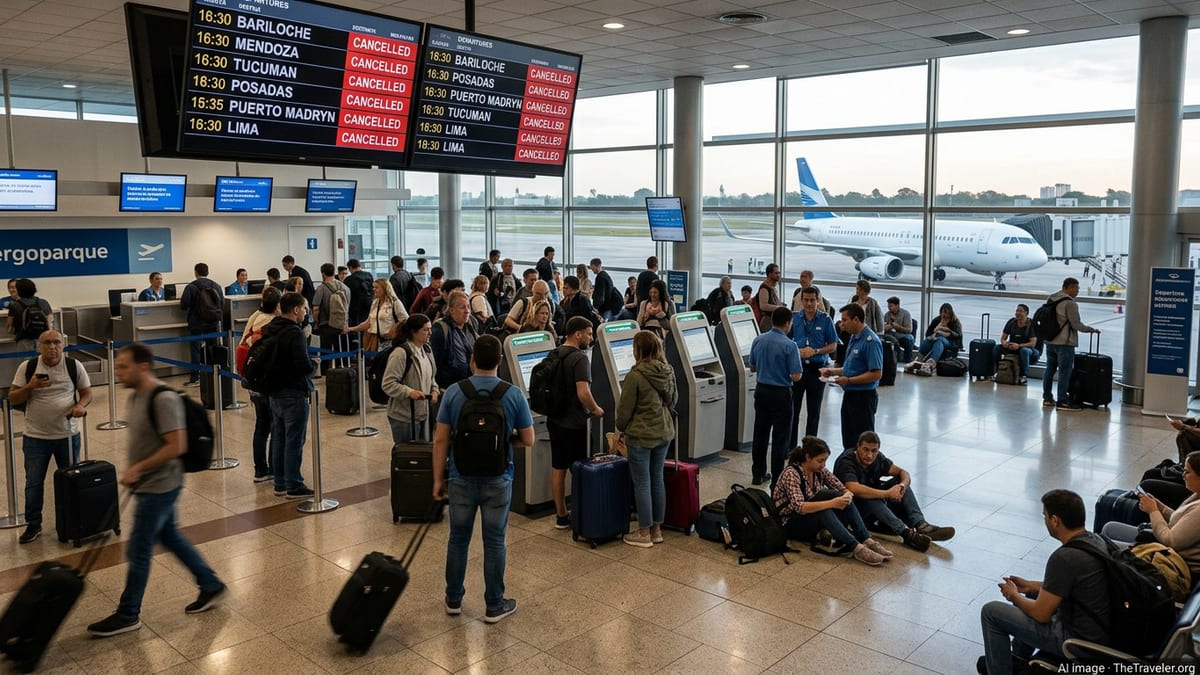
Hundreds of travellers were left stranded in Buenos Aires on June 12 and 13 after a combination of dense morning fog and mounting operational pressures triggered at least 37 delays and 5 cancellations across major carriers Flybondi, JetSMART, Aerolineas Argentinas and others, disrupting connections to key domestic and regional destinations including Santiago del Estero, Posadas, Rio de Janeiro and Sao Paulo.
Get the latest news straight to your inbox!
Weather Disruption Compounds a Fragile Flight Network
Publicly available information from local media and airport monitoring platforms indicates that operations at Buenos Aires’ main airports were heavily affected on June 12 by thick fog that reduced visibility and forced some inbound flights to divert to alternative airports. The disruption rippled through the tightly scheduled domestic and regional network, causing a wave of late departures and missed connections.
Coverage from Argentine news outlets describes flights being delayed, diverted or held on the ground through the morning peak, with knock-on effects that extended into the afternoon and evening. Services to northern destinations such as Santiago del Estero and popular leisure routes like Iguazu and Bariloche were among those affected, while some aircraft arriving from overseas were forced to wait for conditions to improve before landing.
In these circumstances, carriers with smaller fleets and limited spare aircraft, including low cost operators, are particularly exposed. A delay or diversion early in the day can cascade through multiple later rotations, quickly increasing the number of affected flights even if the immediate weather disturbance eases.
The latest Buenos Aires disruption highlights how sensitive Argentina’s recovering air network remains to operational shocks. With passenger numbers rising into the southern winter holiday period, even short-lived weather events can leave airports struggling to absorb delays, especially when combined with existing capacity and reliability challenges at some airlines.
Flybondi, JetSMART and Aerolineas Argentinas Among Worst Hit
Flight-tracking dashboards for Buenos Aires’ Aeroparque Jorge Newbery and Ezeiza International show a cluster of delayed departures and arrivals involving Flybondi, JetSMART and Aerolineas Argentinas services on June 12 and 13. Routes to and from Posadas, Santiago del Estero, Rio de Janeiro and Sao Paulo recorded some of the longest waits, with several departures leaving hours behind schedule and a handful cancelled outright.
Publicly accessible historical data for Flybondi flights linking Buenos Aires with Santiago del Estero, Posadas and Rio de Janeiro shows these routes operating with narrow turnaround windows. When an early sector is disrupted, later flights quickly fall behind schedule. Aviation statistics published in recent months also show that Flybondi has been under pressure, with a reduced available fleet and punctuality levels trailing those of its competitors.
JetSMART and Aerolineas Argentinas, both of which also operate key regional connections from Buenos Aires to Brazilian gateways, saw selected services affected as the fog pushed back departure banks and complicated crew and aircraft rotations. Between the three carriers and several smaller operators, the cumulative total reached at least 37 delayed flights and 5 cancellations across the two days, according to compilations based on live boards and local press tallies.
These figures, while modest in the context of total daily movements, were concentrated on a limited number of high‑demand routes. As a result, the impact on travellers attempting to reach provincial Argentine cities or connect to Brazil was disproportionately severe.
Passengers Face Long Queues, Missed Events and Extra Costs
Reports shared on social media, traveller forums and local news comment sections describe long queues at check‑in counters and boarding gates in both Aeroparque and Ezeiza, as passengers sought information or rebooking options. Many travellers spoke of missed family events, lost hotel nights and disrupted work plans as they waited for updates.
Some Flybondi customers reported receiving short‑notice cancellation messages citing operational reasons, followed by difficulties securing timely alternatives. Similar frustrations have been voiced in previous months by passengers using the carrier on domestic and regional routes from Buenos Aires, contributing to a perception among some frequent flyers that low fares come with a heightened risk of disruption.
JetSMART and Aerolineas Argentinas passengers also faced extended waits, though publicly available punctuality data for recent months suggests that both carriers generally record higher on‑time performance than their low cost rival. In the context of the June 12 and 13 fog event, however, travellers across all airlines were left comparing experiences and weighing whether higher fares or more flexible schedules might offer greater reliability in future.
The immediate financial impact fell heaviest on passengers who had to arrange last‑minute hotel stays, pay change fees on nonrefundable reservations or purchase new tickets to avoid missing crucial commitments. With limited statutory compensation available in Argentina relative to some other markets, many travellers turned to public platforms mainly for advice and to share experiences.
Operational Strain and Regulatory Scrutiny in Argentina’s Aviation Sector
The latest disruption in Buenos Aires comes against a backdrop of growing scrutiny of airline reliability in Argentina. In recent months, publicly available reports have highlighted Flybondi’s elevated cancellation rates and the strain on its fleet, with several aircraft reportedly out of service at various points and on‑time performance significantly below industry averages.
JetSMART and Aerolineas Argentinas, while generally viewed as more stable operators, have also faced challenges managing demand spikes and weather‑related disruptions in a market that has seen rapid changes in capacity and ownership. Statistical bulletins from Argentine aviation authorities for early 2026 show rising passenger numbers on trunk routes from Buenos Aires to provincial capitals, increasing pressure on infrastructure and carrier operations.
Travel industry analysts note that, in such an environment, even routine fog, maintenance windows or staffing issues can quickly snowball into wider disruption. For travellers, that means carefully checking flight status on the day of departure, allowing extra time for connections and considering whether travel insurance or flexible fares provide sufficient protection when schedules unravel.
As southern winter approaches and leisure demand builds for destinations across Argentina and neighboring Brazil, the episode in Buenos Aires underscores the importance of robust contingency planning by airlines and clear, timely information for passengers. For now, travellers heading to or through the Argentine capital are advised, by publicly available advisories and travel forums, to monitor conditions closely and be prepared for potential last‑minute changes.