


More news on this day
Tourists planning trips to Riyadh and other Saudi Arabian gateways are facing a major travel warning as missile strikes on airports, tightened flight permissions and new airline suspensions disrupt access to one of the region’s fastest-growing tourism markets.
Get the latest news straight to your inbox!
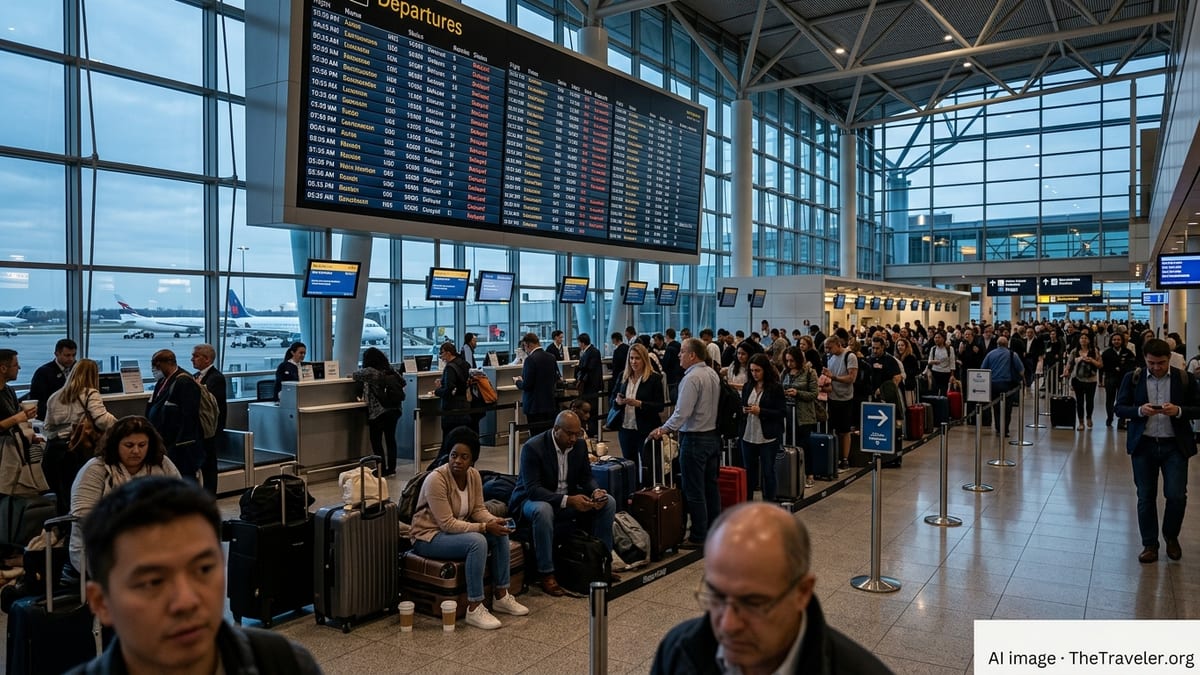
Missile strikes trigger severe disruption at Riyadh hub
Publicly available reporting indicates that Riyadh’s King Khalid International Airport has been hit by multiple missile and drone attacks since early October 2026, attributed to Yemen’s Houthi movement. Coverage in regional and international outlets describes casualties at the airport and visible damage to parts of the airfield infrastructure, placing one of Saudi Arabia’s key aviation gateways under renewed scrutiny from airlines and risk analysts.
Travel industry reports compiled over the past week state that the attacks prompted an immediate wave of flight cancellations and diversions affecting both regional and long haul services. Flights that continued to operate were subject to extended ground delays and security checks, while some carriers opted to route aircraft through alternative hubs in the Gulf to avoid Riyadh airspace where possible.
Specialist aviation trackers referenced by travel dashboards show that while domestic flights within Saudi Arabia are operating on a reduced schedule, international frequencies to and from Riyadh have fallen sharply since the October incidents. Analysts note that this pattern mirrors earlier episodes of airport targeting in the wider Middle East, where carriers initially suspend operations for several weeks before gradually restoring a skeleton schedule once risk assessments are updated.
Travel advisories compiled by consular services in multiple countries now flag the potential for further missile or drone activity around major Saudi transport hubs. Tourists are being advised to keep itineraries flexible, verify tickets directly with airlines and avoid relying on tight connections through Riyadh for the duration of the current security situation.
Airport bans, prior‑permission rules and airline suspensions
In the wake of the October and early November attacks, Saudi Arabia’s General Authority of Civil Aviation has introduced stringent controls on flights into Riyadh. According to travel alert dashboards that aggregate airline schedules and regulatory notices, most foreign carriers now require explicit prior permission before operating to King Khalid International, with many suspending their services entirely while the restrictions remain in place.
An overview of current disruptions published by aviation news sites lists a growing roster of airlines that have halted Riyadh flights. Reports indicate that carriers including European flag airlines, Gulf-based operators and several Asian and Philippine airlines have extended suspensions through dates ranging from mid to late November 2026, with at least one Asian carrier now blocking bookings to Riyadh until late January 2027.
The same disruption summaries note that services to Dammam and other Saudi airports have also been affected at various points following separate security incidents, although operations there appear closer to normal levels than at Riyadh. Even where airports remain technically open, schedules are subject to last minute changes as airlines adjust fleet plans or reroute aircraft to less exposed destinations.
These operational decisions are being taken against the backdrop of a renewed airspace bulletin from the European Union Aviation Safety Agency covering parts of the Gulf region through at least mid November 2026. The bulletin advises European carriers to avoid specific areas of Gulf waters because of elevated risks to civil aviation, contributing to longer routings and capacity constraints for flights that would ordinarily overfly the region.
Government travel advisories and worldwide caution
The airport attacks and subsequent flight bans are unfolding in a broader environment of heightened global travel alerts. A worldwide caution notice maintained on a United States government portal since July 2026 highlights the potential for security incidents, airspace closures and sudden airline schedule changes in parts of the Middle East, urging travelers to track airport operations closely when transiting the region.
National foreign ministries in North America, Europe and Asia have updated their country-specific pages for Saudi Arabia in recent months to reflect the increased risk around major transport hubs. While the precise wording varies, the advisories generally point to the threat of missile and drone activity, the possibility of further strikes on airports and the likelihood of unplanned route suspensions.
Separate advisories for neighboring Gulf states reference the EASA airspace bulletin and remind travelers that even destinations not directly affected by attacks may experience knock-on disruption. When airlines reroute to avoid sensitive corridors, flight times increase and aircraft may arrive out of position, which can cascade into delays and cancellations for services far from the original security hotspot.
Travel risk consultants quoted in public reports stress that advisories are not blanket bans on visiting the region but warnings about specific, elevated dangers that can affect aviation in particular. For tourists, the practical impact is greatest on itineraries that rely on Riyadh as a primary entry point or connecting hub, especially over the coming weeks while restrictions and airline suspensions remain in force.
Impact on tourists, airlines and local tourism plans
The timing of the latest airport attacks is especially disruptive for Saudi Arabia’s efforts to grow leisure tourism, which has expanded rapidly since the launch of tourist visas in 2019. Riyadh was marketed heavily as both a business gateway and a cultural destination, and winter 2026 was expected to see increased visitor numbers for concerts, festivals and sporting events.
Coverage in regional travel media indicates that several high profile events in and around the capital have already been postponed or cancelled in light of the security situation and flight disruption. Organizers are reported to be working with local authorities to reschedule dates or relocate programming to other Saudi cities less dependent on Riyadh as an air hub.
For airlines, the attacks and resulting bans compound a year already marked by volatile fuel prices and airspace limitations in other regions. Carriers that withdraw from Riyadh must decide whether to reassign aircraft to alternative markets or keep capacity in reserve until conditions stabilize. The fragmented response among different airlines means that some passengers still find limited options while others face complete route suspensions from their home country.
Local tourism operators, including hotels and tour companies, are responding by focusing more heavily on visitors arriving through Jeddah and other gateways that currently face fewer restrictions. However, industry analysts caution that as long as international headlines focus on missile strikes at airports, demand for city breaks and business travel to Riyadh is likely to soften, with ripple effects on employment and investment tied to the tourism sector.
What travelers should do if they have plans via Riyadh
Consumer advocacy groups and travel-rights organizations are using the current disruptions to remind passengers of key protections. Information published by European and North American regulators specifies that when flights are cancelled for security or airspace reasons, travelers are usually entitled to a refund of the unused ticket or rerouting at the earliest opportunity, although additional cash compensation may not apply under extraordinary circumstances rules.
Travel alerts compiled by independent websites emphasize the importance of obtaining written confirmation that any planned Riyadh flight is operating as scheduled, rather than relying on older booking emails. Given the fluid situation, some airlines are opening free change windows that allow date or routing changes without standard penalties, particularly for departures in November and early December 2026.
Risk advisories encourage travelers who have not yet departed to consider routing through alternative hubs in the region where more stable schedules are reported, even if that involves extra connections. Those with nonrefundable hotel and tour bookings are advised to review their travel insurance documents carefully to determine whether coverage includes security-related disruptions or only weather and technical delays.
For visitors already in Saudi Arabia, publicly available guidance recommends maintaining flexible return plans, monitoring local news in Arabic and English and registering with consular services where possible. While there is no indication that foreign tourists are being directly targeted, the concentration of attacks on aviation infrastructure means that outbound journeys may take longer to arrange and are more likely to change at short notice than under normal conditions.