

More news on this day
Fort Lauderdale–Hollywood International Airport is experiencing a fresh wave of operational turbulence as network adjustments and sudden cancellations from JetBlue, Delta Air Lines, and Southwest Airlines ripple across key routes to Atlanta, Nassau, and Bogotá, leaving travelers facing extended delays, missed connections, and rapidly shifting schedules.
Get the latest news straight to your inbox!
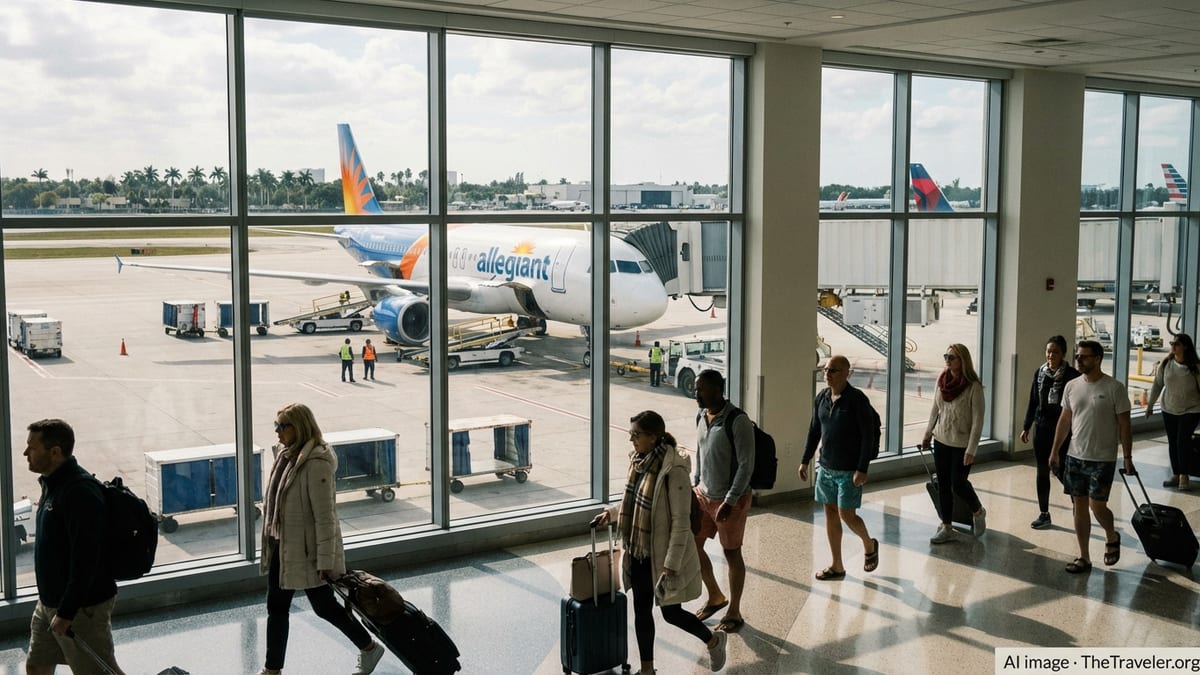
Fort Lauderdale Hit by a New Round of Network Turbulence
Recent scheduling data and public flight status information indicate that Fort Lauderdale–Hollywood International Airport has become a focal point of disruption in early summer 2026. A series of schedule trims, rolling delays, and day-of-travel cancellations involving JetBlue, Delta, and Southwest is reshaping what should be a peak travel period for South Florida.
Analysts tracking airline operations describe a pattern that looks less like a single-day meltdown and more like a sustained period of network stress. Airlines are still recalibrating after the shutdown and consolidation of capacity within the South Florida market, while also contending with weather disruptions, crew placement problems, and high demand on core domestic and Caribbean routes.
The result for travelers moving through Fort Lauderdale is a patchwork of altered departure times, swapped aircraft, and in some cases abrupt cancellations that are forcing rebookings through alternative hubs such as Miami, Orlando, and Atlanta. For those headed to regional gateways like Nassau or long–haul connections via Bogotá, the uncertainty is particularly acute.
JetBlue Rebuilds Fort Lauderdale While Shaving Other Flights
Publicly available information shows that JetBlue continues to position Fort Lauderdale as a central pillar of its 2026 network strategy, even as the carrier executes broader schedule cuts and targeted cancellations. Recent corporate updates describe Fort Lauderdale as JetBlue’s fastest-growing focus city, with new and resumed routes planned across the Caribbean and Latin America alongside a cap on basic economy fares for select city pairs serving South Florida.
At the same time, guidance documents and consumer advisories circulated in recent months highlight operational disruptions, system outages, and strategic cancellations across parts of JetBlue’s network. These materials emphasize that routes have been pruned and frequencies reduced in response to staffing constraints and aircraft availability, with Fort Lauderdale and Orlando emerging as major consolidation points.
For Fort Lauderdale passengers, the practical impact is a schedule that can appear robust on paper yet still be vulnerable to last-minute changes. Reports from flight-tracking platforms show several JetBlue departures in and out of Fort Lauderdale shifting within the operating day, with some services rerouted through alternative cities when aircraft and crew become misaligned. For travelers bound for Nassau or onward to Bogotá with JetBlue codeshares, that can translate into missed connections or forced overnight stays when irregular operations cascade across the system.
Delta’s Atlanta Hub Strains Fort Lauderdale and Bogotá Links
Delta’s role in the current disruption centers on the carrier’s heavy reliance on Atlanta as a connecting hub for Fort Lauderdale traffic and onward flights to Nassau and Bogotá. Recent operations bulletins and traveler guidance describe ongoing performance challenges linked to weather events, fueling constraints, and peak-season congestion at Atlanta, producing waves of delays and cancellations that ripple outward to Florida and Latin America.
Flight-status data for Delta’s Fort Lauderdale–Atlanta services in mid-June show a sequence of flights operating close to schedule interspersed with irregular operations and compensation prompts tied to prior-day disruptions. While some departures between Fort Lauderdale and Atlanta have been listed as en route or on time, consumer-facing materials about “today’s Delta flight disruptions” point to a wider pattern of rolling schedule changes across multiple hubs.
For passengers traveling from Fort Lauderdale to Bogotá, Delta’s Bogotá flights routed over Atlanta add another vulnerability. Real-time listings show regular operations on the core Atlanta–Bogotá service, but when an inbound Fort Lauderdale–Atlanta segment is delayed or cancelled, customers can find their South America connection broken with limited same-day alternatives. That combination of tightly timed connections and hub congestion has raised the risk of misconnects even on days when the long–haul flight departs on schedule.
Southwest Adjustments Add to Domestic Capacity Squeeze
Southwest’s presence in Fort Lauderdale remains a crucial component of domestic connectivity, particularly for travelers using South Florida as a transfer point to the Southeast and Midwest. Planning documents from airport and municipal authorities for the 2026–2027 period indicate that Southwest has been fine-tuning its network with a mix of added departures in high-demand markets and the discontinuation of select routes, including cuts from certain secondary airports earlier this month.
These shifts reduce redundancy for Fort Lauderdale passengers who might once have relied on Southwest as a fallback when other carriers cancelled flights. With fewer overlapping nonstop options on some domestic city pairs, any irregular operation on JetBlue or Delta can now be harder to work around, especially for travelers trying to reach Atlanta for connections or to reposition after a cancellation.
Travelers report that day-of-travel rebooking on Southwest at Fort Lauderdale has become more complex as schedule adjustments narrow the window for convenient alternatives. While the airline continues to advertise its flexible change policies, the underlying reduction in overlapping frequencies means that same-day recovery options are not as plentiful as they were before the most recent round of network changes.
Impact on Travelers to Atlanta, Nassau, and Bogotá
For Fort Lauderdale passengers heading to Atlanta, the convergence of schedule pruning, weather-sensitive hubs, and strong seasonal demand has translated into a higher risk of missed events and disrupted itineraries. Business travelers reliant on early-morning departures to reach Atlanta meetings and same-day returns report facing rolling delays and occasional last-minute flight swaps. When multiple carriers thin out their schedules on the same corridor, recovery options dwindle quickly.
Nassau-bound travelers face a different challenge. Fort Lauderdale is a key launch point for short-haul services into the Bahamas, but a combination of fuel availability concerns across parts of the Caribbean and targeted route adjustments has made the Nassau schedule more brittle. Flights that do operate often depart full, leaving few empty seats to absorb passengers from cancelled services. Travelers already in the islands can find themselves waiting an extra day for a seat back to South Florida after an operational cancellation.
On the Bogotá side, Fort Lauderdale’s role as a North American gateway into northern South America means that disruption can reverberate far beyond Florida. When outbound Fort Lauderdale flights are delayed or cancelled, passengers attempting to reach Bogotá via connections in Atlanta, Orlando, or other hubs can miss interline departures with limited alternative routings. This is particularly problematic for travelers with onward domestic connections within Colombia, where late arrivals may not be protected on separate tickets.
Consumer advocates note that in this environment, passengers departing Fort Lauderdale for Atlanta, Nassau, or Bogotá should build additional buffer time into itineraries, monitor flight status frequently on both airline and third-party platforms, and keep flexible rebooking options in mind. With the summer 2026 travel season still ramping up, the pattern of rolling disruptions suggests that Fort Lauderdale’s operational turbulence may persist, even on days when skies are clear and flights appear to be running close to schedule at first glance.