


More news on this day
Transcend Cruises is preparing to usher in a new chapter for Europe’s river cruise market as its first purpose built vessel, MS Connect, moves from the shipyard to commercial service on the Rhine and other key waterways.
Get the latest news straight to your inbox!
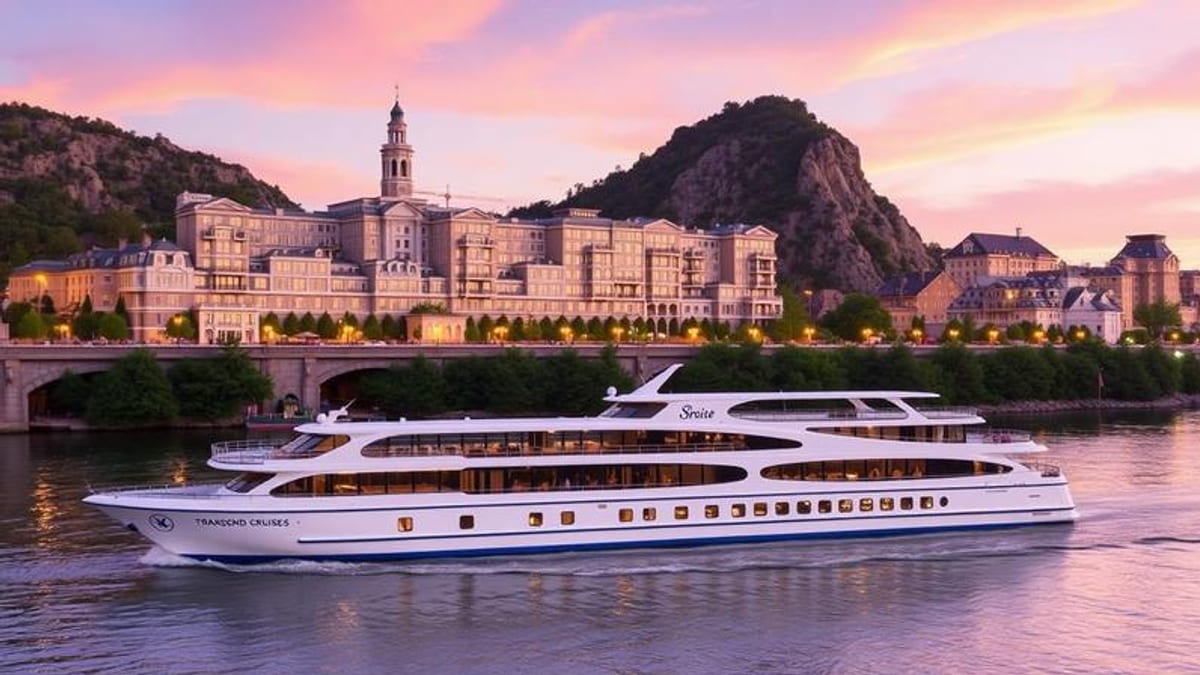
A purpose built ship for Europe’s charter market
MS Connect is the inaugural newbuild in Transcend Cruises’ fleet, marking a shift from operating refurbished tonnage to deploying a vessel designed from the keel up for charter and group travel on Europe’s rivers. Publicly available information indicates that the 135 meter ship has capacity for around 120 guests, a comparatively low passenger count for its size that allows for more generous public spaces and flexible interior layouts.
Industry coverage notes that Connect is intended primarily for full ship charters rather than traditional per cabin retail sales. The concept targets meeting planners, incentive groups, tour operators and private celebrations that want exclusive use of a river vessel but often struggle to align dates, layouts and onboard programming on standard ships. By starting with a charter only model, Transcend is positioning Connect as both a means of transportation and a customizable event venue on the water.
Reports from shipbuilding and cruise trade publications point to a delivery schedule that brings Connect into service for the main European summer season, with initial deployments on the Rhine. The ship is expected to sail a mix of itineraries tailored to group clients, including classic Rhine stretches between the Netherlands, Germany and Switzerland, with scope to expand to other river systems as demand develops.
Design focused on meetings, events and flexibility
What sets MS Connect apart from many contemporary river ships is the emphasis on multi purpose venues rather than a fixed set of lounges and bars. Renderings and technical descriptions highlight spaces such as The Forum, a two deck amphitheater style room created for presentations, performances and plenary sessions, and The Studio, a more intimate venue suited to workshops, small meetings or breakouts.
The ship’s staterooms are also configured with flexibility in mind. According to published details from charter partners, approximately 60 cabins of about 210 square feet can convert into two room suites, effectively turning a traditional cabin into a separate sleeping and living area. This design supports a variety of group types, from corporate delegations to multigenerational family gatherings, without requiring a completely different cabin mix.
Multiple dining options are planned on board instead of a single main restaurant. Trade reports describe several venues serving elevated regional and international cuisine, supplemented by cocktail and wine bars intended to double as informal networking spaces. This approach aligns with the ship’s group focus, giving organizers the ability to schedule private dinners, receptions and themed culinary events within a relatively small vessel footprint.
Partnership with Lindblad and National Geographic
One of the highest profile uses of MS Connect will be as the platform for new European river itineraries operated by Lindblad Expeditions in collaboration with National Geographic. Announcements in 2025 outlined a multi year charter arrangement under which Lindblad will take exclusive blocks of capacity on Connect for a series of Rhine focused sailings.
Lindblad and National Geographic have built their reputation around expedition style voyages on remote rivers such as the Amazon and the Nile, along with coastal and polar itineraries. Bringing that model to Europe’s inland waterways on MS Connect represents a strategic expansion into a region where traditional sightseeing river cruises dominate. The charter agreement allows the partners to overlay their own expedition staff, photographers and lecturers on a ship whose hardware has been tailored for talks, workshops and scientific style programming.
Advance information on the itineraries indicates that these co branded sailings will concentrate initially on the Rhine and its tributaries, combining classic stops in Germany, France and the Netherlands with an emphasis on culture, history and contemporary environmental themes. The presence of large scale presentation venues and flexible cabin configurations on Connect is expected to support this content heavy style of travel, which differs from more conventional river cruise programs built mainly around shore excursions.
Route plans and deployment on Europe’s rivers
While the Rhine is emerging as MS Connect’s primary stage, industry sources suggest that the ship’s design allows for deployment across a range of central European rivers over time. The vessel has been dimensioned to transit key locks and underbridges on the Rhine corridor, opening the possibility of itineraries that connect the North Sea gateways of the Netherlands with Germany’s wine regions and onward links toward Switzerland.
Charter focused deployment means that exact routings will vary according to client requirements. Some groups are expected to favor classic one week Rhine itineraries, while others may opt for shorter corporate programs centered on major cities such as Amsterdam, Cologne or Basel. There is also potential for special interest cruises that combine river segments with land based components, for example wine themed itineraries, art and architecture programs, or educational travel for universities and cultural institutions.
Transcend Cruises has signaled plans to grow beyond a single newbuild, with additional sister ship tonnage under construction to support a broader European river network. In that context, MS Connect can be seen as the prototype for a class of vessels intended to cover up to four ships on multiple rivers by the latter part of the decade, giving the company more flexibility to position hardware on the Rhine, Danube and other high demand corridors.
Sustainability and technology at the core
MS Connect arrives at a time when environmental performance and onboard technology are increasingly central to river cruise purchasing decisions. Information shared by Transcend and its partners highlights the use of advanced energy management systems, shore power connectivity where available and other measures designed to reduce emissions and improve efficiency during both navigation and hotel operations.
The ship’s relatively low guest capacity compared with similar length vessels also plays into this narrative, with more space per passenger and fewer guests generating waste and resource demand. Combined with modern hull design and propulsion systems, these features are intended to position Connect as a competitive option for sustainability conscious groups and expedition travelers.
Digital infrastructure features prominently as well, with reports pointing to comprehensive onboard connectivity and integrated audiovisual systems throughout the public areas. For meetings and incentive groups, that means the ability to host hybrid events, live streaming and complex presentations without relying heavily on temporary equipment. For leisure and expedition sailings, it helps support photography workshops, enrichment lectures and real time sharing of experiences from the rivers of Europe.