


More news on this day
Escalating protests and nationwide strikes across France have prompted renewed scrutiny of the country’s safety for visitors, as the United States updates its travel advisory and issues fresh alerts for American travelers.
Get the latest news straight to your inbox!
Advisory Raised as Unrest Spreads Nationwide
The U.S. Department of State currently lists France at Level 2, advising travelers to exercise increased caution, with unrest and terrorism identified as key concerns. The advisory was updated on October 21, 2026, noting that violence and rioting have recently occurred in multiple French cities and may continue, particularly in connection with protests and strikes.
In parallel, a new security alert from the U.S. Embassy in Paris on November 5 highlights a nationwide, multi sector strike affecting rail networks and urban transit, including the Paris Metro. Publicly available information indicates that travelers are being urged to avoid demonstration areas, monitor local news and transport channels, and allow extra time for airport and station transfers.
Reports from European and North American travel advisories describe demonstrations and strikes as frequent features of public life in France, but recent weeks have seen a notable intensification. Crowds numbering in the hundreds of thousands have gathered in major urban centers, with labor unions, student groups and cost of living campaigners organizing coordinated actions in Paris, Lyon, Marseille, Toulouse and other cities.
Coverage from international media outlets points to sporadic incidents of vandalism and clashes in some locations, while other marches have remained largely peaceful. The scale and geographic spread of the unrest, however, has elevated concerns for visitors about sudden disruption to transportation, access to attractions and localized security risks near protest routes.
Impact on Transport, Flights and Rail Journeys
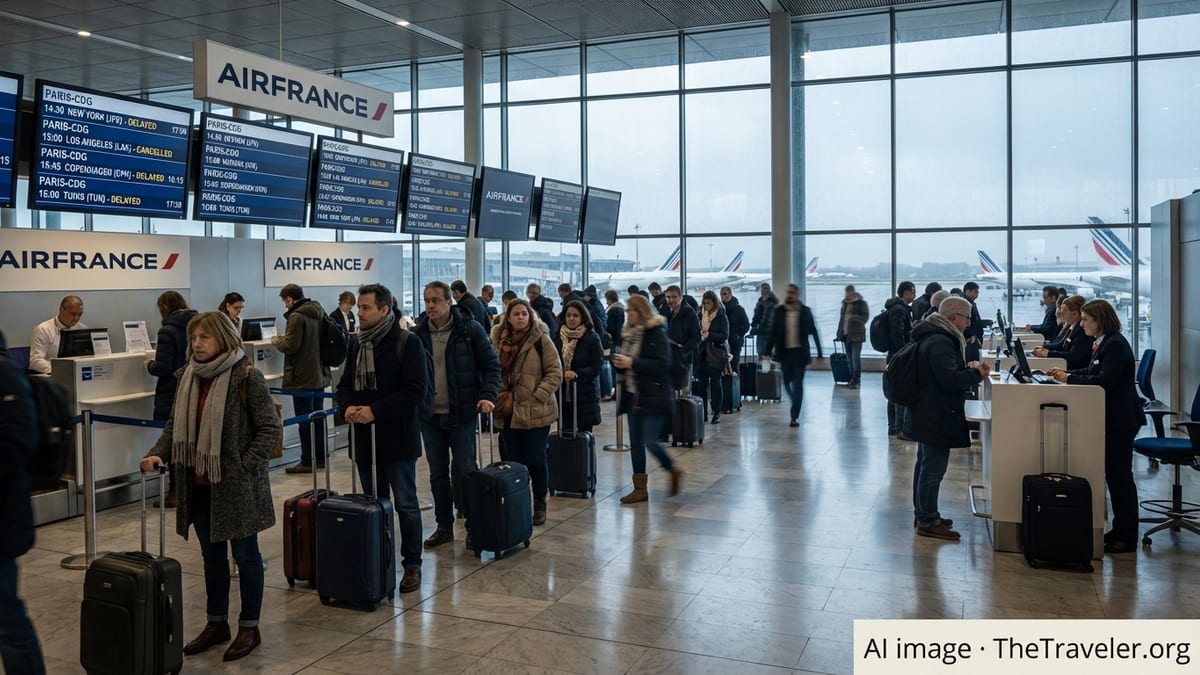
The immediate effects of the latest wave of strikes are being felt most sharply in transport. According to published coverage citing French rail operator schedules, services on national rail lines and regional trains have been reduced or canceled on key strike days, with knock on delays on subsequent days as operations recover. Paris regional express (RER) lines and Metro services have also reported interruptions, particularly along routes passing through central protest gathering points.
The U.S. Embassy alert and independent travel industry reports advise passengers traveling on intercity routes such as Paris–Lyon, Paris–Marseille and Paris–Bordeaux to check train status directly with operators before departure. Travelers connecting to early morning long haul flights from Paris Charles de Gaulle or Orly are being encouraged to build in generous buffers or consider overnight stays near the airports when possible.
Air traffic itself has remained more resilient, with no blanket shutdown of French airspace reported. However, staffing shortages and access problems for airport workers on heavy protest days have led to pockets of disruption. Some airlines have publicly announced flexible rebooking policies for France bound tickets, particularly around major strike dates, allowing passengers to shift travel by several days without additional change fees.
Urban mobility inside French cities has also become more unpredictable. Tram and bus services in cities such as Marseille, Bordeaux and Nantes have been subject to short notice route changes, while road traffic diversions and temporary bridge closures in Paris have added time to taxi and ride hail journeys. Travel advisories from other governments stress that disruption may be most visible in and around central squares, transport hubs and municipal buildings that serve as focal points for demonstrations.
Where Protests Are Concentrated and What Visitors Are Seeing
Recent protest routes in Paris have repeatedly converged on central locations including Place de la République, Place de la Bastille, Place de la Nation and surrounding boulevards. Publicly available police route maps and eyewitness travel accounts indicate that large marches often move along broad avenues connecting these squares, leading to rolling street closures and tight crowding along sidewalks during peak hours.
Travel forums and independent reports from visitors currently in Paris describe a mixed on the ground picture. In neighborhoods away from planned march routes, many travelers report that daily sightseeing continues with limited disruption aside from occasional chanting audible in the distance and greater police visibility near major monuments. In contrast, visitors staying directly along protest corridors have encountered blocked streets, shuttered shopfronts during march times and, in a few instances, tear gas use to disperse more volatile gatherings.
Outside the capital, regional media coverage notes sizeable crowds in cities such as Lyon, Toulouse, Rennes and Nantes, with demonstrations centered on central squares, prefecture buildings and transport interchanges. Localized property damage has been reported in some city centers, including fires and broken windows, though such incidents remain limited in comparison with the total number of participants nationwide.
Despite the heightened tensions, core visitor infrastructure from hotels to museums has largely remained open between major strike days. Some headline attractions have temporarily closed or adjusted hours in anticipation of marches or staff walkouts, with last minute notifications posted on official channels. Travelers who secure timed entry tickets are being advised to monitor official communications up to the morning of their visit to confirm operating status.
How Other Governments Are Framing the Risk
Travel advisories from several other countries broadly align with the U.S. assessment, characterizing the situation as a reason for increased caution rather than a blanket call to avoid travel. For example, current guidance from Canada and Ireland notes that demonstrations and strikes are planned in many French cities, citing the potential for road blockages, public transport disruption and isolated incidents of violence associated with some protests.
These advisories stress that most demonstrations are announced in advance, but also warn that spontaneous gatherings can occur with little notice. Travelers are urged to stay well away from protest locations, even if events appear peaceful, and to follow instructions provided through local public information channels and hotel notices. Guidance also highlights the importance of carrying identification, as identity checks in affected areas have become more frequent during peak protest periods.
European institutional analyses of protest management in France have noted recurring debates around crowd control tactics and civil liberties. Recent reporting by French and international outlets has examined how prior episodes of unrest exposed gaps in intelligence gathering and deployment planning, contributing to property damage and injuries. While this commentary is aimed primarily at domestic policymakers, it has indirectly shaped perceptions among prospective visitors about the likelihood of sudden escalations during marches.
Some international universities and corporate travel risk services have circulated memos to students and staff traveling in Europe, pointing specifically to the updated U.S. advisory for France and emphasizing contingency planning. Recommendations typically include registering trips with relevant consular services, maintaining up to date itineraries, and confirming that travel insurance policies cover delays or cancellations linked to civil unrest.
Practical Steps for Americans Planning or Continuing Trips
For U.S. travelers with imminent departures to France, publicly available guidance converges on a series of practical steps rather than outright trip cancellations. The State Department encourages registration in the Smart Traveler Enrollment Program so that alerts and security messages reach travelers directly. Checking the dedicated France travel advisory page, embassy security alerts and airline and rail operator notices on a daily basis in the run up to departure is also strongly recommended.
On the ground, travelers are advised to avoid known protest gathering points and surrounding side streets, particularly in the late afternoon and early evening when marches are most common. Booking accommodation away from major squares and government districts can reduce exposure to noise, road closures and potential clashes. When demonstrations do occur nearby, many advisories suggest remaining inside accommodations until crowds disperse, rather than attempting to cross protest lines.
Travel risk briefings also underline the importance of time management. On declared strike days, visitors are encouraged to allow significantly longer than usual to reach airports, train stations or long distance bus terminals, and to keep flexible back up routes in mind, such as alternative Metro lines or airport shuttles. Where budgets permit, private transfers booked in advance can provide more predictable connections, though even these can be slowed by congestion and diversions.
For travelers still in the planning phase, industry reports indicate that some tour operators are adjusting itineraries within France, favoring regions and dates less likely to clash with scheduled actions. Prospective visitors evaluating whether to postpone are weighing these operational adjustments against their personal risk tolerance. While France remains open to tourism and many trips are proceeding, the combination of intensified protests and updated U.S. travel warnings is prompting a more cautious, closely monitored approach to travel over the coming weeks.