


More news on this day
Germany’s Frankfurt Airport has taken a decisive step toward a new era of aviation, suspending passenger operations at Terminal 2 as a multi-year, €1.5 billion modernization program gets underway to align the hub with future traffic, sustainability and digitalization demands.
Get the latest news straight to your inbox!
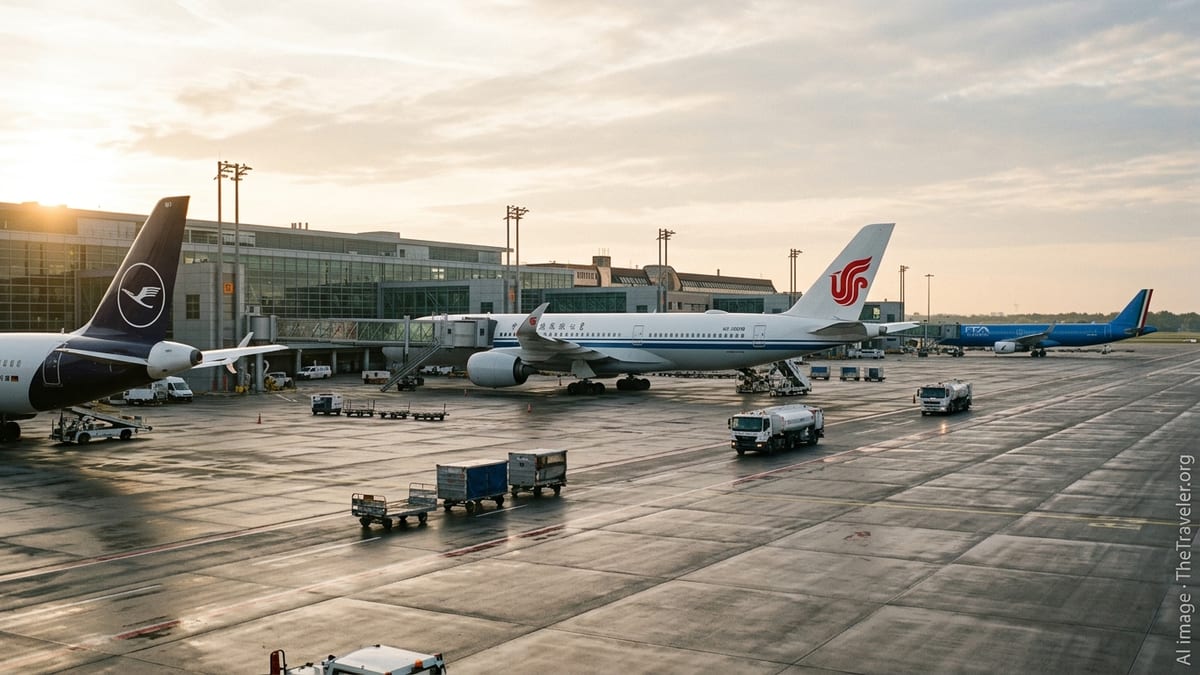
Multi-year shutdown marks turning point for Germany’s main hub
Passenger operations at Frankfurt Airport’s Terminal 2 were halted on June 9, 2026, as operator Fraport initiated a comprehensive renovation and modernization program. Publicly available information shows that the building, which first opened in 1994, is expected to remain out of service for several years while construction teams overhaul core systems and passenger areas.
Reports indicate that all airlines based at Terminal 2 have been relocated to the recently opened Terminal 3 and to Terminal 1, allowing the older complex to be taken completely offline. The move effectively concentrates all traffic into the more modern parts of the airport while heavy works proceed behind the scenes at Terminal 2.
The project is described in industry coverage as one of the largest single investments at Frankfurt in recent decades, signalling a fundamental reset of how Germany’s busiest airport will handle passengers and aircraft in the next generation. The closure follows a period of strong recovery in passenger numbers, which analysts view as giving the operator more confidence to commit to long-term infrastructure spending.
According to published coverage in German business media, the shutdown is expected to last well into the 2030s, underscoring the scale and complexity of the works. During this period, the terminal will effectively serve as a construction site as engineers strip out legacy systems and redesign the internal layout.
Scope of renovation: from check-in halls to energy systems
Fraport’s public communications and trade press reports outline a wide-ranging upgrade program inside Terminal 2. The works are understood to include a complete renewal of technical infrastructure such as heating, cooling, electrical systems and building automation, much of which dates back to the early 1990s.
Modern security technology, revamped check-in zones and significantly reconfigured passenger screening areas are also planned. Aviation sector outlets report that the aim is to create more efficient, higher-capacity security lanes and baggage systems that can handle new screening standards and rising passenger volumes with less waiting time.
The renovation extends to the visible parts of the terminal as well. Plans include redesigned departure lounges, new retail and food concepts, and upgraded gate areas intended to offer more comfort, workspace and digital services. Industry analysis suggests that new wayfinding systems, expanded power outlets and enhanced seating will play a central role in the refreshed design.
Energy efficiency is another core component of the project. According to publicly available sustainability documents from the airport group, Frankfurt is working toward a goal of zero carbon emissions at its own facilities in the coming years. Replacing outdated ventilation, lighting and climate systems in Terminal 2 with modern, low-energy alternatives is seen as a significant step toward that target.
Terminal 3 takes center stage during the transition
The decision to close an entire terminal of a major European hub has been made possible by the recent opening of Terminal 3 on the southern side of the airfield. Reports from aviation news outlets describe Terminal 3 as providing substantial additional capacity, which has allowed Fraport to reassign carriers from Terminal 2 without sharply reducing overall throughput.
Airlines that previously operated from Terminal 2, including a wide range of non-European carriers, have moved into the new building and into spare capacity at Terminal 1. Publicly available information indicates that the airport’s automated people-mover network and bus operations have been adjusted to reflect the new traffic pattern, with Terminal 3 now acting as a primary gateway for many long-haul services.
Observers note that the reconfiguration effectively accelerates Frankfurt’s shift toward a hub model built around two modern terminals rather than a patchwork of older facilities. For passengers, the most visible change in the near term will be the absence of Terminal 2 from flight information boards and airport signage, as all check-in and arrivals are routed through Terminals 1 and 3.
Aviation analysts point out that the transition period will serve as a test of the airport’s new layout, passenger flows and ground access, particularly at peak summer travel times. Any congestion or bottlenecks identified while Terminal 2 is offline could inform how the modernized complex is integrated back into the system later in the decade.
Passenger experience: short-term disruption, long-term gains
Travelers flying to or through Frankfurt in the months ahead will need to pay close attention to terminal allocations, as many carriers have shifted check-in desks and gate assignments. Consumer travel reports advise passengers to verify their departure terminal carefully and to allow extra time for navigating updated transport links, especially for connections involving Terminal 3.
Within the airport, some services previously associated with Terminal 2, such as parking areas and certain landside facilities, will continue to operate but may be affected by construction-related adjustments. Local coverage notes that specific shuttle or people-mover services could be intermittently impacted as work progresses around the building and its access points.
In the longer term, expectations for the passenger experience are considerably more positive. Trade publications covering the project suggest that the renovated Terminal 2 is being designed around faster processing, expanded self-service options and a more seamless interface with digital travel tools. This includes better integration of biometric identification, mobile check-in and automated baggage handling technologies.
Industry observers also highlight that the overhaul offers an opportunity to align the terminal with new expectations for comfort and sustainability. Brighter interiors, improved acoustics, more natural light and expanded quiet zones are among the features commonly referenced in comparable projects at other European hubs, and analysts expect Frankfurt to follow similar trends as designs are finalized.
Strategic implications for German and European aviation
The closure and planned rebirth of Terminal 2 carry broader strategic implications for Germany’s aviation landscape. Frankfurt serves as the country’s primary intercontinental gateway and one of Europe’s busiest transfer hubs, making its infrastructure decisions particularly influential for airlines and passengers across the region.
According to financial filings and sector commentary, Fraport views the upgrade cycle as essential to maintaining the airport’s competitiveness at a time when rival hubs in Istanbul, the Gulf region and other parts of Europe are investing heavily in new capacity. A fully modernized Terminal 2, combined with the recently opened Terminal 3, is expected to give Frankfurt greater flexibility in allocating airlines by alliance, market and route network.
Regional commentators have also pointed to the project as part of a broader shift in German aviation, with growth increasingly distributed between Frankfurt and other airports such as Munich. In that context, the long-term investment in Terminal 2 is seen as a signal that Frankfurt intends to remain a central pillar of Europe’s long-haul and connecting traffic for decades to come.
While the full impact will only become clear once the terminal reopens, the shutdown marks a clear commitment to future-ready operations. For now, passengers and airlines will adapt to a new configuration of Germany’s busiest airport, as construction workers move in and Terminal 2 begins its transformation from 1990s-era facility to next-generation aviation gateway.