


Frankfurt Airport is one of Europe’s busiest hubs and, for many travelers, one of the most confusing. Multiple terminals, mixed Schengen and non Schengen zones, frequent extra security checks and long walks between gates can quickly turn an easy connection into a stressful sprint. Yet regulars who pass through Frankfurt several times a year have learned a set of tricks that make the airport far more predictable and even pleasant. The tips below collect what frequent travelers wish they had known the first time they flew through Frankfurt, updated for 2026 and illustrated with concrete examples from the ground.
Get the latest updates straight to your inbox!
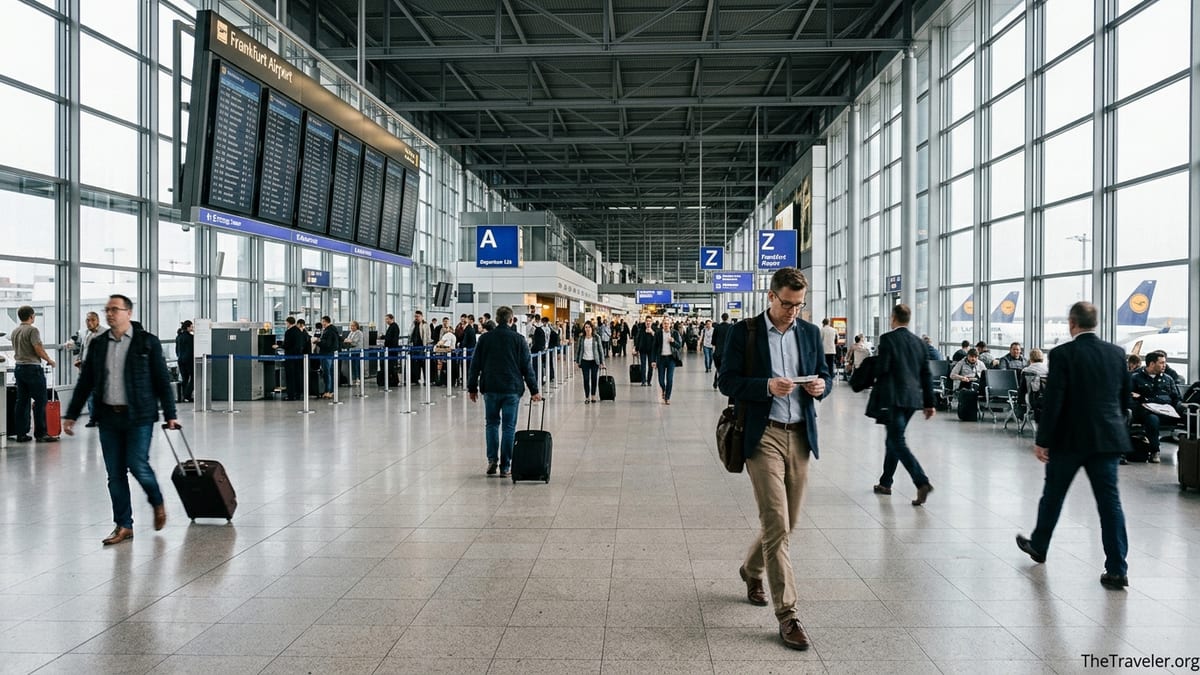
Understand Frankfurt’s Layout Before You Land
Frankfurt Airport now has three main passenger terminals: Terminal 1, Terminal 2 and the newly opened Terminal 3, plus a separate Lufthansa First Class Terminal. Terminal 1 is the largest and is home to Lufthansa and most Star Alliance carriers, split into concourses A, B, C and Z. Schengen flights usually depart from A and part of B, while non Schengen long haul flights use Z, parts of B and C. Terminal 2 mainly serves non Star Alliance airlines, and Terminal 3, which started passenger operations in April 2026, currently handles a growing list of long haul and leisure carriers using the new G, H and J gates. In practice, this means that even if all your flights are on one ticket, you can easily arrive in one terminal and depart from another.
Frequent flyers recommend pulling up the official airport map as soon as you have your boarding passes, ideally before you even board your first flight. For example, if you see you are arriving at gate Z52 and departing from A18, you can anticipate that you will need to pass border control to enter Schengen, possibly a security check, and then walk or use the Sky Line people mover to change concourses inside Terminal 1. If your connection involves Terminal 3, you should expect an airside bus or a dedicated transfer route rather than a quick indoor walk, and build that into your planning.
Another useful mental model is to think in three layers: landside (before security), Schengen airside, and non Schengen airside. Many amenities and lounges are restricted to one of these zones. For instance, the Lufthansa Welcome Lounge for arriving passengers is in Terminal 1 landside arrivals, while most Priority Pass lounges are in the non Schengen zones. Understanding which “layer” you are in at any moment can prevent you from leaving an area with useful services and then being unable to get back without re clearing security.
Lastly, distances are longer than they look on the map. A transfer from one end of Concourse Z to the far end of Concourse A can easily be a 20 minute walk at a normal pace. Travelers who rely on moving walkways often report that congested areas or temporary works slow them down. If you travel with children, heavy cabin baggage or reduced mobility, you should add extra buffer time on top of the official minimum connection time.
Connection Times, Security and Passport Control: Plan for the Worst
Official minimum connection times at Frankfurt can be as low as 45 minutes for certain Schengen to Schengen connections on one ticket, but frequent travelers consistently say that such tight connections are only comfortable when everything goes perfectly. Real world experience suggests that you should aim for at least 75 minutes for Schengen to Schengen, 90 minutes for Schengen to non Schengen, and 2 hours or more when changing terminals or airlines, especially if you need to collect and re check baggage on separate tickets.
Extra security checks are common, particularly on itineraries involving North America, Israel or the United Kingdom. A traveler arriving from New York to Frankfurt and connecting to a domestic flight to Munich, for example, may pass through passport control to enter Schengen and then be routed through a transfer security checkpoint even though they were already screened at departure. On busy Monday mornings or Sunday evenings, waiting times at some security points can spike. The airport itself publishes live estimated waiting times for each checkpoint, but seasoned travelers recommend acting as if you will hit one of the slower lines and moving quickly from your arrival gate toward passport control instead of browsing duty free first.
Border control can be unpredictable. Many EU and some non EU citizens can use automated eGates, but the number of open booths for manual checks varies by time of day. An American traveler connecting from Chicago to Rome on a Sunday afternoon, for instance, may find a 10 minute wait at the automated gates if they hold an eligible passport, while non eligible passengers join a manual line that stretches 30 minutes or more. If you are on a tight connection and see that one set of passport booths has a significantly shorter line, staff will sometimes let you switch queues if you explain your departure time politely.
Those with separate tickets or self transfers need to be especially cautious. If you arrive on a low cost airline into Terminal 2, clear immigration, pick up your bag and then need to re check with a different airline in Terminal 3, your realistic minimum time from gate to new security check can approach 2.5 hours. In such cases frequent travelers prefer a 4 to 5 hour buffer, which also leaves time for a shower, a proper meal or even a short nap in a lounge or airport hotel.
Smart Ways to Move Between Terminals and Into the City
Within Frankfurt Airport, the main people mover between Terminals 1 and 2 is the Sky Line train, which runs airside. On the public, landside level, there is also a shuttle bus. When Sky Line service is affected or partly suspended on certain lines, which does happen during technical inspections or works, frequent travelers report that following the temporary signs for replacement buses can add 10 to 15 minutes to your transfer. If you have mobility issues, ask ground staff at your arrival gate for assistance rather than trying to navigate unexpected changes yourself.
Terminal 3 adds another layer. During its first months of operation in 2026, many passengers are carried between Terminal 3 and the rest of the airport by dedicated shuttle buses. Experienced travelers who have already used Terminal 3 transfers suggest budgeting an extra 15 to 20 minutes compared with an intra Terminal 1 transfer. If you are arriving on an airline that uses Terminal 3 and connecting onto Lufthansa in Terminal 1, it is wise to stick to connections of at least 2 hours or to choose a slightly longer layover that gives you the option of a lounge visit and a relaxed meal instead of a rushed bus ride.
For travel into Frankfurt city or beyond, there are two distinct rail stations. The regional station handles S Bahn commuter trains and regional services that connect quickly to Frankfurt Hauptbahnhof, the main station, in roughly 10 to 15 minutes. These S Bahn trains are typically the cheapest option, with single tickets into the city center usually costing around a typical local transit fare rather than a premium airport surcharge. The long distance station, in contrast, sits under a separate glass hall and serves Intercity Express trains that speed to Cologne, Stuttgart, Munich and other German cities. A traveler landing at 9:00 in the morning could, for example, be on an ICE train to Cologne by 10:00 if they walk directly to the long distance platforms and buy a flexible ticket.
Taxi and ride hail services are well regulated but can be expensive on congested days. Many frequent travelers staying in central Frankfurt prefer the S Bahn unless they are arriving very late at night or carrying heavy baggage. One compromise some use is to take the train to Frankfurt Hauptbahnhof, then a short taxi to their hotel in neighborhoods like Sachsenhausen or Westend, which often costs significantly less than a direct taxi ride from the airport all the way to the hotel.
Lounges, Showers and Sleep: Where Regulars Actually Relax
Frankfurt has a dense network of lounges, but access depends heavily on airline, cabin class and whether you are in the Schengen or non Schengen zone. Lufthansa and Star Alliance elites find a wide selection of Lufthansa Business and Senator Lounges in Terminal 1, with locations in both A and Z concourses for Schengen and non Schengen flights. A frequent traveler connecting from Madrid to Singapore on Lufthansa, for instance, might shower and have a hot meal in the Lufthansa Senator Lounge A while waiting to board their long haul flight in Z, then walk over to the Z concourse lounge closer to boarding time.
Non Star Alliance travelers now have more options as well, especially with the opening of a new SkyTeam lounge in Terminal 3’s non Schengen area in April 2026. SkyTeam flyers on airlines such as Air France and KLM, or holders of certain premium credit cards with lounge access agreements, can use this space to shower, eat and work between flights, avoiding the crowded general departure areas. Several independent lounges in Terminal 2 also accept Priority Pass and similar memberships, but note that many are located in non Schengen zones. Travelers on purely Schengen itineraries sometimes discover too late that they cannot reach those lounges without exiting and re entering border control.
For sleep and showers outside traditional lounges, Frankfurt offers several practical solutions. Some areas of the terminals have so called silent chairs or reclining loungers near windows where travelers with long layovers rest, although these fill quickly in the evenings. There are also nap cabins and pay by the hour rest pods in some zones, which frequent travelers use for early morning arrivals when their hotel room in the city is not yet available. While prices vary, many report that a few hours in a private cabin with a flat surface and shower access is cheaper than booking an extra hotel night and offers more comfort than trying to sleep upright in the gate area.
If you need a full overnight, the airport has on site hotels connected to or very close to Terminal 1 and the rail stations, plus several cheap chain hotels one short train stop or shuttle ride away. Regulars passing through on late evening arrivals often book these in advance, especially on trade fair days when Frankfurt’s city center hotels sell out or raise prices sharply. Checking trade fair calendars for the Messe Frankfurt before fixing your dates can sometimes save a significant amount on accommodation.
Food, Shopping and Quiet Corners That Are Worth Your Time
Frankfurt is not a food destination in the way some Asian hubs are, but frequent travelers learn to navigate its dining options strategically. In Terminal 1, the area landside above the regional train station often has a broader mix of casual restaurants and bakeries at relatively moderate prices compared with some airside outlets. A traveler arriving early for a domestic flight to Berlin, for example, might ride the escalator up from the S Bahn platforms, pick up a fresh sandwich and coffee from one of the bakery chains in the shopping plaza, and only then head toward security once they are ready to go through.
Airside, each concourse has a mix of sit down restaurants, fast food and grab and go counters. Portions and quality can vary, but regulars recommend choosing outlets with open kitchens or higher table turnover, which tend to keep food fresher. If you have a longer layover and want to sample something local, look for places serving classics such as pretzels, sausages or apple wine. Prices are inevitably higher than in the city, but you can still find a hot meal and drink for a reasonable sum if you avoid the most heavily branded global chains in prime positions right next to security exits.
Shopping is heavily tilted toward duty free, fashion and luxury brands. While it is possible to pick up last minute items such as universal adapters, headphones or toiletries, frequent flyers often bring their own essentials to avoid airport markups. One exception is German pharmacy and skincare products, which can be competitively priced even at the airport. Travelers who forgot to buy souvenirs in the city may also find a surprisingly good selection of regional food items like marzipan, chocolates or specialty mustards in the larger duty free stores.
Quiet corners exist, but you have to seek them out. In Terminal 1, some of the more peaceful areas are at the far ends of concourses, away from the central shopping spines and main junctions between A, B and Z. Prayer rooms and chapels are typically calmer than general seating, and some travelers use them for a moment of silence and decompression between long flights. If you need to work, look for seating with power outlets near windows, which are often less crowded than central seating clusters around information screens.
Practical Hacks Regulars Use to Make Frankfurt Easier
Seasoned travelers who pass through Frankfurt several times a year have developed a handful of repeatable habits that significantly reduce stress. One is to keep cabin baggage as streamlined as possible. Frankfurt’s security staff, like many in Europe, can be strict about removing electronics and liquids, and secondary inspections are common. A frequent flyer connecting from London to Tokyo via Frankfurt might pack all electronics and liquids in a separate pouch that can be lifted out of the bag in one movement, minimizing fumbling at the scanner and reducing the chance of a manual bag search that eats into connection time.
Another hack is to watch gate changes closely. Frankfurt assigns some long haul flights to remote stands, requiring a bus transfer to the aircraft. The gate displayed on your boarding pass when you check in is not always final. Regulars set an alarm to check the airport’s gate screens or app about 90 minutes before departure. If a flight to, say, Toronto moves from a jet bridge gate at Z to a bus gate in B, they adjust their departure from the lounge accordingly, because boarding at bus gates can start earlier and involve longer walks.
Many experienced travelers also carry a small emergency kit tailored to Frankfurt’s quirks. This can include a compact umbrella or hooded jacket for the rare occasion you have to walk down an exposed stairway to a bus in rainy weather, a portable battery pack because some gate areas lack plentiful outlets, and a printed copy of key travel documents in case of system issues at check in. They also keep a small amount of euro cash on hand for vending machines, cloakroom services and certain small kiosks that may not accept foreign cards or mobile payments as reliably as major shops and restaurants.
Finally, frequent Frankfurt users recommend mentally reframing the airport as part of your trip rather than an obstacle. Booking a slightly longer connection that allows for a sit down meal, a shower in a lounge or a short walk to stretch your legs around the window areas overlooking the apron can leave you feeling far more rested when you board the next sector. A traveler flying from San Francisco to Johannesburg via Frankfurt, for example, might deliberately choose a three hour layover, use the time for a shower, a light meal and a brief rest, and arrive in South Africa feeling noticeably better than if they had raced through on the shortest possible connection.
The Takeaway
Frankfurt Airport can be intimidating at first encounter, particularly if you are used to compact domestic terminals or smaller European hubs. Its mix of Schengen and non Schengen areas, large distances between gates and frequent extra security checks catch many first time visitors off guard. Yet once you understand its basic layout, plan generous connection times and learn a few insider routines, Frankfurt becomes a fairly predictable machine.
The key lessons frequent travelers emphasize are to know which terminal and concourse you are using before you land, move briskly toward passport control and security rather than browsing, build extra time into any transfer that crosses borders or terminals, and choose your food, lounge and rest options strategically. With those principles in mind, even a long layover at Frankfurt can turn into a productive or restorative break rather than a stressful gap between flights.
Above all, treat Frankfurt Airport as a major international hub that rewards preparation. Check terminal maps and live security times in advance, keep an eye on gate changes, and pack in a way that makes security smoother. Do this and you will likely find, as many frequent flyers do, that what once seemed like a maze gradually feels like familiar, if busy, territory.
FAQ
Q1. How much connection time do I really need at Frankfurt Airport?
Most frequent travelers aim for at least 75 minutes for Schengen to Schengen connections, around 90 minutes for Schengen to non Schengen, and 2 hours or more when changing terminals or airlines, especially if baggage must be re checked on separate tickets.
Q2. Is 45 minutes enough for a connection in Frankfurt on one ticket?
It can be, particularly for Schengen to Schengen transfers on a single booking with through checked bags, but it leaves little margin for delays, long security lines or distant gates. Many travelers prefer 60 to 90 minutes for comfort.
Q3. Do I always have to go through passport control when connecting in Frankfurt?
No. You pass passport control when crossing between Schengen and non Schengen zones. A domestic Germany to Schengen Europe connection usually only involves security checks, while a United States to Germany domestic connection will involve passport control to enter Schengen and sometimes an additional transfer security screening.
Q4. Are there good lounge options if I am not flying Lufthansa or a Star Alliance airline?
Yes. Terminal 2 offers several independent lounges that accept memberships such as Priority Pass, and Terminal 3 now has a SkyTeam lounge in the non Schengen area for eligible passengers on airlines like Air France and KLM, as well as some premium credit card holders.
Q5. Can I sleep at Frankfurt Airport during a long layover?
Yes. There are reclining loungers and quiet seating areas in some concourses, nap cabins and pay by the hour rest pods in selected zones, and several on site or nearby hotels connected by short walks, trains or shuttles for full overnight stays.
Q6. What is the easiest way to get from Frankfurt Airport to the city center?
The S Bahn commuter trains from the regional station are usually the fastest and least expensive option, taking roughly 10 to 15 minutes to Frankfurt Hauptbahnhof. Taxis and ride hail services are comfortable but cost more, especially during peak hour traffic.
Q7. Is food at Frankfurt Airport very expensive?
Prices are higher than in the city but vary by location. Landside areas near the regional station often have more reasonably priced bakeries and casual eateries, while airside offerings can be pricier. Choosing less central outlets and avoiding heavily branded chains can help keep costs down.
Q8. Are there showers available if I do not have lounge access?
Yes. Some independent pay per use lounges and rest facilities offer showers for a fee even if you are not flying in a premium cabin. You can also sometimes access showers in certain airport operated rest zones or hotels for a modest charge.
Q9. How far in advance should I arrive at Frankfurt Airport for departure?
For intercontinental flights, many travelers arrive about 3 hours before departure, and around 2 hours for European flights, especially at busy times such as Monday mornings and Sunday evenings. This allows for check in, potential queueing at security and an unhurried walk to the gate.
Q10. What is the best way to handle security checks at Frankfurt?
Pack electronics and liquids so they can be removed quickly, have your documents ready and follow staff instructions closely. Moving promptly to the checkpoint after check in or arrival, rather than lingering in shops, greatly reduces the risk of encountering long lines that jeopardize tight connections.