


More news on this day
Hundreds of South Shore Line riders faced unexpected delays and last-minute improvisation after a freight train derailment and power loss near East Chicago abruptly halted commuter rail service between northwest Indiana and Chicago.
Get the latest news straight to your inbox!
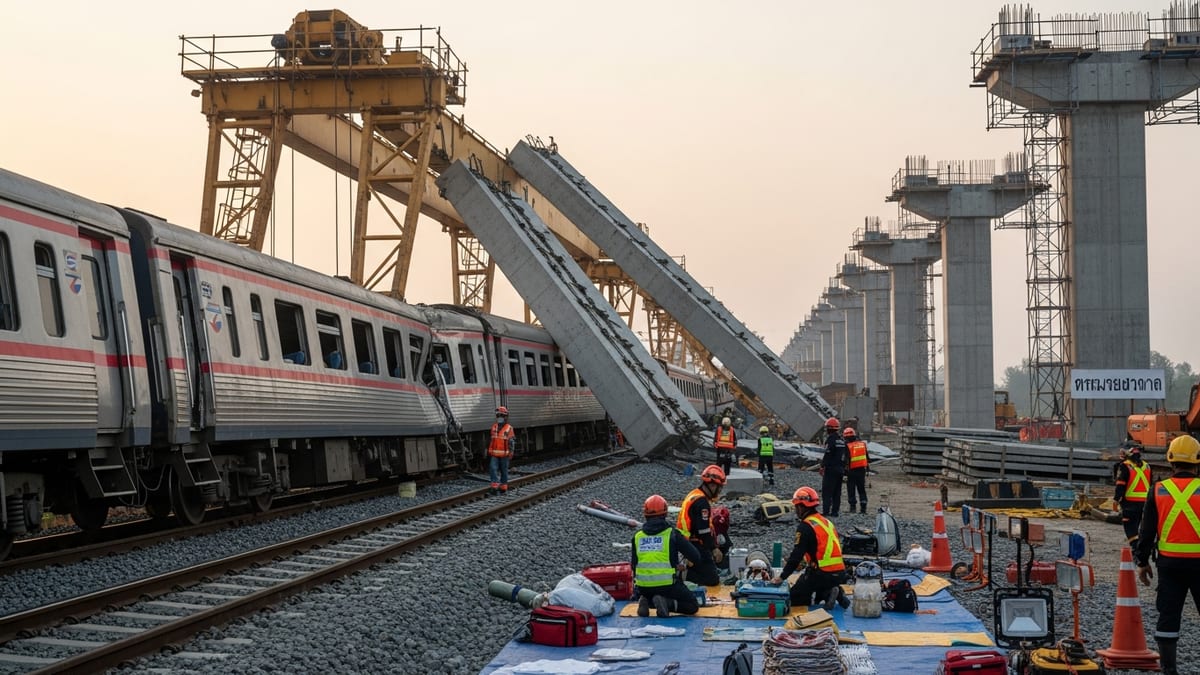
Derailment Near East Chicago Disrupts Key Commuter Corridor
Reports indicate that a freight train left the tracks near East Chicago on the evening of Wednesday, June 24, triggering a power loss that forced the suspension of South Shore Line commuter service across a busy stretch of track in northwest Indiana. The disruption affected trains running between Chicago and communities such as East Chicago, Gary and Michigan City, a vital corridor for daily commuters and regional travelers.
Based on publicly available information from regional outlets, the derailment occurred in an area where freight operations share or intersect with infrastructure used by the South Shore Line, a key commuter rail link connecting Chicago with South Bend. The resulting damage and electrical issues left trains unable to operate normally, creating a cascade of cancellations and delays through the Thursday morning rush period.
No injuries were immediately reported in connection with the freight derailment, according to early coverage. However, the incident highlighted how closely intertwined freight and passenger rail operations remain across the Chicago and northwest Indiana rail network, and how problems affecting one can quickly reverberate across the other.
Passengers Face Cancellations, Crowding and Confusion
Commuters who rely on the South Shore Line to reach work, school and the Chicago city center woke Thursday to announcements that multiple morning rush-hour trains were canceled. Advisory notices indicated that service would be suspended on key portions of the line, forcing riders to seek last-minute alternatives, including driving, carpooling or using other regional transit options where available.
Local coverage described scenes of confusion as passengers accustomed to predictable weekday schedules adjusted to partial or suspended service. Some riders already en route were delayed or rerouted, while others arrived at stations only to find that trains were not operating or that schedules had been significantly altered. As is common during large rail disruptions, travelers reported longer travel times, crowded alternative services and uncertainty about when full operations would resume.
The interruption came during a period of strong summer travel demand in the Chicago region, affecting not only daily commuters but also leisure travelers heading to and from Indiana’s lakeshore communities. For many, the derailment underlined the vulnerability of single-corridor rail links and the limited redundancy when a major commuter route suddenly goes offline.
Rail Operator Outlines Gradual Restoration of Service
By Thursday afternoon, publicly posted advisories from the rail operator signaled a gradual move toward restoring service. The South Shore Line indicated that some trains would resume later in the day, with modified schedules and potential delays, while crews continued work near the derailment site to ensure that tracks, signaling and power systems were safe for regular operations.
Restoration efforts focused on clearing derailed freight cars, inspecting overhead power infrastructure and track components, and verifying that shared or adjacent routes could safely carry passenger trains. Until those checks were complete, service remained limited, with riders urged to monitor updated timetables and alerts before heading to stations.
Transit watchers noted that the cautious, staged return of trains reflects standard practice following a freight derailment affecting passenger corridors. Even when the main obstruction is cleared, railroads typically conduct detailed inspections and test runs to minimize the risk of further operational issues once full passenger service resumes.
Travel Ripple Effects Across Northwest Indiana and Chicago
The derailment’s impact extended beyond the South Shore Line itself, as highway congestion grew on parallel routes used by displaced rail passengers. Commuters driving from Indiana into Chicago reported heavier-than-usual traffic at key pinch points, including expressway approaches to the city.
Local transit and park-and-ride facilities near alternate rail and bus services also experienced added pressure. Some riders shifted to nearby Metra lines or regional bus routes where connections were practical, although options were limited for communities that primarily depend on the South Shore Line for direct rail access to Chicago.
For tourism-focused destinations along the line, such as Indiana Dunes and nearby lakeshore towns, the disruption came at an inconvenient moment. The South Shore Line is often marketed as a car-free way for Chicago-area visitors to reach the dunes and beach communities. Reduced service or lingering uncertainty can influence weekend travel decisions, particularly for day trips planned around reliable train schedules.
Safety, Resilience and Shared Freight–Passenger Corridors
The incident has renewed attention on the broader question of resilience where freight and passenger rail share infrastructure. While freight derailments remain relatively rare compared with the volume of trains that move daily across the Midwest, analysts note that even a single event can significantly disrupt commuter operations, as seen with this South Shore Line suspension.
Publicly available data from federal safety agencies and previous incidents show that derailments can arise from a range of factors, including track conditions, mechanical failures and operational issues. In shared corridors, any resulting damage to rails, overhead power systems or signal components may require extended inspection and repair before commuter trains can safely pass.
For daily riders, the South Shore Line disruption functions as a reminder of the importance of maintaining robust infrastructure, clear communication channels and contingency plans when incidents occur. As service gradually stabilizes following the East Chicago freight derailment, many travelers are likely to watch closely for information on long-term infrastructure improvements and operating practices that could reduce the risk of similar large-scale disruptions in the future.