


More news on this day
Strong thunderstorms moving across the Charlotte region prompted a ground stop at Charlotte Douglas International Airport on Friday, disrupting one of the nation’s busiest airline hubs at the height of summer travel.
Get the latest news straight to your inbox!
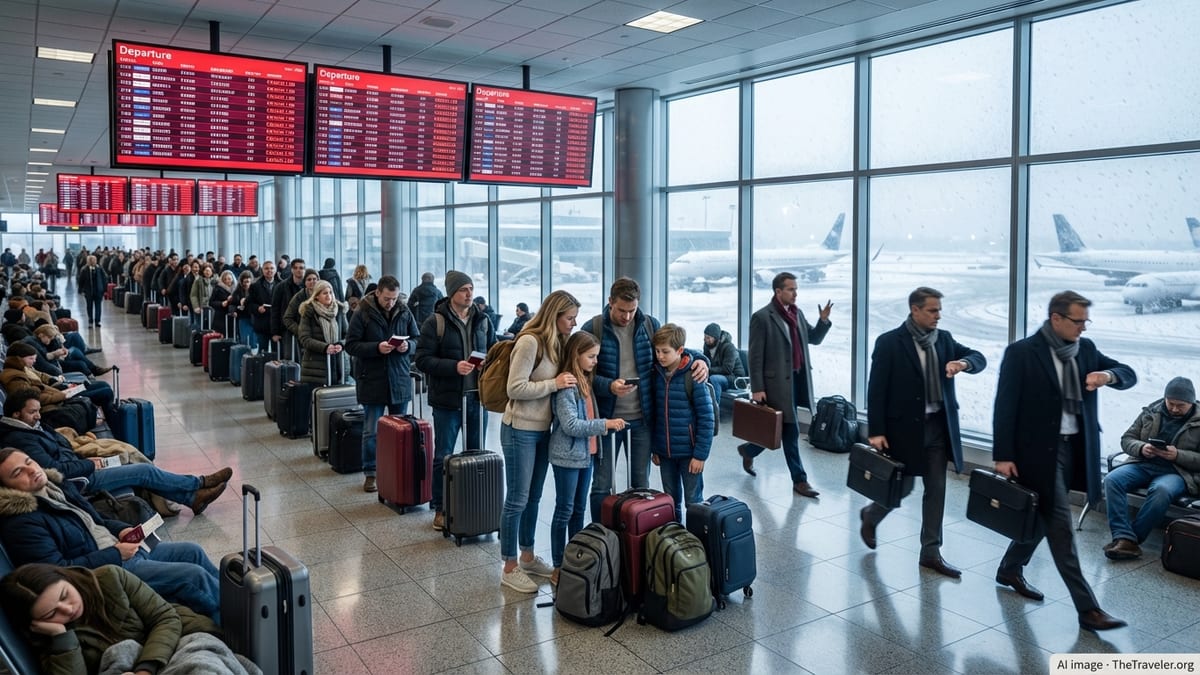
Severe Weather Halts Departures at Major Southeast Hub
According to publicly available air traffic management advisories, departures bound for Charlotte Douglas International Airport were temporarily halted as storms intensified in the Carolinas, bringing heavy rain, lightning and low clouds to the area. The ground stop limited the number of aircraft allowed to depart for Charlotte, with some flights held at origin airports and others delayed at gates.
Operational data from the national airspace system indicates that the decision was tied to convective weather over and around the airport, which reduced arrival and departure capacity on already constrained runways and taxiways. Radar imagery shared in local media coverage showed slow-moving storm cells repeatedly passing over Mecklenburg County and neighboring communities.
Charlotte Douglas, a key connecting hub in the eastern United States, typically handles hundreds of daily departures. Even a short ground stop can rapidly cascade into missed connections, aircraft repositioning challenges and crew scheduling problems, particularly on peak summer travel days.
As the storms moved through, some arriving aircraft were placed in holding patterns or diverted to other airports, while departing flights faced pushes in anticipated takeoff times. Passengers reported extended waits on concourses and in aircraft parked at gates as the weather system lingered over the region.
Passengers Face Delays, Diversions and Canceled Connections
Flight status boards at airports across the network reflected the impact of the Charlotte disruption, with departures bound for the North Carolina hub showing delays ranging from minor schedule adjustments to several hours. In some cases, flights were canceled outright when it became clear that aircraft or crews would not be able to reposition in time for later departures.
Reports from travelers on social platforms described crowded gate areas and long lines at customer service counters as passengers tried to rebook missed connections. Some itineraries were rerouted through other major hubs as airlines attempted to keep long-haul and international journeys on track despite the weather complications in Charlotte.
Travelers already in the air when the ground stop took effect faced diversions or extended holding times while air traffic controllers managed spacing and safety around the storm cells. In a number of cases, aircraft landed at alternate airports to refuel or wait out the worst of the weather before continuing to Charlotte once conditions improved.
For local passengers departing from Charlotte, the impact included rolling delays throughout the afternoon and evening as the ground stop ended but airlines worked through the backlog of flights. Some departures left significantly behind schedule as aircraft needed for earlier flights were still airborne or parked at other airports.
Weather Risks Heightened by Busy Summer Operations
Meteorological outlooks for the Charlotte area in early July highlighted the potential for repeated rounds of thunderstorms, driven by warm, moist air and an active frontal boundary across the Southeast. Forecast discussions pointed to the risk of intense downpours, frequent lightning and strong wind gusts capable of quickly reducing visibility and making ramp operations unsafe.
Charlotte Douglas has experienced similar weather-related disruptions in recent summers, reflecting a broader pattern in which convective storms periodically slow or halt operations at major U.S. hubs. Aviation performance analyses indicate that such events can ripple through the national network for hours as delayed aircraft and displaced crews move from one schedule to the next.
Ongoing construction and airfield improvement work at the airport, documented in federal planning reports, has also narrowed the margin for handling disruptions, as certain taxiways and ramp areas remain subject to periodic closures. While the projects are intended to expand capacity and improve traffic flow in the long term, they can temporarily limit the options available to manage traffic when severe weather strikes.
Operational planners typically build some buffer into schedules during peak storm seasons, but intense afternoon thunderstorm complexes can still overwhelm those safeguards, especially when they form repeatedly over the same corridor used by arriving and departing flights.
Advice for Travelers Navigating Weather Ground Stops
Travel industry guidance suggests that passengers with upcoming trips through Charlotte and other storm-prone hubs monitor their flight status closely on days when thunderstorms are in the forecast. Airlines often adjust departure times and routings hours in advance in response to air traffic control initiatives such as ground stops and ground delay programs.
Publicly available information indicates that carriers may also issue flexible travel policies during periods of widespread weather disruption, allowing customers to change flights without additional fees within a limited window. Such measures are sometimes extended to include Charlotte when forecasters highlight an elevated risk of severe storms across the Carolinas and the broader East Coast.
Travelers connecting through Charlotte Douglas are often advised to allow extra time between flights during peak summer months, when afternoon storms are most likely to disrupt operations. Choosing earlier departures can also reduce the risk of missing connections, since morning flights are less likely to be affected by the daily build-up of convective activity.
As thunderstorms remain a recurring feature of the summer travel season, aviation analysts expect that weather-driven ground stops like the one affecting Charlotte Douglas will continue to test the resilience of airline schedules and traveler patience, particularly at large hub airports that play a central role in the national network.