


More news on this day
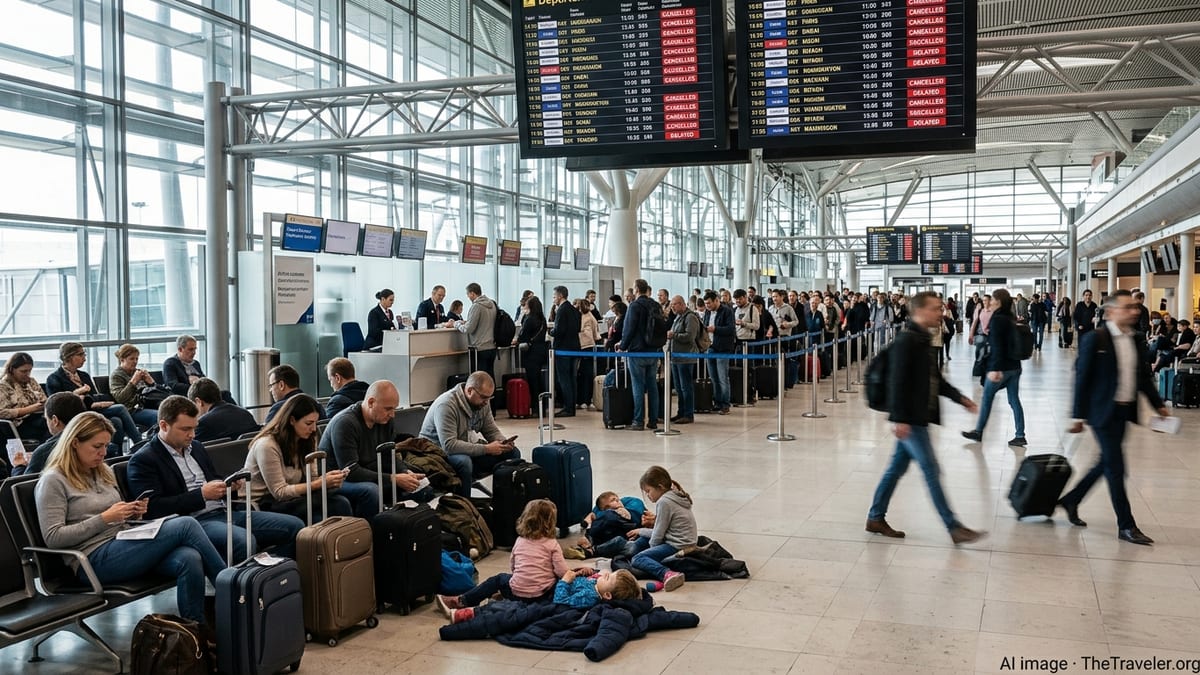
Saudi Arabia is facing a new wave of air travel disruption as Saudia, Air France and affiliated European carriers trim or cancel nearly a dozen additional flights, affecting major hubs in Jeddah, Riyadh and Medina as well as links to Cairo, Paris, Amsterdam and several busy domestic routes.
Get the latest news straight to your inbox!
Regional Tensions Keep Saudi Skies Under Pressure
Published coverage on aviation and security developments in the Gulf region in early 2026 indicates that ongoing instability and intermittent airspace restrictions continue to weigh heavily on airline schedules serving Saudi Arabia. Analysts have linked multiple rounds of cancellations and rerouting to conflict-related airspace closures and heightened risk assessments around key corridors used by flights to and from the kingdom.
Industry data and airline advisories show that since late February 2026, carriers operating in and out of Saudi Arabia have been forced to repeatedly adjust timetables as routes over parts of the Gulf and neighboring countries are periodically curtailed. These changes have particularly affected services feeding Saudi Arabia’s main international gateways at Jeddah, Riyadh and Medina, pushing some operators to suspend city pairs altogether rather than rely on ad hoc diversions.
In this context, the latest batch of cancellations by Saudia, Air France and partner airlines represents a continuation of a months long pattern of disruption rather than an isolated incident. Each new schedule update further tightens already constrained capacity for both point to point and connecting passengers.
Saudia Pulls More Flights on Key Domestic and Regional Links
Publicly available schedule updates and advisory documents referencing a “current wave of Saudia flight cancellations” indicate that the Saudi flag carrier has once again reduced service on a mix of domestic and regional routes. Earlier notices from aviation intelligence providers described Saudia suspending flights to several Gulf capitals after airspace closures, and more recent guidance to passengers points to further selective cancellations as the situation evolves.
Domestic corridors such as Jeddah to Riyadh and Jeddah to Medina, which normally form the backbone of Saudi Arabia’s internal air network, have seen scattered flight withdrawals and timing changes. While many services continue to operate, passengers report short notice cancellations and rebookings on certain frequencies, complicating itineraries that rely on tight connections onward to international flights.
On the regional front, routes linking Saudi gateways with nearby cities such as Cairo have also seen fresh adjustments. Timetable aggregators show multiple recent days where departures between Saudi Arabia and Egypt have been thinned out or retimed, reflecting both Saudia’s own decisions and knock on effects from regional airspace constraints. The result is a patchwork of availability that can vary considerably from one day to the next.
Air France and KLM Reduce Saudi Access to Europe
The European side of the disruption is being felt most clearly through the Air France KLM network. Recent European press coverage and travel advisories describe Air France extending suspensions on certain Middle East routes, including services touching Riyadh, while Dutch partner KLM has confirmed that its flights to the Saudi capital will remain suspended into mid June.
Riyadh in particular has lost a significant share of its nonstop connectivity to European hubs. Reports on the Air France KLM group’s strategy note that suspending Riyadh flights has created gaps for travelers who typically connect through Paris or Amsterdam to reach the Saudi capital. With KLM’s Riyadh operation paused and Air France limiting parts of its own Middle East program, passengers are being redirected through alternative carriers or more circuitous routings.
The impact extends beyond Riyadh. As airlines rebalance capacity, some services touching Jeddah and Medina are being used to consolidate Saudi bound traffic that previously had more routing options. This has increased pressure on remaining flights to and from Paris and Amsterdam, with higher load factors and fewer same day alternatives when disruptions occur.
Pressure Mounts on Jeddah, Riyadh, Medina and Cairo
Jeddah, Riyadh and Medina sit at the heart of Saudi Arabia’s aviation system, and changes on a handful of international routes can quickly ripple through their operations. Schedules tracking departures from these airports over recent weeks show a pattern of rolling adjustments, with some individual flights removed from sale even when broader route structures remain intact.
Jeddah, as Saudia’s main hub and a key gateway for religious travel, has faced intermittent cancellations on services feeding European and regional markets. Even when full route suspensions are not in place, capacity reductions on single days can disrupt travel for pilgrims and business travelers connecting onward via Cairo, Paris or Amsterdam.
Riyadh has been particularly exposed to decisions made in European capitals. With one major European partner confirming an extended suspension of Riyadh operations and another limiting service, the Saudi capital’s connectivity to Western Europe has tightened considerably. Medina, which relies heavily on seasonal and religious traffic, has also experienced schedule trimming that reduces redundancy for travelers using the city as an entry point.
Cairo’s role as a regional connector means cancellations on Saudi routes can strand or delay travelers far beyond the immediate city pair. As flights between Saudi Arabia and Egypt are pulled or rescheduled, itineraries that depend on Cairo as an intermediate hub for Africa or the wider Middle East face higher risks of misconnection.
Travelers Confront Limited Alternatives and Ongoing Uncertainty
For passengers, the combined effect of these latest cancellations is a landscape of constrained choices and heightened uncertainty. Advisories from multiple airlines serving the Gulf region emphasize that flights may be suspended or rerouted at short notice in response to security assessments and airspace decisions, and publicly available guidance consistently urges travelers to monitor bookings closely.
With nearly a dozen additional flights now removed from schedules across Jeddah, Riyadh, Medina, Cairo, Paris and Amsterdam, rebooking options are becoming more limited, especially during peak travel days. Many passengers are being funneled toward a smaller pool of remaining services or rerouted via third country hubs, adding extra time and complexity to journeys that were once relatively straightforward.
Industry observers note that the current episode illustrates how quickly regional instability can reshape global air networks. As Saudia, Air France and partner carriers continue to adjust their operations, travelers heading to or from Saudi Arabia over the coming weeks are likely to face an environment where schedules remain fluid, direct options are reduced, and careful advance planning is essential to keep trips on track.