


More news on this day
Air travelers across Kuwait are facing a fresh wave of disruption as a series of Kuwait Airways and EgyptAir cancellations from Kuwait International Airport have affected at least eight international flights, disrupting links to Cairo, Istanbul, Amsterdam, Bangkok, New York and other major hubs just weeks after the partial reopening of Kuwaiti airspace.
Get the latest news straight to your inbox!
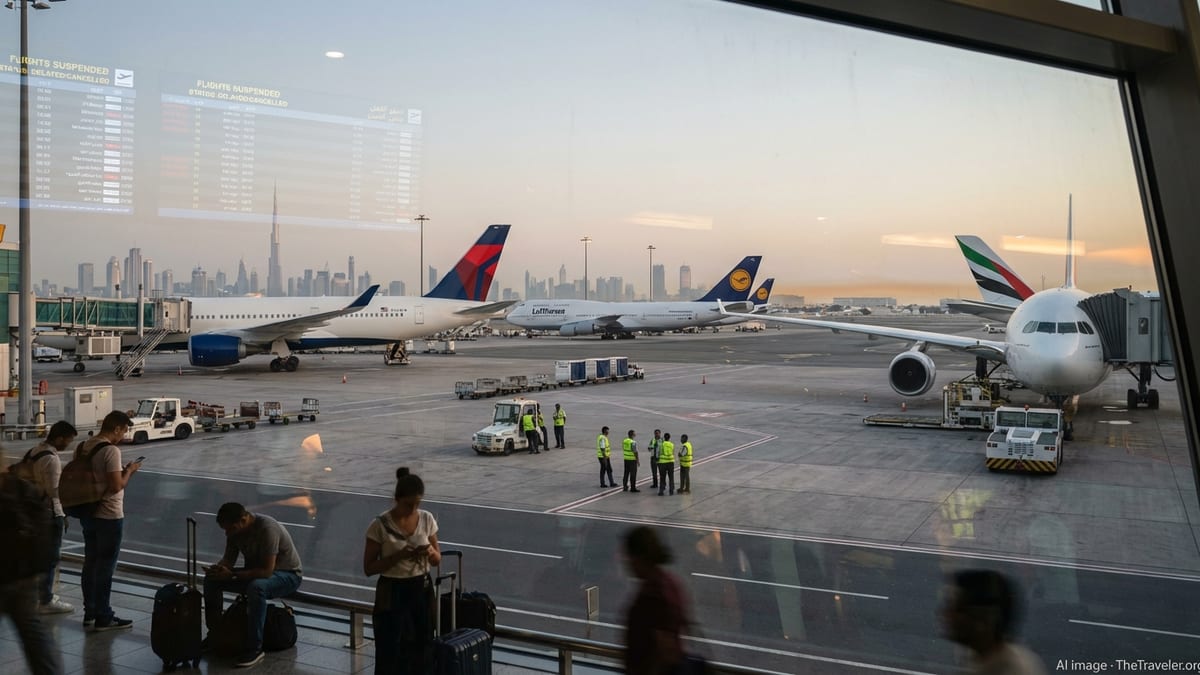
Fresh Setbacks After Gradual Reopening of Kuwait International Airport
The latest cancellations come at a sensitive moment for Kuwait’s aviation sector, which has been rebuilding operations following the prolonged closure of Kuwaiti airspace earlier this year. Commercial traffic has only recently resumed on a limited basis, with Kuwait Airways and low-cost carrier Jazeera Airways gradually restoring services while other international airlines await full authorization to return.
Published timetables and airport data show that Kuwait Airways has been steadily reintroducing long-haul and regional services, including key routes to New York, Cairo, Istanbul and Amsterdam. At the same time, EgyptAir has been updating its summer schedule on core Middle East and European routes from Cairo, including flights touching Kuwait, Istanbul and Amsterdam. The latest series of cancellations appears to intersect these network rebuilds, as carriers adjust frequencies to match available capacity, regulatory constraints and passenger demand.
Travel forums and schedule trackers indicate that Kuwait Airways flights linking Kuwait City with Istanbul and Amsterdam have been particularly vulnerable to last-minute changes, with some recent rotations listed as cancelled after tickets were sold. EgyptAir’s evolving timetable on routes between Cairo, Kuwait and other regional gateways has likewise introduced uncertainty for travelers with onward connections.
The result is a fragile recovery in which even a small cluster of cancellations quickly ripples across multiple continents, affecting passengers not only starting or ending their journeys in Kuwait, but also those relying on Kuwait City as a connecting hub between Asia, the Middle East, Europe and North America.
Key Routes Affected: Cairo, Istanbul, Amsterdam, Bangkok and New York
According to publicly visible flight-status pages and schedule aggregators, the latest disruption centers on at least eight flights touching Kuwait City, involving Kuwait Airways and EgyptAir services on some of their most commercially significant routes. Among the affected city pairs are Kuwait–Cairo, Kuwait–Istanbul, Kuwait–Amsterdam and Kuwait–Bangkok, along with transatlantic links involving New York.
Data from online trackers shows individual Kuwait Airways services between Kuwait City and Istanbul, as well as Amsterdam, that were scheduled during the second week of May but subsequently marked as cancelled. Parallel reports from passengers indicate that Kuwait–Cairo itineraries, including those involving Kuwait Airways and EgyptAir connections via Cairo, have been altered or removed from booking systems with limited advance warning.
On long-haul sectors, Kuwait Airways’ New York service remains one of the most closely watched routes in the current environment. While some flights between Kuwait City and John F. Kennedy International Airport have reappeared on schedules following the April reopening, travelers report that select departures around the start of May were either withdrawn or subject to status changes, contributing to concerns about the reliability of upcoming rotations.
Bangkok and other Asian destinations linked to Kuwait through multi-leg itineraries have also been caught in the turbulence. Passengers transiting Kuwait on journeys between South Asia or Southeast Asia and European or North American cities describe having to rebook itineraries after learning that one segment, often the Kuwait City leg, had been cancelled while other segments on the same ticket remained active.
Travelers Confront Short Notice and Limited Rerouting Options
For passengers, the most disruptive aspect of the current cancellations is the short notice with which changes are being communicated. Accounts shared on online forums in Kuwait and abroad describe travelers receiving emails from Kuwait Airways stating that their flights have been cancelled, sometimes just days before departure, with a promise of refunds but few immediate alternatives presented.
Others note that while some tickets are being rebooked automatically onto later services, many itineraries, particularly those involving complex connections through Cairo or European hubs such as Amsterdam, are instead being refunded outright. This leaves customers to reconstruct their travel plans at higher prices and with limited seat availability, given that overall capacity out of Kuwait remains constrained.
Reports from passengers connecting to New York, Bangkok and European capitals suggest that a number of travelers are opting to bypass Kuwait entirely, choosing routings through Gulf hubs such as Dubai, Doha and Abu Dhabi where schedules appear more predictable. However, this shift often entails longer travel times, additional visa considerations for transits and increased costs compared with pre-closure itineraries via Kuwait City.
At Kuwait International Airport itself, the partial nature of the reopening continues to weigh on operations. With only a subset of airlines flying a reduced number of frequencies, a cancelled flight can translate into hours or days of delay before an alternative departure becomes available, particularly on routes that have not yet returned to daily service.
Operational and Regulatory Factors Behind the Cancellations
Publicly available information suggests that a mix of operational and regulatory factors lies behind the latest round of cancellations by Kuwait Airways and EgyptAir, rather than a single underlying cause. Kuwait’s aviation authorities have been gradually reauthorizing flights following earlier disruptions linked to regional security tensions, and airlines are adjusting their schedules in response to evolving airspace restrictions, crew and fleet availability, and safety assessments.
Industry-focused coverage indicates that carriers serving Kuwait must coordinate closely with regulators on revised routings and slot allocations as airspace across the Gulf region is reopened in phases. For Kuwait Airways, which pivoted to temporary operations from Saudi airports during the height of the shutdown, the transition back to a Kuwait-based network has required a complex reshaping of schedules and aircraft rotations.
EgyptAir, meanwhile, is in the midst of rolling out its updated summer timetable, including the deployment of newer aircraft types on regional routes. Changes in aircraft assignments can lead to further adjustments in frequency and timing, especially on secondary segments such as Kuwait–Cairo links that feed into longer-haul connections to Europe, Asia and North America.
According to published timetables, the cumulative effect is a more volatile pattern of operations than travelers might expect in a typical summer season, with certain days seeing near-normal activity and others marked by multiple cancellations on the same route. This volatility appears particularly acute on services touching Istanbul and Amsterdam, both of which are key connection points for Kuwait-based travelers heading to wider European networks.
What Passengers Can Do as Kuwait’s Air Network Stabilizes
With schedules still in flux, travel planners and frequent flyers in and out of Kuwait are emphasizing the importance of close monitoring and flexible arrangements. Publicly shared advice from affected travelers highlights the need to track flight status directly via airline websites and reputable flight-tracking platforms in the days leading up to departure, especially for itineraries on Kuwait Airways and EgyptAir involving Cairo, Istanbul, Amsterdam, Bangkok or New York.
Some passengers report more success securing alternative travel when they contact carriers promptly after a cancellation notice, rather than waiting for automatic rebooking. Others advocate for booking fully refundable or changeable tickets during this transition period, even at higher upfront prices, to avoid being locked into itineraries that may later unravel.
Travel agents and online booking intermediaries continue to play a crucial role, particularly for travelers navigating complex multi-stop journeys. Where direct rerouting via Kuwait is not feasible, agents are often turning to alternative hubs in the Gulf, as well as European gateways, to piece together replacement itineraries that maintain similar arrival times at final destinations.
For now, Kuwait’s aviation recovery remains a work in progress. While the resumption of flights by Kuwait Airways, Jazeera Airways and a growing list of foreign carriers signals a clear move toward normalization, the cluster of cancellations involving Kuwait Airways and EgyptAir underscores that travel through Kuwait City is still subject to abrupt changes. Passengers on routes touching Cairo, Istanbul, Amsterdam, Bangkok and New York are being urged, by publicly available guidance and peer experience, to build contingency time into their plans as airlines and regulators continue to recalibrate Kuwait’s role as a regional hub.