


More news on this day
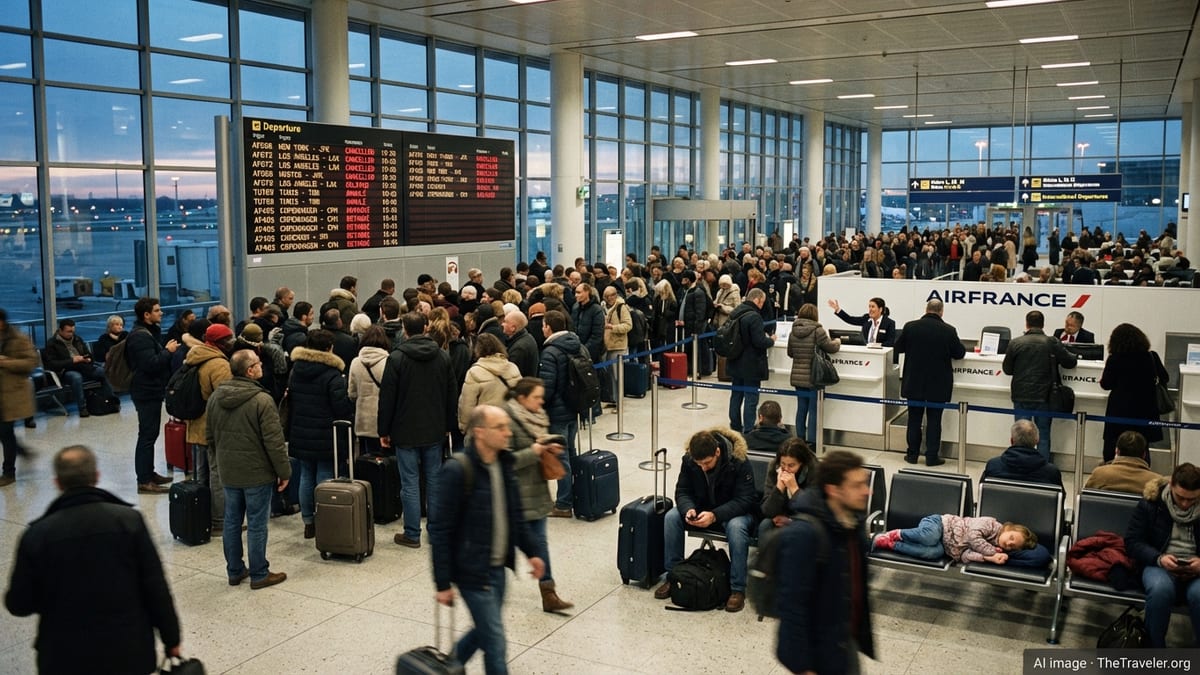
Frontier Airlines passengers traveling from Detroit to Atlanta were left stranded overnight in Knoxville, Tennessee, after a weather diversion and subsequent crew duty-time limits prevented the flight from continuing, according to published coverage and flight-tracking data.
Get the latest news straight to your inbox!
What happened on the diverted Detroit to Atlanta flight
Reports indicate Frontier Flight 3409, scheduled from Detroit Metropolitan Wayne County Airport to Hartsfield-Jackson Atlanta International Airport, diverted to Knoxville’s McGhee Tyson Airport on Friday, September 11, 2026, as storms disrupted operations in and around Atlanta. Flight-tracking information shows the aircraft landed in Knoxville instead of proceeding to Atlanta.
According to published coverage, the flight’s disruption escalated after the diversion because the operating crew reached legal duty-time limits, often referred to as “timing out.” Once a crew reaches those limits, continuing the trip is not permitted under safety rules, which can turn a short, weather-driven diversion into an overnight disruption when a replacement crew is not immediately available.
Multiple accounts described passengers waiting for hours at the diversion airport and then facing an overnight stay without a quick path onward. Published coverage also described travelers assessing limited late-night transportation and lodging options, particularly as the delay extended into the evening.
Why a weather diversion can still end in a cancellation
While the initial trigger in this case was weather affecting Atlanta, a diversion introduces a new operational problem: the flight is no longer where the airline planned its aircraft and crew to be. When that happens late in the day, the crew may be close to the end of its allowed duty period after earlier segments, delays, and additional time on the ground.
In practical terms, a crew timeout is a safety-driven stop, but it also reflects how tightly scheduled airline operations can be. A diverted aircraft may need a new crew, a gate, ground support, and updated flight planning to continue, and a low-cost carrier may have fewer standby crews or local resources at an airport that is not a regular operating base.
Frontier’s publicly available policies also note that delays can occur during diversions and after landing, including while waiting for clearance, a gate, or other operational constraints. That can be especially relevant when an aircraft is on the ground at a diversion field and cannot quickly return to service.
Knoxville’s role in the disruption
Published coverage of the incident emphasized how a diversion to Knoxville can be challenging for passengers when the airline has limited service there. Recent reporting has also pointed to Frontier scaling back or suspending scheduled operations at Knoxville’s McGhee Tyson Airport, which can reduce the number of Frontier staff on-site and limit options to re-accommodate travelers on the carrier’s own flights.
When an airline does not operate many daily flights from a diversion airport, rebooking can become slower, particularly if seats are scarce on the next day’s flights. Travelers may then have to consider waiting for the airline’s next available departure, purchasing a last-minute ticket on another carrier, or arranging ground transportation, each of which can be difficult late at night.
Published accounts also described passengers seeking meals and basic assistance during the extended delay. When disruptions stretch past normal operating hours, airports and concessionaires may be closed, making vouchers less useful and leaving travelers reliant on whatever services remain available overnight.
What rules and passenger rights may apply after a cancellation or long delay
For U.S. domestic itineraries, U.S. Department of Transportation guidance states that consumers are entitled to a refund if their flight is significantly delayed or significantly changed and they choose not to travel. The same DOT guidance also notes that if a traveler accepts and takes an alternative flight, that traveler generally is not entitled to a refund under those rules for the original ticket.
Separately, DOT’s airline customer service dashboard is designed to show what major U.S. airlines commit to provide during cancellations and delays, particularly when the cause is within the airline’s control. In many real-world disruptions, however, the classification can be contested by customers, especially when a weather event triggers a chain of airline-controlled impacts such as crew and aircraft mispositioning.
DOT’s tarmac-delay requirements are another compliance area travelers often reference during major disruptions. Frontier’s published tarmac delay plan outlines passenger notification practices during extended ground delays and describes timing thresholds for returning to a suitable deplaning point for domestic flights, along with access to medical assistance if needed.
What travelers can do during a diversion and overnight misconnection
When a diversion occurs, the first practical decision is whether to stay with the airline’s rebooking options or to self-arrange alternatives. In a crew-timeout scenario, continuing the same evening may be unlikely if a replacement crew is not already available, so travelers often must weigh the costs of an overnight stay against the risk of missing scarce seats on next-day flights.
Passengers dealing with a cancellation or a delay that they consider significant can document the original itinerary, the time they were notified, the alternative options offered, and any additional costs. DOT guidance focuses on whether the traveler chooses not to travel and whether the delay or change meets the significant threshold for refund eligibility.
For travelers who paid for extras such as assigned seating or baggage fees, DOT’s broader consumer protection rules also address when ancillary fees should be returned if the service was not provided. In diversion and cancellation scenarios, the details can hinge on what the passenger ultimately received and how the ticket was rebooked.