


More news on this day
The United States has reaffirmed its highest Level 4 “Do Not Travel” advisory for Iraq following an October 23, 2026 update to its guidance, highlighting a combination of terrorism, kidnapping, civil unrest, health concerns and the limited ability of U.S. consular staff to assist travelers in the country.
Get the latest news straight to your inbox!
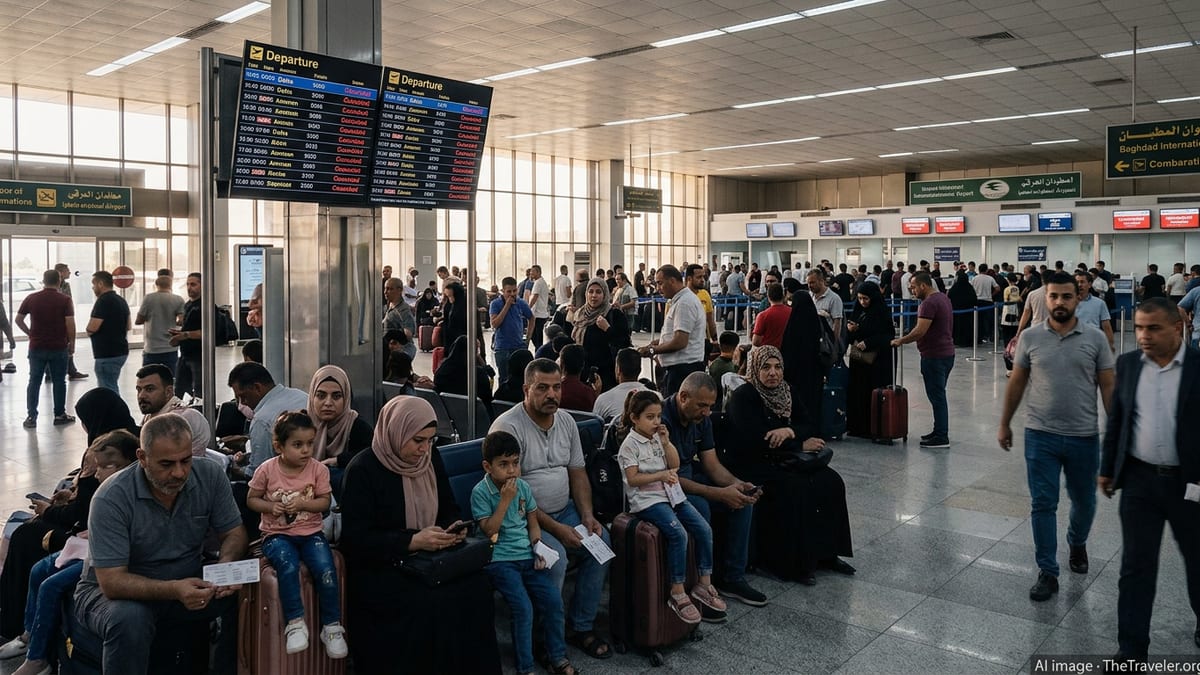
Advisory Raised to Top Tier Amid Regional Tensions
Publicly available information from the U.S. Department of State shows that Iraq is now listed at Level 4, the highest category in the four‑tier advisory system, with a clear instruction not to travel. The advisory, updated on October 23, 2026, underscores that Americans are exposed to a greater likelihood of life‑threatening risks if they enter the country.
According to the published advisory, risk indicators attached to Iraq currently include terrorism, civil unrest, kidnapping or hostage‑taking, crime, armed conflict and health concerns. The document also notes that the U.S. government has a limited ability to provide emergency services to its citizens on the ground, particularly outside major urban areas.
Travel‑risk summaries compiled from State Department materials explain that Level 4 is reserved for destinations where conditions can deteriorate suddenly, evacuation options may be constrained and local security incidents may not be predictable. In such cases, Americans already in the country are urged through official guidance to leave when it is safe to do so, while those considering trips are advised to cancel their plans.
The latest Iraq notice sits within a broader wave of regional advisories covering multiple Middle Eastern countries, issued as tensions rise over militant activity and concerns about attacks on U.S. interests. Coverage by regional and international outlets notes that Washington has highlighted potential threats from Iranian‑aligned groups and Yemen’s Houthis as part of this wider security picture.
Key Risks for Travelers Considering Iraq
Open‑source security assessments point to the threat of terrorism as one of the most significant dangers for foreign visitors in Iraq. Militant groups, including cells linked to the so‑called Islamic State, remain active in several provinces, particularly in more remote or rural areas. There is also documented activity from non‑state militias, some of which are aligned with regional powers and not fully under central government control.
In addition to bombings and armed attacks, kidnapping for ransom or political leverage is identified in advisory material as a core concern. Public documents from U.S. and allied governments stress that Westerners, aid workers, journalists and business travelers can be perceived as high‑value targets for criminal networks or armed groups seeking money, publicity or bargaining chips.
Civil unrest and political volatility add another layer of risk. Reporting from Iraq in recent years has described recurring protests, clashes between rival armed factions and episodes of violence around government facilities, party offices and symbolic public spaces. Demonstrations can flare quickly and, according to travel‑safety guidance, sometimes involve the use of live ammunition or heavy crowd‑control measures.
Health and infrastructure constraints also feature in current advisories. While major private hospitals operate in some cities, decades of conflict and underinvestment have left gaps in services in parts of the country. Power cuts, road damage and limited emergency response capabilities increase the impact of accidents or attacks on anyone in the vicinity, whether resident or visitor.
Impact on Air Links, Overland Routes and Itineraries
The updated Iraq advisory explicitly references risks to civil aviation operating in or near Iraqi airspace. International aviation notices, cited in media coverage, have intermittently warned of potential hazards from anti‑aircraft fire, missile activity or military operations, particularly in periods of heightened regional confrontation.
Public guidance advises U.S. citizens not to rely on any public transportation within Iraq other than commercial civil aviation, and even then only after carefully reviewing the latest security information. Overland travel by road, especially at night or in outlying governorates, is described in open guidance as carrying heightened risk of ambushes, improvised explosive devices, checkpoints operated by irregular forces and criminal activity.
For the travel industry, the continued Level 4 status effectively halts mainstream leisure itineraries that were beginning to emerge before the latest escalation. Specialized historical and pilgrimage tours to cities such as Baghdad, Najaf and Karbala, which had been cautiously marketed by a small number of niche operators, are now widely flagged as incompatible with current U.S. and allied government advice.
Insurance implications are another practical consequence. Many U.S. and European insurers either exclude Iraq outright from standard travel policies or treat it as a high‑risk destination requiring special underwriting. Travel‑risk consultancies note that a Level 4 designation typically triggers exclusions or significantly higher premiums, affecting not only tourists but also corporate travelers and humanitarian staff.
Guidance for U.S. Citizens Already in Iraq
For Americans who are already in Iraq, the State Department’s public materials emphasize preparation and contingency planning rather than routine movement. Travelers are urged through open guidance to ensure they are enrolled in the Smart Traveler Enrollment Program, maintain regular contact with family or employers, and monitor local and international news closely for changes in the security environment.
Published safety recommendations highlight the importance of avoiding locations that have historically been targeted, including government and military facilities, foreign diplomatic compounds, large hotels, major religious sites during pilgrimages, and energy infrastructure such as oil fields and pipelines. Crowded markets, transport hubs and other soft targets may also be vulnerable to attacks or collateral harm if clashes erupt nearby.
Public information encourages those in Iraq to keep several days of essential supplies, maintain flexible travel arrangements and identify more than one route to and from their accommodation. In cities, guidance commonly stresses limiting movements to essential trips and using security‑vetted transport if available. Travelers are also advised to keep documents and communication devices readily accessible in case of sudden evacuations or curfews.
Consular messaging notes that, due to security restrictions on U.S. government personnel, the embassy and consulates may not be able to provide on‑the‑ground assistance in parts of Iraq. In practice, this can mean that services such as emergency evacuations, replacement of travel documents or in‑person welfare checks are constrained by local conditions, especially in contested or remote areas.
What the Highest Warning Level Means for Future Travel
The formal definition of Level 4 describes it as the highest advisory category, applied where life‑threatening risks are considered significantly elevated and where the U.S. government’s ability to help citizens during a crisis is substantially limited. Background material explains that the system is designed to be dynamic, allowing countries to move between levels as conditions change.
For Iraq, the October 23 update confirms that earlier security concerns remain and, in some respects, have been intensified by wider regional developments. Analysts quoted in open media coverage point to cross‑border missile and drone activity, proxy confrontations and the possibility of targeted attacks on foreign interests as factors keeping Iraq at the top warning tier.
Other governments, including Australia and New Zealand, currently maintain parallel “do not travel” advisories for Iraq, indicating a broad international consensus among Western states on the severity of the threat environment. These advisories often reference similar risk categories, from terrorism and armed conflict to kidnapping and violent crime.
While the Level 4 designation does not make travel to Iraq illegal for private U.S. citizens, it signals that those who choose to go may face extreme hazards and limited support. For the foreseeable future, publicly available guidance suggests that leisure trips should be deferred and that only travelers with critical, well‑supported missions and robust security planning should even consider entering the country.