


More news on this day
Departures at Boston Logan International Airport were temporarily halted Sunday night after a problem with the airport’s fueling system prompted an FAA ground stop and rippled delays across one of New England’s busiest travel hubs.
Get the latest news straight to your inbox!
Fueling malfunction leads to FAA ground stop
Publicly available flight operations data and local broadcast coverage indicate that the disruption began on the evening of July 5, when a malfunction in Logan’s centralized fueling system limited the ability to refuel outbound aircraft. The Massachusetts Port Authority, which operates the airport, acknowledged the fueling issue in public statements summarized by regional media, describing a system problem that constrained normal fueling operations.
According to published coverage from several Boston-area outlets, the Federal Aviation Administration responded by issuing a ground stop for Boston Logan International Airport, temporarily pausing most departures while the underlying issue was addressed. FAA advisories cited a fueling system problem at the airport and indicated that the restrictions would remain in place for a period on Sunday night, with the possibility of extension if conditions did not improve.
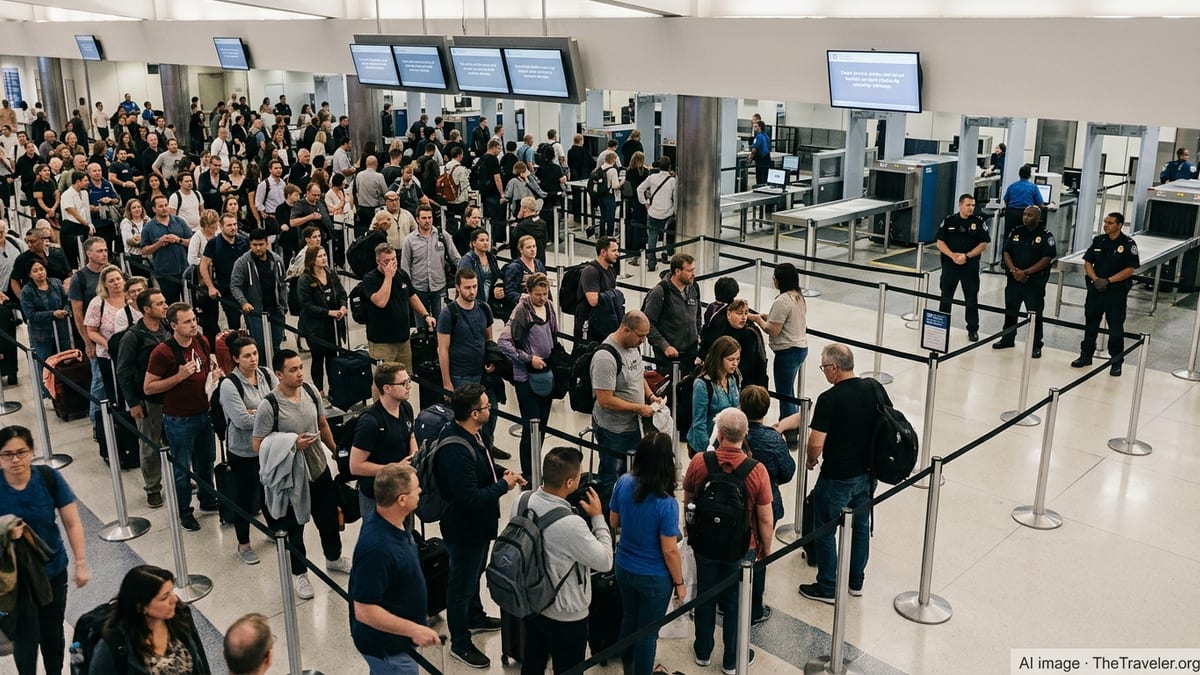
Reports from passengers and airport tracking services showed aircraft holding at gates awaiting fuel, as well as some flights kept at origin airports to avoid additional congestion at Logan. While many inbound flights continued to arrive, the imbalance between arrivals and limited departures led to crowded gate areas, longer tarmac waits and a growing backlog of delayed departures through the late evening.
By late Sunday night, Massport indicated through statements referenced in local news reports that the fueling issue had been resolved and that the ground stop was expected to be lifted. Even after the formal restriction ended, residual delays persisted as airlines worked through the accumulated queue of departures.
Delays, cancellations and a busy holiday weekend
The disruption unfolded at the tail end of the Independence Day holiday period, a peak travel window that had already stretched airline schedules and airport infrastructure. Publicly available flight-tracking data late Sunday showed dozens of delayed departures from Logan, along with a smaller number of outright cancellations, as carriers adjusted to the fueling interruption.
Passengers described, in accounts shared with local media, extended waits on board aircraft that had landed but could not proceed to gates that were occupied by planes waiting for fuel. Others reported being held at departure airports around the country after their flights into Boston were placed under restrictions linked to the ground stop.
For some travelers, the timing compounded what was already a challenging travel day. Heavy traffic returning to the Boston area, lingering weather in parts of the country and high passenger volumes at security and check-in created a tightly wound system in which even a short-lived technical disruption had outsized effects. Airline operations teams at Logan were left to juggle crew duty limits, aircraft rotations and passenger rebookings while the fueling system problem was resolved.
Airport observers noted that holiday weekends often leave less slack in the system, meaning that ground stops associated with technical or weather issues can translate quickly into missed connections and late-night arrivals. Sunday’s fueling issue fit that pattern, with airlines using a mix of delays, reroutings and cancellations to manage the impact on their networks.
What is known about Logan’s fueling infrastructure
Publicly accessible documents describing Boston Logan’s operations indicate that most commercial jet fuel at the airport is distributed through a centralized fuel farm and hydrant system rather than individual tanker trucks serving each aircraft. That system is managed by BOSFUEL, a consortium overseen by participating airlines, with Massport providing oversight of the broader airfield infrastructure.
Environmental and infrastructure reports released by Massport in recent years describe an Aircraft Fueling System designed with leak detection measures, secondary containment and other protections to limit environmental risk. These materials also reference periodic maintenance and system checks as part of the airport’s efforts to keep the fuel network operating reliably in a high-traffic environment.
Similar, if smaller-scale, fueling disruptions have affected Logan in the past. Local news archives document a previous fuel farm outage in 2024 that also prompted a temporary ground stop and led to a wave of residual delays as crews restarted equipment and verified system safety. Industry analysts note that while such events are relatively rare, centralized fuel infrastructure can become a single point of failure when technical faults arise.
Aviation operations specialists generally emphasize that when fueling capacity is constrained, decision-makers often prioritize safety and predictability by holding flights on the ground rather than allowing large numbers of partially fueled or fuel-uncertain aircraft to maneuver around a busy airfield. That approach, visible in Sunday night’s pattern of delays and holds, tends to focus disruption into a shorter window in exchange for a more controlled recovery once systems are restored.
Traveler impact and operational recovery
For passengers with Sunday night departures, the most immediate effects were gate holds, lengthy lines at customer service counters and a wave of rebookings into the early hours of Monday and later in the week. Airline status dashboards late Sunday and early Monday showed extended departure queues on multiple carriers serving domestic and international routes from Logan.
According to publicly available information from flight-tracking platforms, departure performance at Boston improved gradually after the ground stop was lifted, but the backlog translated into some early-morning delays on Monday as aircraft and crews were repositioned. Travelers with tight connections, especially those transiting through other East Coast hubs, faced particular challenges as missed links cascaded through itineraries.
Massport, through information shared in local coverage, encouraged travelers to monitor airline apps and flight status tools closely and to arrive at the airport with extra time while operations stabilized. Given the variability in airline responses, some passengers with later departures saw only modest schedule changes, while others experienced multi-hour delays or overnight stays as planes and crew members timed out or were reassigned.
Airport operations specialists note that recovery from a ground stop tied to infrastructure can differ from one caused by weather. When the underlying issue is resolved, as appeared to be the case with Sunday’s fueling problem, airlines can often accelerate departures by extending ground handling shifts and adjusting gate assignments. However, the complexity of crew scheduling, especially at the end of a busy holiday weekend, can leave ripple effects that persist for several schedule banks.
Recurring questions about resilience at major hubs
The Logan fueling incident arrives amid broader national scrutiny of aviation infrastructure resilience, following recent episodes involving air traffic control staffing constraints, software outages and severe weather disruptions at major hubs. While Sunday’s event was localized to Boston, it added to a growing list of reminders that even routine technical systems can have large-scale impacts when they falter during peak travel periods.
Massport’s own planning documents emphasize investments in airfield technology, ground access improvements and environmental protections, but also acknowledge that concentrated traffic and aging infrastructure create operational challenges. Analysts observing Sunday’s disruption suggested that the event may prompt renewed attention to redundancy, maintenance planning and contingency protocols around fueling operations at large airports.
For travelers, the episode underscores the value of flexible itineraries, real-time status monitoring and contingency planning, particularly when flying at the end of busy holiday stretches. While most flights affected by Sunday’s ground stop were expected to complete their journeys within a day or two, the experience of sudden, systemwide delays from a single infrastructure issue is likely to linger in the minds of many passengers as the summer travel season continues.