


More news on this day
A Southwest Airlines Boeing 737 MAX 8 operating as Flight WN4480 from Denver to New York LaGuardia diverted to Indianapolis, according to live flight-tracking data and publicly available airline information.
Get the latest news straight to your inbox!
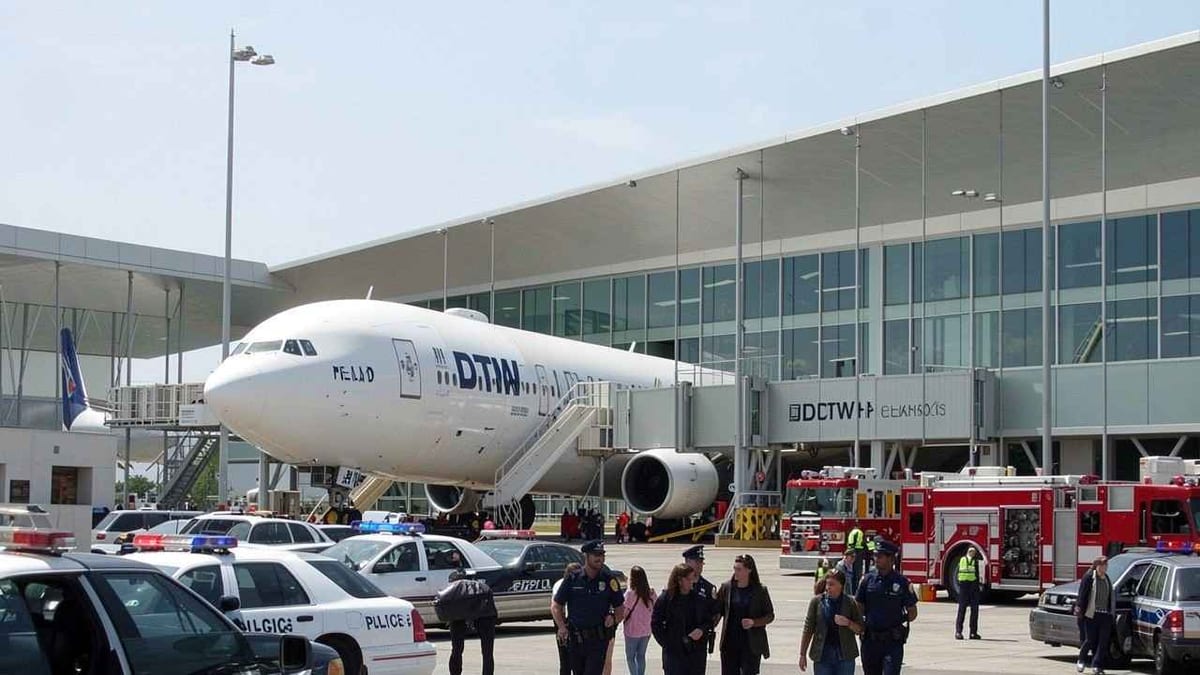
Flight WN4480 Changes Course En Route to LaGuardia
Flight information for Southwest Airlines WN4480 shows the Denver to New York LaGuardia service listed as diverted to Indianapolis International Airport. The scheduled late-night departure from Denver was planned as a nonstop operation to New York, but tracking records indicate that the aircraft instead terminated its west–east segment in Indianapolis.
Publicly available data indicates that the aircraft involved was a Boeing 737 MAX 8, part of Southwest’s growing MAX fleet on longer domestic sectors. The diversion was recorded on the flight’s routing history, noting Denver as the origin, LaGuardia as the intended destination, and Indianapolis as the unscheduled stopping point.
At the time of writing, no detailed causal explanation has been published through airline advisories or regulatory disclosures. Diversions of this type can arise from a range of operational considerations, including weather, air traffic flow constraints, technical inspections, or medical assistance for passengers or crew.
Although the diversion occurred during an overnight operation, available schedule data shows that Southwest continues to list frequent services linking Denver, Indianapolis, and New York, suggesting that the incident is being treated as an isolated, flight-specific disruption rather than a structural change to the route.
Impact on Passengers and Overnight Operations
Based on typical procedures, passengers on Flight WN4480 would have faced an unplanned overnight stop or onward rebooking from Indianapolis. Flight-tracking timelines suggest an arrival in Indianapolis in the early hours, cutting short the planned nonstop segment to LaGuardia and requiring schedule adjustments for travelers expecting a middle-of-the-night arrival in New York.
Overnight and red-eye services are especially vulnerable to cascading effects when diversions occur. Limited ground staffing, constrained airport curfews at some East Coast facilities, and tight aircraft utilization schedules can all complicate quick turnarounds. In this case, LaGuardia’s busy nighttime and early-morning traffic patterns may have further influenced the decision to conclude operations temporarily in Indianapolis rather than press on to New York.
Travelers affected by diversions of this kind typically receive updated itinerary options, including rebooking on later flights or alternate routings. Publicly available information about Southwest’s general policies highlights options for changing flights when irregular operations occur, though specific handling of WN4480 has not been fully detailed in open sources.
Despite the disruption, the use of a large hub airport such as Indianapolis provides access to ground services, maintenance facilities, and additional Southwest departures, which can ease onward travel arrangements compared with diversion to a smaller regional airfield.
Operational Context for Southwest’s Denver–New York Services
Denver and New York LaGuardia are both significant markets for Southwest, with the airline operating multiple daily frequencies on the route as part of its broader transcontinental network. The Boeing 737 MAX 8 has become a common type on higher-demand, longer domestic legs, offering additional range and seating compared with older variants in the 737 family.
Network data and timetable information show that Southwest also maintains a solid presence in Indianapolis, linking the city to Denver, New York, and several other domestic destinations. This network structure can make Indianapolis a practical diversion point for flights that encounter operational issues between the central United States and the East Coast.
Industry observers note that, across U.S. carriers, summer 2026 has brought a mix of congestion issues, convective weather patterns, and crew-availability challenges. While no single factor has been publicly identified for Flight WN4480, the incident fits into a broader pattern of complex operational days in which airlines rely on intermediate hubs to absorb disruptions.
Southwest’s published route maps and schedule data continue to list Denver–New York services as operating normally following the diversion, reinforcing the view that WN4480’s altered path is not indicative of a wider suspension or long-term rerouting of the corridor.
What a Diversion Means for Boeing 737 MAX 8 Operations
The Boeing 737 MAX 8 is designed to operate efficiently across a wide range of conditions, and unscheduled diversions on this aircraft type are managed within established airline safety and maintenance frameworks. Available fleet information indicates that Southwest deploys its MAX 8 aircraft heavily on busy domestic routes, including those linking Denver with major East Coast gateways such as New York.
When diversions occur, flight crews follow standardized checklists and coordinate with dispatch, air traffic control, and airport teams to identify the most suitable diversion airport. Large facilities like Indianapolis International can offer the runway length, ground equipment, and staffing needed to support a fully loaded 737 MAX 8 during an unplanned stop.
In the context of Flight WN4480, the choice of Indianapolis aligns with these criteria. While detailed technical data for this particular flight have not been made public, the use of a major airport suggests that the diversion was handled within routine operational parameters for the aircraft type.
For travelers, the aircraft itself is generally not the critical factor in a diversion’s impact; instead, the key issues are timing, rebooking options, and access to services on the ground. Boeing 737 MAX 8 operations are integrated into Southwest’s broader fleet plan, enabling the airline to reposition aircraft and crews after an event and restore normal scheduling.
Guidance for Travelers on Future Denver–New York Flights
For passengers booked on upcoming Southwest flights between Denver and New York, publicly available information continues to show the route operating on a regular basis, including on Boeing 737 MAX 8 equipment. Flight Wn4480’s diversion appears to be one irregular-operation event within a larger, still-active schedule.
Travel experts generally recommend that passengers monitor their flight status closely on the day of departure, particularly during peak travel periods or when storms and congestion are affecting large portions of the U.S. airspace system. Tools such as airline apps, airport information boards, and independent flight-tracking platforms can provide early indications of delays or routing changes.
If a flight is diverted or significantly delayed, travelers are usually able to explore options such as same-day changes, travel-credit arrangements, or rerouting through alternative hubs. These options vary depending on ticket type, timing, and the cause of the disruption, but they can help ease the practical impact of events similar to the diversion experienced by Flight WN4480.
As airlines navigate a busy summer travel season, incidents like this diversion highlight the importance of flexibility in trip planning, buffer time in tight itineraries, and awareness of the broader network that carriers like Southwest operate through cities including Denver, Indianapolis, and New York.