


More news on this day
Across Europe and beyond, railways are racing to retire aging GSM-R radio systems and introduce 5G-based Future Railway Mobile Communication System platforms that promise denser traffic, smarter operations and smoother cross-border travel, even as cyber risk climbs sharply with every new connected component.
Get the latest news straight to your inbox!
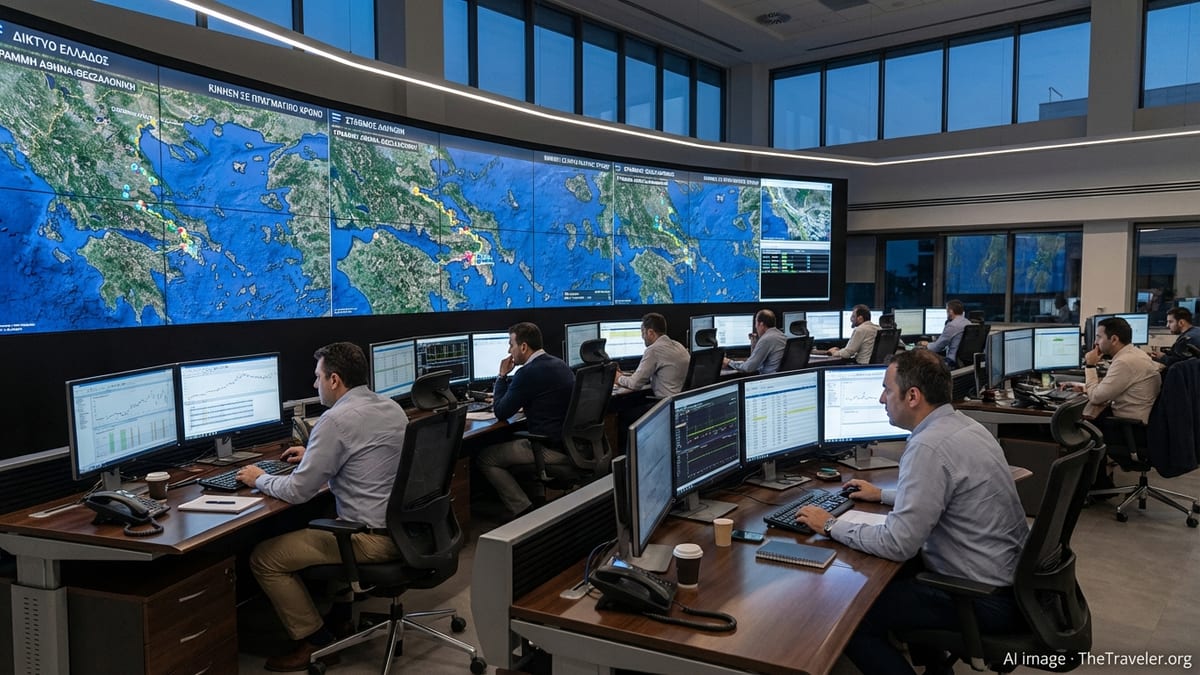
From GSM-R to FRMCS: a high-stakes technology shift
The Global System for Mobile Communications – Railway, better known as GSM-R, has formed the backbone of train-to-trackside voice and data links since the early 2000s. Built on 2G technology, it underpins the European Train Control System, allowing signalling instructions to be sent directly to the cab and enabling higher line speeds and tighter headways than traditional trackside signals.
As passenger numbers rebound and freight operators seek more capacity without building new lines, industry bodies have determined that GSM-R can no longer meet long-term performance and lifecycle needs. The Future Railway Mobile Communication System, or FRMCS, has been selected as the global successor, using 4G and 5G standards to carry mission-critical voice, data and video with far higher bandwidth and lower latency.
Sector reports describe FRMCS as a system-of-systems that integrates radio access, core networks, applications and security in a unified architecture. Trials and “plugtests” events coordinated by international rail and standards organizations indicate that 5G-based components are now mature enough to support live operational scenarios on dedicated spectrum bands while coexisting with legacy GSM-R on test routes.
National migration roadmaps are beginning to crystallize. In Europe, research published in mid-2026 points to early FRMCS pilots already running on 1900 MHz bands, while operators such as Deutsche Bahn plan staged rollouts extending into the 2030s. Switzerland is upgrading its communications core to support VoLTE and future FRMCS services ahead of national mobile network changes, illustrating how telecom lifecycles are now tightly bound to rail planning.
Efficiency gains: automation, capacity and real-time railways
Proponents argue that FRMCS and associated digital signalling can unlock a step change in rail efficiency. The new standard is designed to support higher-level European Train Control System operation and Automatic Train Operation, which together can shrink the gaps between trains, smooth braking and acceleration, and recover from disruptions more quickly.
With 5G as the transport layer, FRMCS is expected to carry continuous, high-rate data feeds from trains, trackside sensors and wayside equipment. Industry briefings describe scenarios in which real-time condition monitoring detects faults before they trigger failures, and where analytics platforms adjust timetables dynamically to squeeze more capacity out of congested corridors.
Private 5G deployments along key routes are a central part of this vision. Recent project updates from European consortia highlight successful trials of end-to-end FRMCS solutions in real railway environments, combining onboard units, dispatch systems and mission-critical services over dedicated 5G infrastructure. These demonstrations are being presented as proof that the technology can meet rail’s strict requirements for availability, handover and latency.
Passenger-facing services are also in focus. By converging operational and commercial connectivity on a common 5G-based platform, operators hope to provide more reliable onboard Wi-Fi, real-time occupancy data and richer information services without undermining safety-related traffic. Advocates say this convergence could help justify investment in new networks by sharing infrastructure costs across multiple use cases.
Cyber threats grow as railways go fully IP
The same features that make FRMCS attractive for digital railways also widen the sector’s exposure to cyber threats. Moving from isolated, purpose-built radio systems to IP-based, standards-driven networks creates more interfaces, more software and more opportunities for attackers to exploit vulnerabilities.
Policy papers and technical studies warn that legacy components of the broader European Rail Traffic Management System already exhibit security weaknesses, including limited encryption and authentication in certain train-to-ground links. As GSM-R is gradually replaced or operated in parallel with FRMCS, analysts note that attackers could seek to pivot between old and new systems during the long coexistence period.
In the United States, separate assessments of rail infrastructure have drawn attention to unaddressed cybersecurity issues in wayside equipment and signalling networks, arguing that relatively low-cost tools could be used to disrupt operations. New regulatory proposals are pushing operators to formalize cyber risk management programs, but implementation remains uneven across freight and passenger rail.
Academic research published in 2026 on European signalling architectures concludes that even with FRMCS in place, the overall security of rail control depends heavily on how higher-level systems such as ETCS are configured. The study identifies full deployment of more advanced ETCS levels, combined with robust key management and monitoring, as one of the most significant measures to improve resilience against network and protocol attacks.
Recent disruptions underline the cost of fragility
While many cyber risks remain theoretical, recent real-world incidents have underscored the vulnerability of existing rail communication systems. In June 2026, a nationwide outage of GSM-R in Germany triggered a full halt of Deutsche Bahn services for what commentators described as an unprecedented technical stoppage, rippling across European timetables.
Initial industry analysis of the event has portrayed it as a clear illustration of the dangers of relying on aging, centralized systems nearing the end of their supported life. Observers argue that a future architecture based on FRMCS and modern 5G design principles, including network slicing and redundant cores, could help avoid single points of failure that can cripple entire networks.
Elsewhere, partial disruptions and signalling glitches in recent years have often been traced to software misconfigurations, overloaded communication links or maintenance errors rather than hostile attacks. Even so, each high-profile incident feeds public and political scrutiny of how resilient digital railways really are, particularly as cities and governments promote rail as a low-carbon backbone of national transport.
Industry groups acknowledge that migration brings its own risks. Running GSM-R and FRMCS side by side for years will add complexity and create new dependencies, and operators will need to ensure that transitional designs do not introduce additional single points of failure. Testing campaigns and staged cutovers are being positioned as critical tools to contain these operational hazards.
Building security into the next generation of rail networks
Responding to the dual pressures of modernization and cyber risk, suppliers and operators are increasingly describing security as an integral design pillar rather than an afterthought. Technical papers and deployment guides emphasize features such as end-to-end encryption, strong mutual authentication, and continuous patch management across the FRMCS stack.
Vendors involved in recent FRMCS field trials in Europe report that cybersecurity considerations now shape network architecture decisions from the outset, including segmentation between safety-critical and non-critical traffic, secure onboarding of onboard units and remote access controls for maintenance staff. Some private 5G pilots are using cloud-based analytics to monitor radio performance and detect anomalies that could signal either faults or malicious activity.
At the policy level, regulators in several regions are tightening requirements for incident reporting, asset inventories and cyber governance in the rail sector. Guidance being developed in Europe links FRMCS migration to broader critical infrastructure security rules, while in North America, new transportation security directives are pushing railroads toward more structured cyber programs and exercises.
Specialists caution that technology alone will not resolve the tension between efficiency and security. They point to ongoing skills shortages in both rail operations and cyber defense, and to the challenge of maintaining complex, multi-vendor platforms over decades. For now, the picture that emerges from publicly available information is of an industry attempting to harness the potential of 5G-era communications without repeating the security oversights of the past, aware that future rail reliability will depend as much on digital resilience as on steel and concrete.