


More news on this day
New images emerging from a July 5 train derailment, along with archival scenes from similar midsummer rail incidents, reveal how quickly holiday travel can be thrown off course when freight and passenger lines are disrupted.
Get the latest news straight to your inbox!
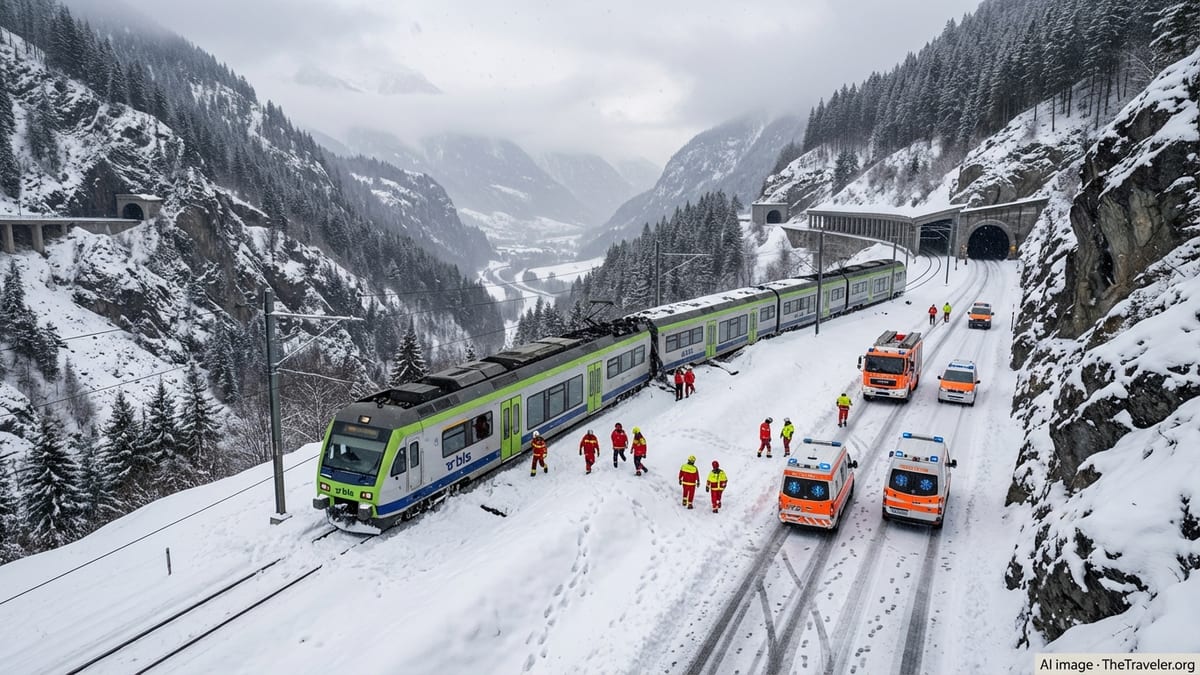
Smoke, Fire and a Sudden Halt to Holiday Plans
Early-morning images from a July 5 freight derailment near small Midwestern and Plains communities show a familiar pattern: twisted tank cars, thick plumes of smoke and road crossings suddenly blocked at the height of a busy holiday weekend. In several incidents over recent years, including hazardous materials derailments in North Dakota and Mississippi on July 5 in different summers, photographs have documented long strings of freight cars jackknifed across the right of way and flames rising from damaged tank cars.
Published coverage of the 2024 derailment near Bordulac, North Dakota, describes 29 Canadian Pacific Kansas City railcars off the tracks and a substantial fire on the edge of town. Photos from that scene capture tank cars resting at sharp angles and a large column of smoke visible from nearby highways and farm fields. In some frames, firefighters appear as small silhouettes against an orange glow, underscoring the scale of the blaze relative to the surrounding prairie landscape.
In a separate July 5 event in 2025 near Glendora, Mississippi, reports and images show a CN freight train derailing with at least one benzene tank car catching fire. Nighttime photographs taken from evacuation routes depict a bright fireball beyond tree lines and fields, with emergency vehicles lining rural roads. Together, these scenes form a stark gallery of how quickly a routine freight run can become a regional emergency as travelers attempt to drive past blocked crossings or detour around smoke-filled corridors.
For road travelers and nearby residents, these images often become their first indication that a rail incident has unfolded out of sight of major highways. As cars back up at closed grade crossings and navigation apps start to re-route, the smoky sky, flashing lights and stationary freight consists captured in photographs help explain the chain of delays that ripple out across a wider region.
Evacuations, Shelters and a Community on the Move
Photographs from July 5 rail emergencies also highlight the human side of disruption as communities mobilize to shelter evacuees. In Glendora in 2025, publicly available images show residents carrying bags and pet carriers to temporary shelters after a hazardous materials release was reported. School gyms and community centers appear lit late into the night, with cots and folding chairs arranged in neat rows beneath basketball hoops and scoreboard clocks.
A similar pattern emerges in coverage of the North Dakota derailment. Local reporting describes incident command posts set up near small-town crossings, where aerial photos show emergency vehicles clustered like a ring around the derailed train. Maps shared with the public illustrate one-mile evacuation and monitoring zones, with highlighted circles overlapping farmsteads, grain bins and county roads. While not all residents are displaced in every incident, the visual record emphasizes how even a relatively small derailment can temporarily redraw the geography of daily life.
More recently, on the night of July 5, 2026, a derailment near Bucyrus, Ohio, prompted an evacuation order within a one-mile radius due to concern about a possible hydrochloric acid leak. News photos accompanying that coverage depict Bucyrus High School converted into an emergency shelter, with doors propped open and staff preparing to receive residents. The school’s parking lot, usually quiet at the end of a holiday weekend, is instead filled with vehicles arriving under the glare of portable lighting towers.
These recurring July 5 scenes of buses, school buildings and community centers being repurposed for emergency use underline how closely rail infrastructure intersects with local travel routines. Visitors passing through by car, and locals returning from Independence Day gatherings, often find themselves detouring through unfamiliar neighborhoods or pausing in shelter parking lots, adding an unplanned chapter to their holiday journeys.
Rail Safety Lessons Behind the Images
Beyond the immediate visual drama, the gallery of July 5 derailment photos is closely linked to ongoing safety discussions. The National Transportation Safety Board’s final report on the July 5, 2024 Canadian Pacific Kansas City derailment near Bordulac notes that 29 cars, including multiple hazardous materials tank cars, left the tracks following a collapse of the track subgrade. Images from the investigation show damaged culverts and compromised embankments, along with scorched tank shells, offering a technical backdrop to the striking fire-scene photographs.
Recent industry coverage indicates that the Bordulac accident has renewed scrutiny of legacy DOT-111 and rebuilt DOT-117R tank cars. Photo sequences released through regulatory dockets and rail publications display heat-damaged tanks, deformed fittings and breached shells, which have become visual evidence in debates over whether older cars should be retired more quickly from hazardous materials service. These pictures, often captured during daylight inspections after the fire is extinguished, contrast sharply with the dramatic nighttime fire imagery that initially circulates after a derailment.
Other publicly available images highlight culvert and drainage structures beneath the tracks, which have become a focal point of safety recommendations stemming from the July 5 North Dakota event. Close-up photos of collapsed or undermined culverts help explain how heavy rainfall and aging infrastructure can contribute to track failure just before peak summer travel periods. For travelers reading about delays hours or days later, such engineering details offer context for why a single point of failure can sideline long freight consists and affect passenger routes over a broad area.
Together, the technical and on-the-ground images from multiple July 5 derailments function as a visual archive for regulators, rail operators and the traveling public. They document not only the immediate disruption but also the underlying infrastructure issues that can transform a quiet early-morning freight run into a large-scale response on one of the busiest weekends of the year.
Ripple Effects on Passenger Routes and Holiday Travel
While many July 5 derailments involve freight rather than passenger trains, the travel consequences extend far beyond the freight rail corridors themselves. Published coverage and traveler accounts from the past two summers describe cascading disruptions as passenger routes are suspended, re-routed or delayed in the wake of freight incidents and associated heat-related slow orders.
In 2025, the Glendora derailment led to cancellations and diversions of long-distance passenger services that share track with CN freight operations. Social media posts and travel forums from that period show images of passengers waiting in station halls with luggage piled around them, along with photos from train windows revealing freight consists standing idle on adjacent tracks. The impression is of an entire rail corridor slowed to a crawl just as travelers attempt to return home from the holiday.
During the 2026 Independence Day weekend, separate from any single freight incident, extreme heat across parts of the United States contributed to the cancellation of multiple Amtrak departures, including services along the busy Northeast Corridor. Photos from stations in major cities depict crowded concourses, long lines at information desks and digital boards filled with delay notations. For many travelers, these scenes coincided with ongoing freight-rail recovery work elsewhere on the network, amplifying the sense of a system under strain.
Taken together, the gallery of July 5 derailment and disruption images underscores a broader reality for holiday travelers. A freight derailment hundreds of miles away, combined with weather-related speed restrictions, can ripple through passenger timetables on the very day when trains are most in demand. The result is a patchwork of crowded stations, substitute buses and extended layovers that becomes part of the visual story of the holiday weekend.
Remembering Past July 5 Disasters
The date of July 5 already holds a particular resonance in rail safety circles because of earlier tragedies that continue to inform modern practice. Historical documentation of the 2013 Lac-Mégantic oil train disaster in neighboring Quebec, which unfolded overnight between July 5 and July 6, shows catastrophic damage to a downtown district following the runaway derailment of a crude oil train. While the official accident time falls just after midnight on July 6, many retrospective accounts reference July 5 as the day routine operations began to unravel.
Archival photographs from Lac-Mégantic display a starkly altered urban landscape, with rows of buildings reduced to foundations and burned-out tank cars resting amid rubble. These images are regularly revisited in technical reports, public inquiries and safety campaigns that seek to explain how operational decisions and equipment standards can combine to produce far-reaching consequences for communities and travelers.
Modern July 5 derailments, including the more recent North Dakota and Mississippi incidents and the 2026 evacuation in Ohio, are far smaller in scale than Lac-Mégantic. Yet photos from these newer events are often presented alongside historical images in coverage that traces the evolution of tank car regulations, routing decisions and emergency planning. The visual juxtaposition reinforces the connection between everyday freight activity and the rare but serious failures that can affect an entire region’s mobility.
For travelers, the growing gallery of July 5 rail images provides both a cautionary record and a reminder of how resilient networks can become after disruption. Frames that once showed derailed cars and smoke columns are eventually followed by photos of cleared tracks, reopened crossings and trains once again moving through towns at their usual pace, signaling the resumption of summer journeys across the rail map.