


More news on this day
Rail passengers travelling to and from Gatwick Airport are facing a fresh wave of disruption at the same time as a multibillion pound upgrade of the airport gathers pace, sharpening questions about whether surface transport is keeping up with Gatwick’s growth ambitions.
Get the latest news straight to your inbox!
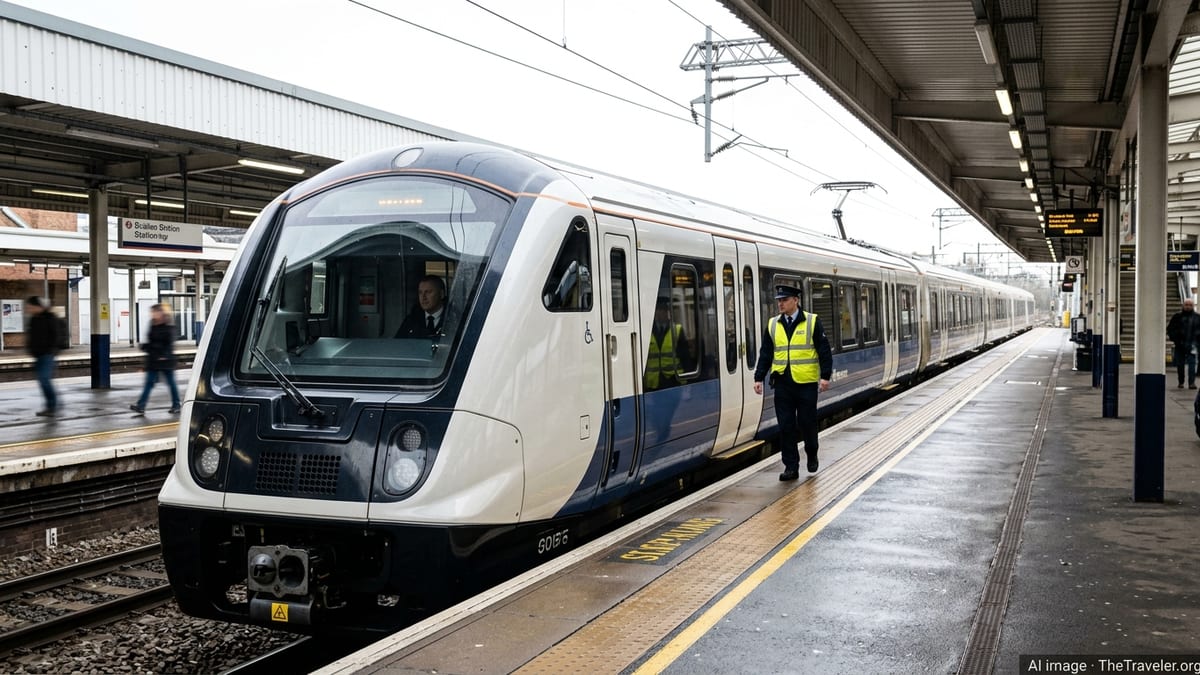
New incidents highlight fragile rail links to Gatwick
Recent disruption on key commuter and airport routes in south London and Sussex has once again exposed the vulnerability of rail connections into Gatwick. Reports from rail news outlets describe significant problems today after bridge damage near Purley forced all lines to close through a critical section used by Southern and Thameslink, hitting services between London, Gatwick and the south coast.
Separate coverage of a signalling fault and depot derailment earlier this year detailed how Southern, Thameslink and Gatwick Express services were severely curtailed, with widespread cancellations and delays across the network feeding into the airport’s main rail artery. Together with previous “do not travel” warnings issued in February after multiple incidents across south east England, the pattern has reinforced perceptions of an increasingly unreliable service for airport users.
National rail alerts over the past few months have also flagged repeated issues on routes that funnel traffic towards Gatwick, including incidents around Hassocks and engineering closures between East Croydon and the airport. Travellers heading for flights have frequently been advised to allow additional time, reroute via alternative lines or switch to replacement buses when rail options have broken down.
For departing and arriving passengers, the compounding effect of delays, missed connections and hurried rebookings is turning what should be a straightforward rail journey into a critical point of failure in the wider airport experience.
Nationalisation and network pressures on key operators
The latest disruption comes just weeks after Govia Thameslink Railway, the country’s largest train operator, moved into public ownership. The operator’s brands Southern, Thameslink, Great Northern and Gatwick Express together carry large volumes of airport‑bound traffic and dominate rail access to Gatwick.
Government statements and industry briefings around the nationalisation framed the change as part of a broader shift towards a unified Great British Railways structure. Supporters argue that bringing GTR routes under direct state control could eventually improve accountability and long‑term investment in reliability, particularly on strategic airport corridors.
However, the timing has coincided with a spate of high‑impact incidents across south east England, from derailments and power failures to emergency line closures between Horsham, Three Bridges and London hubs. Industry reports and regional reviews show how relatively localised faults can quickly cascade across the densely used Brighton Main Line and its branches, leaving airport services vulnerable to disruption far from the terminal itself.
Passenger accounts on social platforms and in local media indicate growing frustration with what many see as chronic unreliability on these routes. For frequent flyers, shift workers and holidaymakers, the uncertainty surrounding rail punctuality is increasingly shaping decisions on when and how to travel to the airport, and in some cases encouraging a shift to road‑based alternatives.
£2bn plus investment plan reshapes Gatwick on the ground
While rail operators grapple with operational challenges, Gatwick Airport is pressing ahead with one of the largest investment programmes in its history. Financial and planning documents linked to the airport’s Northern Runway Project and capital investment plans refer to more than £2 billion in spending over the coming years, funded by private investors.
The programme includes enabling works for bringing the existing northern runway into regular use, expanded terminal and gate capacity, and upgrades to core infrastructure across the campus. Airport publications emphasise goals such as reducing the need to bus passengers to remote stands, improving energy efficiency and overhauling ageing facilities like the main forecourts and staff areas.
Gatwick’s management has consistently highlighted surface access as a priority, pointing to previous investment in the on‑site railway station, where a major concourse expansion and platform improvements were completed to relieve crowding and improve accessibility. More recent rail sector reports have underlined that the new station concourse now serves as a primary gateway for a significant share of passengers arriving by train.
Yet the contrast between upgraded station infrastructure and continuing disruption on the wider rail network is becoming sharper. While the immediate station environment has improved compared with a decade ago, persistent reliability issues upstream mean passengers may never reach the new facilities in time to benefit from them.
Capacity growth risks clashing with unreliable access
If Gatwick’s expansion unfolds as planned, the airport could handle significantly more passengers each year, aided by the regular use of its northern runway and associated terminal enhancements. Published assessments of the runway project suggest the hub is positioning itself as a stronger rival to Heathrow and other European gateways, with a focus on short haul and leisure markets as well as long haul links.
This potential growth raises difficult questions about how many additional travellers the surrounding transport network can reliably accommodate. Rail is marketed as the quickest and most sustainable way to reach the airport from London and much of the south east, and plays an important role in limiting road congestion on the nearby motorway network.
However, recurring problems on lines operated by Southern, Thameslink and Gatwick Express are undermining that proposition. When services are suspended between key junctions such as East Croydon, Purley, Three Bridges and Brighton, thousands of passengers can be forced onto already busy roads, taxis and coaches at short notice, complicating efforts to cut emissions and manage peak traffic.
Transport analysts note that punctual, frequent rail links are especially critical once an airport scales up to higher traffic levels. Any mismatch between capacity in the air and resilience on the ground risks creating bottlenecks that reverberate through airlines, ground handling and security operations.
Balancing long‑term ambitions with short‑term disruption
For now, travellers heading to Gatwick are being urged through public information channels to check live rail updates carefully, consider alternative routes via London Victoria or other hubs, and allow significantly more time for journeys. Engineering works scheduled across parts of the region later this year, including on lines feeding into Gatwick, are expected to bring further planned disruption alongside the risk of unplanned incidents.
In the medium term, the shift of GTR services into public ownership may offer an opportunity to align rail planning more closely with Gatwick’s long‑term development, including commitments within the airport’s master plans and sustainability strategies. Closer coordination on timetabling, resilience upgrades and contingency arrangements could help ensure that new runway and terminal capacity is matched by robust rail access.
Until those benefits are felt, though, the passenger experience will remain caught between two conflicting realities: an airport investing heavily to expand and modernise, and a rail network that continues to suffer high‑profile breakdowns at moments when travellers most need reliability.