


More news on this day
Hourslong security lines at Lihue Airport on Kauai have been linked to ongoing generator-powered operations following Hurricane Lowell, as travelers report extensive delays at TSA checkpoints and disrupted departure schedules.
Get the latest news straight to your inbox!
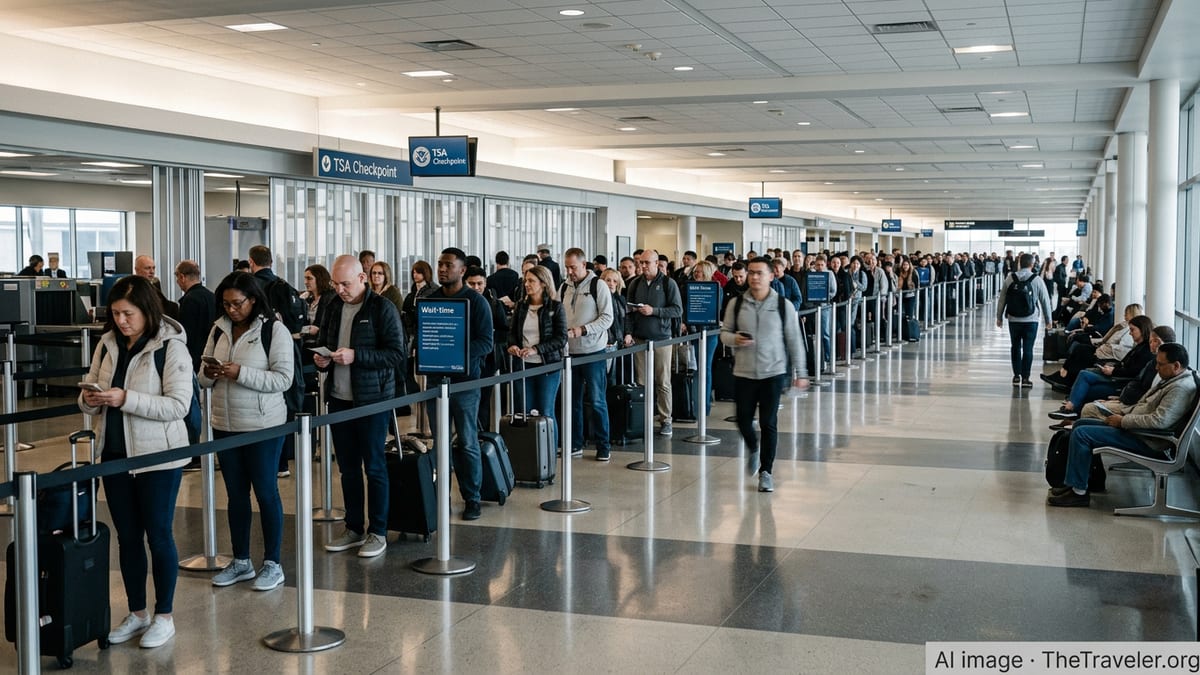
Backup Power Strain After Hurricane Lowell
Publicly available updates show that Lihue Airport has been operating on generator backup this week as Kauai continues to recover from widespread power outages after Hurricane Lowell. The Hawaii Department of Transportation reported that commercial flights resumed by the afternoon of September 8, but noted that the airport was relying on temporary power while utility crews worked to restore islandwide service.
County of Kauai briefings around the same period indicated that a large majority of customers on the island remained without electricity, underscoring the scale of the disruption to local infrastructure. With the terminal dependent on backup systems rather than normal grid power, even routine airport functions have faced additional stress.
Travel industry advisories and accommodation updates for Kauai referenced ongoing electrical problems, including at properties near Lihue, and pointed out that airport operations were being supported by temporary power solutions. This context helps explain how a failure or limitation involving generators could cascade into bottlenecks at passenger screening.
While runways and airfield operations were restored quickly enough for flights to resume, the more fragile side of the airport’s infrastructure has been under pressure. Security screening lanes, ticketing systems and passenger information displays are among the services that depend heavily on reliable electrical power.
Hourslong Lines Reported at TSA Checkpoints
Reports circulating on traveler forums on September 11 describe an unusual scene at Lihue Airport, with the TSA line stretching out of the terminal doors and into the parking areas. Contributors wrote that passengers were waiting several hours to clear security and that some flights were delayed or departing with many booked travelers still stuck in screening queues.
Individual accounts indicate that at least part of the screening area appeared to be operating on limited generator power, with references to only a portion of the TSA equipment functioning. In practice, this meant fewer active lanes handling roughly the same number of departing passengers, creating a queue that moved slowly even when flights were held at the gate.
Other comments from the same day suggest that not all departures were equally affected. Some travelers who arrived at off-peak times reported more manageable waits, pointing to a pattern in which the most severe delays coincided with morning and midday banks of interisland and transpacific flights.
Historical information from the airport’s own website notes that the primary TSA checkpoint normally operates from early morning until late evening, with two additional satellite checkpoints opened during peak periods. When power constraints or equipment issues limit how many of those checkpoints can be staffed and fully energized, passenger throughput can drop sharply even without any change in scheduled traffic.
Airlines Issue Waivers as Disruptions Mount
Airline bulletins issued this week corroborate that infrastructure problems at Lihue have had a material impact on travel. One major carrier published a travel exception policy on September 8 specifically tied to “Lihue Airport infrastructure,” allowing customers traveling to, from or through LIH to change plans without standard fees for a defined period.
A subsequent update on September 9 extended the affected travel dates, reflecting expectations that the airport and the broader island power grid would continue to face challenges beyond the initial 24-hour window. The advisory framed the situation as an infrastructure issue connected to Hurricane Lowell, rather than a short-term flight operations disruption such as weather at departure time.
These waivers effectively acknowledged that passengers might struggle to reach their scheduled flights even if the runways and airspace remained open. By relaxing change fees and rebooking rules, carriers offered some flexibility to travelers confronted with unexpectedly long waits at security or uncertainty about when full airport power would be restored.
Publicly available information from airline advisory pages does not enumerate specific TSA equipment failures, but it consistently links the waivers to the condition of the airport facilities. Combined with on-the-ground accounts of limited generator capacity supporting screening, the picture that emerges is one of a system strained well beyond normal operating margins.
Fragile Infrastructure Exposed on a Key Tourism Gateway
The situation at Lihue Airport highlights how quickly a localized power issue can ripple through a busy leisure gateway. Kauai receives a steady stream of visitors who often cluster departures around checkout times from resorts, concentrating demand on the TSA checkpoints during certain hours. Under generator power and with partial screening capacity, those surges translate into multi-hour lines instead of the sub-30-minute waits that state performance targets typically seek to achieve.
Budget documents and planning materials for Hawaii’s airports have long emphasized the importance of reliable electrical and mechanical systems at Lihue, including lighting, security and flight information networks. Separate state records identify planned investments in power systems and terminal improvements, illustrating that the vulnerabilities revealed by Hurricane Lowell were already on the radar of transportation planners.
The current episode may sharpen the focus on projects that harden backup power at smaller but strategically vital airports across the islands. For Kauai, where residents and visitors alike rely on a single commercial airport, redundancy in generators and distribution equipment can make the difference between a manageable disruption and a days-long bottleneck for outbound travel.
Observers also note that, as Hawaii pursues a broader airports modernization program, the lessons from Lihue’s generator-driven delays could influence design priorities for future terminal upgrades. Integrating resilient power infrastructure directly into passenger-processing areas may become a higher priority for projects on outer islands that face more limited repair resources after major weather events.
What Travelers Can Expect in the Coming Days
Forecasts for Lihue indicate more typical trade-wind weather in the days ahead, reducing the likelihood of further storm-related closures. The key variable now is the pace of utility restoration on Kauai and the transition of Lihue Airport from generator power back to the main electrical grid.
As of the latest available updates, airlines are continuing to monitor conditions and maintain flexible rebooking options tied to the airport infrastructure advisory window. Travelers with upcoming departures from Lihue this week are being encouraged, through public-facing guidance, to check their flight status frequently and allow extra time to clear security while the airport completes its recovery.
Online discussions from visitors and residents suggest that conditions at the checkpoints can change rapidly during the day, with quieter periods alternating with renewed surges. Those patterns may moderate once all screening lanes and satellite checkpoints can be brought back online at normal capacity and backed by stable power.
For now, the generator issues that helped trigger hourslong screening delays at Lihue Airport stand as one of the most visible reminders of Hurricane Lowell’s impact on Kauai’s infrastructure. How quickly that image is replaced by a return to normal processing times will depend on repair crews, equipment reliability and the resilience built into the airport’s next round of upgrades.
Hawaii Department of Transportation update on Hurricane Lowell impacts
Delta Air Lines Lihue Airport infrastructure travel advisory