


More news on this day
Germany has granted formal approval for Alstom’s Coradia iLint hydrogen fuel cell train to carry passengers on its national rail network, a milestone that positions the country at the forefront of zero-emission regional rail technology.
Get the latest news straight to your inbox!
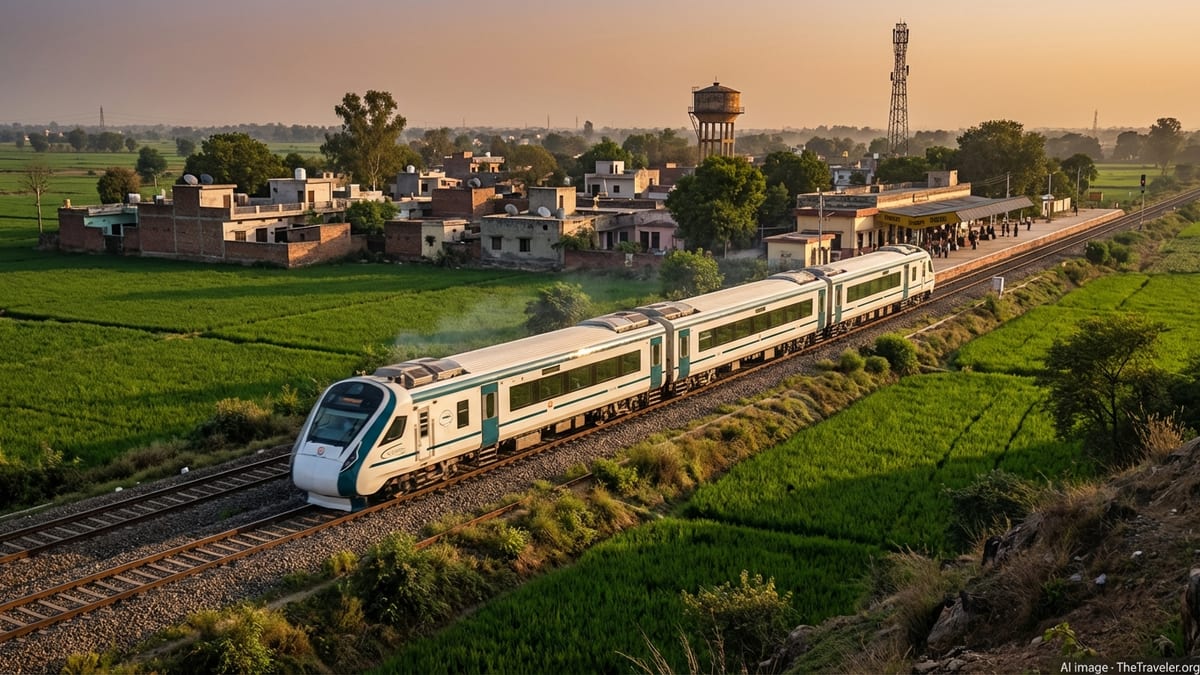
A Regulatory First for Hydrogen Passenger Trains
Publicly available information shows that Germany’s Federal Railway Authority provided type approval for the Coradia iLint, confirming that the two-car multiple unit meets national safety and technical standards for passenger operation. The authorization covers use on conventional regional lines, where many services are still operated by diesel-powered rolling stock.
The Coradia iLint is based on Alstom’s existing Coradia Lint regional platform, but replaces the conventional diesel drivetrain with a hydrogen fuel cell and on-board energy storage system. The train converts hydrogen into electricity in real time to power its traction motors, with water and steam as the primary local by-products.
Reports indicate that initial approval in Germany has been a key prerequisite for wider deployment of hydrogen trains across Europe. Testing, homologation and pilot operations in several German states helped demonstrate that fuel cell traction can be integrated into regular regional timetables without major changes to operations.
Industry coverage notes that Germany’s green light for the Coradia iLint effectively created a regulatory template for similar hydrogen multiple units, giving manufacturers and transport authorities a clearer pathway from prototype to full commercial service.
From Prototype to Commercial Passenger Service
According to published coverage, pre-series Coradia iLint trains began trial runs on German tracks several years before the latest approvals for broader passenger use. These early deployments focused on non-electrified routes in Lower Saxony, where regional services had previously relied on diesel multiple units.
During test campaigns, the trains operated mixed with conventional services, allowing engineers and operators to validate energy consumption, refueling logistics and timetable robustness under real-world conditions. Data from these trials indicated that the hydrogen units could match or exceed the range and performance of comparable diesel trains while significantly reducing local emissions.
Subsequent contracts for series-built Coradia iLint units have expanded their footprint within Germany’s regional rail network. Publicly available project summaries describe orders for fleets serving routes in Lower Saxony and the Frankfurt Rhine-Main region, among others, with multi-year maintenance and hydrogen supply agreements bundled into long-term packages.
By progressing from demonstration sets to series production and full passenger operations, the Coradia iLint has become one of the most visible examples of hydrogen technology in everyday public transport, complementing battery and overhead-wire electrification strategies.
Technical Profile of the Coradia iLint
Technical documentation and specialist rail reports describe the Coradia iLint as a two-car articulated regional train capable of speeds broadly comparable to diesel multiple units used on secondary routes. A roof-mounted hydrogen storage system feeds fuel cells that generate electricity, which is then distributed through traction converters to the bogie-mounted motors.
The train is designed with on-board batteries that store excess electrical energy, for example when braking or when fuel cell output temporarily exceeds traction demand. This hybrid architecture allows the fuel cells to run at relatively stable, efficient load points while the batteries handle short-term peaks in acceleration.
Depending on operating conditions and route profiles, range figures cited in public materials typically extend to several hundred kilometres on a single hydrogen refueling. This autonomy is aimed at enabling a full day’s operation on many regional diagrams without the need for intermediate fueling, which can simplify early network deployment.
The iLint’s design also targets noise reduction, with multiple sources noting that it generates lower sound levels than equivalent diesel units under acceleration and at station stops. Combined with the absence of exhaust gases along the route, this is presented as a quality-of-life benefit for both passengers and communities living near regional lines.
Infrastructure and Hydrogen Supply Challenges
While train approval is a central milestone, regional authorities still face infrastructure and energy questions as they scale up hydrogen rail. Information from project descriptions in Germany highlights investment in dedicated hydrogen refueling facilities, often located at regional depots where trains are stabled overnight.
These depots typically include storage tanks, compression systems and fueling stations designed to handle multiple trainsets within short time windows. In some cases, hydrogen is produced off-site and transported to the depot; in others, on-site production using electrolysers is being explored to align more closely with renewable power sources.
Debate continues within the rail sector over the best use cases for hydrogen compared with full line electrification or battery trains. Analysts often point to long, non-electrified regional lines with relatively low traffic density, where the cost of installing overhead wires is hard to justify, as prime candidates for hydrogen-powered units.
Germany’s approval of the Coradia iLint therefore intersects with broader questions about how to balance investment in infrastructure, rolling stock and energy supply chains, particularly as national and EU climate targets call for rapid decarbonization of transport.
Implications for Europe’s Rail Decarbonization Efforts
Germany’s decision to certify the Coradia iLint for passenger service is being watched closely by other European regions weighing hydrogen options for their own networks. Demonstration runs have already taken place in several countries, suggesting a growing interest in replicating the German experience where local conditions are suitable.
For Germany itself, the deployment of hydrogen multiple units fits into a wider mix of decarbonization tools that includes electrification of core corridors, introduction of battery-equipped regional trains and continued efficiency improvements in rail operations. Hydrogen trains are being positioned as a complementary solution for corridors where overhead lines are unlikely to be installed in the near term.
As more data emerges from day-to-day operations, observers expect closer scrutiny of lifecycle emissions, including the carbon intensity of hydrogen production. The environmental advantage of hydrogen traction depends heavily on moving from fossil-based hydrogen to supplies generated from renewable electricity, a shift that is only partially under way.
Even so, Germany’s approval of Alstom’s hydrogen train for regular passenger service marks a notable moment in the transition away from diesel on regional routes. It signals that fuel cell multiple units are no longer only prototypes or pilot projects, but part of the practical toolkit countries can use to modernize and decarbonize their rail systems.