


Germany is in the midst of its most significant immigration overhaul in decades. For internationally mobile professionals, investors and globally active employers, recent and upcoming legal changes are reshaping who can move to Germany, under what conditions, and how quickly newcomers can convert temporary status into long term residence or citizenship. Understanding these shifts is critical for anyone evaluating Germany as a relocation destination in the coming years.
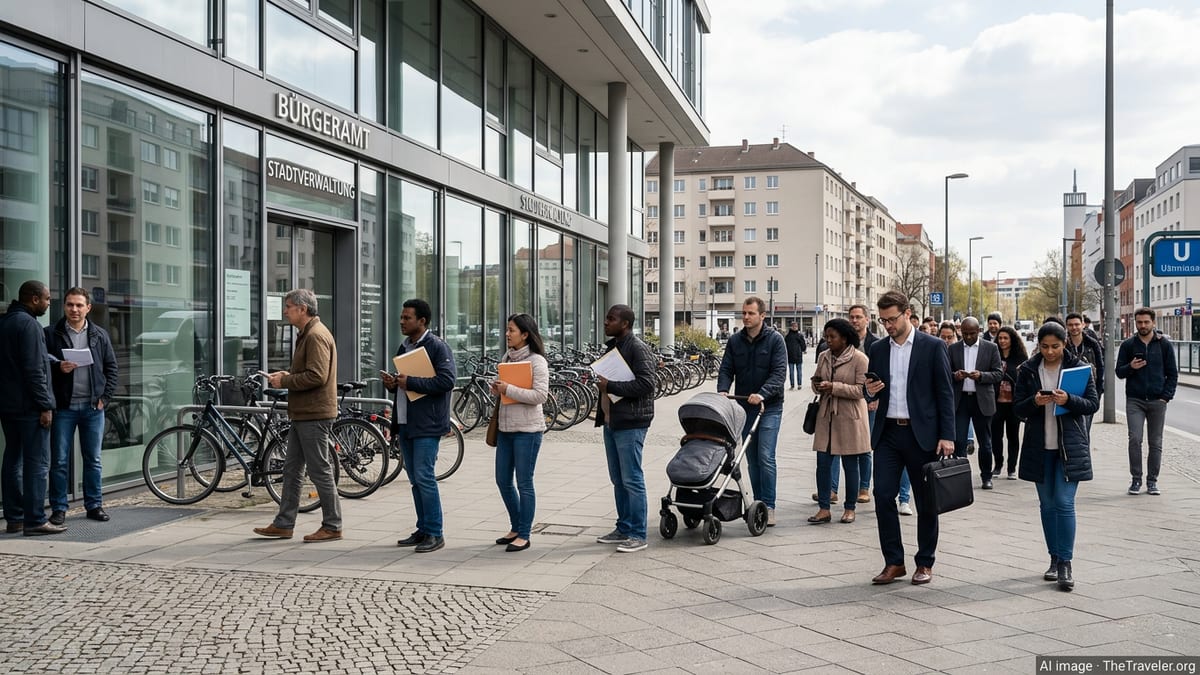
Overview of Germany’s Current Immigration Reform Cycle
Germany is pursuing a strategic shift toward a more open and skills-focused immigration model. Legislative changes adopted in 2023 and 2024 and further adjustments expected into 2025 and 2026 are designed to attract larger numbers of qualified non EU nationals, simplify procedures and make long term integration more attainable. For expats, this means an environment that is gradually moving from restrictive, document heavy processes toward more flexible pathways based on education, work experience and labor market demand.
The reform package is centered on three pillars: a revamped Skilled Workers Immigration Act, the introduction of a points based Opportunity Card (Chancenkarte) for jobseekers without a prior offer, and a liberalized citizenship framework that reduces required residence periods and normalizes multiple nationality. These measures sit on top of the existing EU rules on mobility and Blue Card residence, which have also been adjusted to lower salary thresholds for certain highly qualified roles.
While the political details are still evolving, the overall trajectory is clear. Germany is signaling that long term labor migration is a structural necessity rather than a short term fix. Expats considering relocation should therefore view Germany less as a closed, exception driven system and more as a destination where predictable skills based migration will be central to economic planning.
At the same time, implementation capacity at consulates, local immigration offices and recognition bodies remains a decisive factor. Policy changes on paper do not always translate into uniform practice across the country, and regional differences in processing speed and interpretation can still be substantial. This gap between federal reform and local execution is a key risk to monitor when planning relocation timelines.
Skilled Workers Immigration Act: New Pathways and Flexibilities
A major component of the reform cycle is the reworked Skilled Workers Immigration Act, parts of which entered into force from March 2024. The law broadens who qualifies as a skilled worker and decouples residence status more clearly from narrow profession matching. A skilled worker is now generally defined as someone with either a recognized vocational qualification of at least two years or a higher education degree comparable to a German qualification. In practice, this recognizes a wider range of international training programs as a basis for residence.
One crucial change is that foreign vocational training no longer has to be tied directly to the specific job the person will perform in Germany, as long as the role is considered skilled work. Previously, expats were often limited to positions that closely matched their formally recognized qualification. The new rules instead acknowledge that career paths can be more fluid, particularly in dynamic sectors such as IT, consulting and project management. This gives employers and expats more room to adjust roles over time without jeopardizing status.
Another adjustment is the greater use of professional experience as an alternative to formal recognition of qualifications. For certain categories, at least two years of work experience in a relevant field, combined with a qualification recognized in the home country and meeting minimum salary requirements, can now be sufficient for residence. This is especially relevant for applicants from countries whose vocational systems do not map neatly onto German standards but whose workers nonetheless possess strong on the job skills.
For expats weighing a move, these changes increase the feasibility of relocating on the basis of real world career histories rather than solely on paper credentials. However, detailed case assessment remains essential, as the exact interpretation of “relevant experience” and minimum salary thresholds varies by role, region and evolving administrative guidance.
Points Based Opportunity Card (Chancenkarte) for Jobseekers
The introduction of the Opportunity Card marks Germany’s move into points based immigration for individuals who have potential but no confirmed job offer before arrival. This residence permit is aimed primarily at skilled workers from non EU countries who hold at least a two year recognized vocational qualification or a higher education degree and can demonstrate sufficient language skills and financial resources.
The points system evaluates candidates on criteria such as qualifications, German or English language ability, professional experience, age and prior connection to Germany. Applicants must reach a minimum points threshold to qualify. While precise scoring can change over time, higher points are generally awarded for stronger German language skills, more years of experience in shortage occupations and prior lawful stays or degrees obtained in Germany.
Opportunity Card holders can reside in Germany for a period typically up to one year to seek qualified employment and may work part time to support themselves. If they secure a suitable job, there is the possibility to transition into a longer term skilled worker residence permit and in some cases extend the card once. This model is intended to reduce the traditional chicken and egg problem in which employers are reluctant to recruit from abroad and applicants cannot move without a signed contract.
From an expat decision making perspective, the Opportunity Card is particularly relevant for mid career professionals who are confident in their labor market prospects but lack an immediate offer. It provides a structured, lawful way to test the German job market from within the country. However, it assumes a willingness to shoulder the financial and professional risk of a self directed job search, and success depends heavily on language level, sector and regional demand.
EU Blue Card and High Skilled Immigration Adjustments
Germany has also implemented changes related to the EU Blue Card regime, which is the main channel for highly skilled non EU nationals. Reforms have lowered salary thresholds and broadened the list of shortage occupations, making the Blue Card more accessible in practice. In approximate terms, minimum salaries are now closer to around half of the annual social security contribution ceiling, with somewhat lower thresholds for designated shortage roles such as STEM specialists and certain healthcare professionals.
The combination of the national Skilled Workers Act and the EU Blue Card adjustments is important. For some expats, particularly those with academic degrees and competitive salaries in recognized shortage sectors, the Blue Card can still be the most advantageous path, offering relatively straightforward recognition requirements and in some cases faster routes to permanent residence. For others whose profiles do not fit cleanly into Blue Card criteria, national skilled worker permits and the Opportunity Card provide alternatives.
The reforms also enhance mobility within the EU for Blue Card holders and ease employer changes after minimum periods of employment. This is relevant for internationally mobile professionals who may view Germany as one step in a broader European career trajectory. Greater intra EU mobility can increase the attractiveness of starting in Germany even if long term plans point elsewhere.
Expats should, however, track the interaction between national and EU level rules. Salary thresholds are typically adjusted annually, and shortage occupation lists can change with labor market conditions. These shifts may affect eligibility for those planning moves several years ahead and should be factored into long term relocation strategies.
Liberalized Citizenship and Multiple Nationality
A central policy signal to expats is Germany’s modernization of its citizenship law. From late June 2024, regular residence requirements for naturalization have been reduced from eight to five years, with a potential reduction to three years in cases of exceptional integration such as high language proficiency and strong civic engagement. This is a substantial shortening of the timeline for those seeking a durable, rights equivalent status in Germany.
Equally significant is the general acceptance of multiple citizenship. Germany now largely allows new citizens to retain their previous nationality, and German citizens can in many cases acquire another citizenship without automatically losing their German one. For globally mobile professionals and families, this removes one of the most prominent deterrents to naturalization: the need to renounce the passport of origin.
The reforms also expand access to citizenship by birth for children of non German parents. Where at least one parent has held lawful residence for around five years and meets certain status conditions, children born in Germany can obtain German citizenship at birth alongside the parents’ nationality. This improves long term security for families settling in Germany and reduces the complexity of later naturalization for children who effectively grow up in the country.
Nevertheless, the new citizenship framework includes more explicit integration expectations and grounds for exclusion. There is clearer emphasis on respect for constitutional principles, gender equality and rejection of antisemitism and other forms of discrimination. For expats planning to pursue citizenship, the path is more accessible in terms of time and multiple nationality but also more explicit in its value based requirements which are assessed at the naturalization stage.
Recognition of Qualifications and Experience: Practical Implications
While the legal texts have become more open to foreign qualifications and experience, recognition procedures remain an operational bottleneck. Many immigration routes still require either formal recognition of vocational training as equivalent to German standards or at least confirmation that the foreign program meets minimum duration and content requirements. Processing times for recognition can stretch into several months, varying by profession and federal state.
The expanded role of professional experience within the reformed Skilled Workers Act partially mitigates this problem. Applicants in selected categories can rely more heavily on documented years of work rather than full formal recognition. However, this flexibility is constrained by minimum salary levels and the expectation that experience must be both recent and closely linked to the intended role in Germany. Employers play a key role in documenting and justifying this relevance.
Differences between regulated and non regulated professions remain critical. In fields such as medicine, nursing, teaching and certain technical trades, statutory recognition by the relevant authority is still a precondition for practicing, irrespective of immigration status. In non regulated sectors like much of IT or business services, recognition can be less central, with immigration decisions leaning more heavily on contract terms and salary benchmarks.
Expats should therefore approach Germany’s new immigration landscape with a dual lens. On the one hand, legal gateways are clearly wider than in previous years. On the other, the administrative infrastructure for qualification assessment is adjusting more slowly. Early preparation of degree evaluations, detailed employer reference letters and, where needed, professional licensing applications remains essential to leverage the new rules effectively.
Transition Risks, Regional Variations and Policy Uncertainties
As with most major legislative reforms, the transition period in Germany is characterized by uneven implementation and evolving guidance. Different local immigration offices may interpret borderline cases differently, especially in the early years of the Opportunity Card and the redefined skilled worker categories. Processing times can expand temporarily as staff are trained on new criteria and as demand spikes from newly eligible applicants.
Regional labor market conditions also influence how readily authorities approve certain applications. In areas with acute skills shortages, there may be greater openness to flexible interpretations of experience and qualification requirements, while in regions with weaker demand authorities may apply criteria more conservatively. For expats, this means that practical outcomes can vary not only by profile but also by the specific city or federal state of intended residence.
Policy uncertainty is another factor to watch. Although the overall direction of opening remains strong, political debates about migration levels are ongoing. Future governments could tighten specific parameters such as minimum salary thresholds, points allocations under the Opportunity Card or the scope of shortage occupations. While wholesale reversal of the reforms appears unlikely in the medium term, incremental adjustments could materially alter eligibility for certain groups.
In addition, external factors such as economic downturns or large scale humanitarian movements may prompt short notice regulatory changes, temporary suspensions of facilitative measures or reallocation of administrative capacity. Expats considering relocation several years ahead should therefore monitor not only formal law but also policy discussions and implementation trends.
The Takeaway
Germany’s recent immigration reforms collectively shift the country toward a more proactive and competitive stance in the global race for talent. The reworked Skilled Workers Immigration Act, the launch of a points based Opportunity Card and the liberalized citizenship regime substantially change the medium and long term prospects for expats who wish to build a career and life in Germany.
For internationally mobile professionals, the practical message is twofold. First, eligibility pathways are broader and more accommodating of diverse qualifications and career trajectories than in previous years. Second, successful relocation still hinges on careful planning around credential recognition, income levels, language acquisition and the choice of region and permit type. Germany is more open, but it is not yet frictionless.
Those contemplating relocation should evaluate their profiles against both the new skilled worker categories and the Opportunity Card criteria, while also considering long term options for permanent residence and citizenship now made more attainable by shorter residence requirements and acceptance of multiple nationality. Employers planning to recruit internationally should align talent strategies with the new tools available and anticipate administrative lead times during the transition phase.
In summary, Germany is moving decisively from a reactive to a strategic immigration policy orientation. For expats prepared to navigate a still complex but increasingly favorable system, these changes significantly improve the practicality of choosing Germany as a relocation destination in the coming decade.
FAQ
Q1. How have Germany’s rules for skilled worker immigration recently changed?
Germany has broadened the definition of skilled workers, reduced reliance on strict job to qualification matching and increased the role of professional experience and realistic salary thresholds in granting residence permits.
Q2. What is the Opportunity Card and who should consider it?
The Opportunity Card is a points based residence permit for qualified non EU nationals without a job offer, allowing them to stay in Germany for a limited period to search for skilled employment.
Q3. Has Germany reduced the time required to qualify for citizenship?
Yes, the regular required residence period for naturalization has been shortened from eight to around five years, with a possible reduction to roughly three years in cases of exceptional integration.
Q4. Can new German citizens now keep their original nationality?
In most cases, yes. Germany has moved to generally permit multiple citizenship, so many new citizens can retain their original nationality where their home country also allows this.
Q5. How do the new rules affect children of expats born in Germany?
Children born in Germany to non German parents may more easily acquire German citizenship at birth if at least one parent has held lawful residence for a sufficient period, typically around five years, while also keeping the parents’ nationality.
Q6. Are recognition procedures for foreign qualifications still necessary?
Often yes, especially in regulated professions, although experience based routes now exist in some categories. Recognition timelines and requirements vary significantly by profession and federal state.
Q7. What are the main risks during the transition to the new system?
Key risks include inconsistent interpretation between local immigration offices, temporary processing delays, evolving practical guidance and possible short notice parameter changes in response to political or economic developments.
Q8. How do EU Blue Card changes interact with national reforms?
Lowered Blue Card salary thresholds and expanded shortage occupation lists sit alongside national skilled worker permits, giving highly qualified expats multiple pathways and greater flexibility in choosing the most suitable status.
Q9. Will these reforms make it easier to move between EU countries after relocating to Germany?
For certain categories, especially EU Blue Card holders, reforms enhance mobility within the EU, making it more practical to begin a European career in Germany and later move to other member states.
Q10. What should expats track going forward regarding German immigration policy?
Expats should monitor updates to salary thresholds, points criteria under the Opportunity Card, shortage occupation lists, administrative processing trends and any further adjustments to citizenship rules or residence requirements.