


More news on this day
Germany has reinforced its long standing warning against travel to Syria with an updated advisory that underscores the volatile security situation in Syria itself and the growing risk of regional escalation affecting air travel and neighboring states.
Get the latest news straight to your inbox!
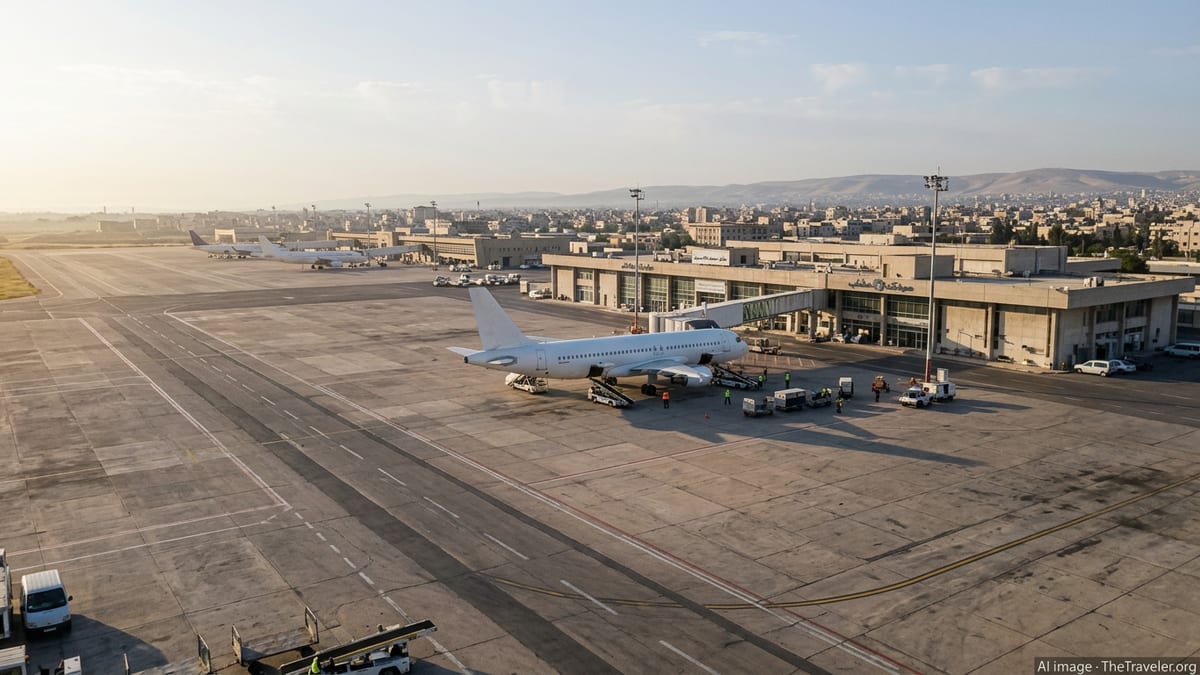
Advisory update focuses on regional security shockwaves
Germany’s Federal Foreign Office maintains a formal travel warning for Syria and recently refreshed its country advice to reflect what it describes, in publicly available guidance, as an unstable and unpredictable security environment across large parts of the country. The latest update, dated October 29, 2026, keeps the existing warning in place and adds new language on the risk that tensions elsewhere in the Middle East could rapidly spill over into Syria and its airspace.
According to the Foreign Office’s Syria travel and security notice, the security situation in much of the country remains difficult to assess, and the future trajectory is considered only partially foreseeable. The advisory points to recent bomb attacks in central Damascus during the summer of 2026, including explosions near an internationally used hotel and a separate attack on a café that resulted in numerous deaths and injuries, as indicators that even heavily policed urban centers cannot be regarded as safe.
At the same time, the Foreign Office’s broader regional guidance highlights the potential for sudden escalations linked to the Iran conflict and ongoing hostilities involving non state armed groups and regional militaries. The advisory notes that military confrontations, including recent clashes involving Houthi forces and Saudi Arabia, have already contributed to heightened uncertainty across the region and could again disrupt civilian air traffic at short notice.
Publicly accessible information on the advisory history shows that Syria sits within a wider group of destinations in the Middle East and Gulf region for which Germany currently issues strong warnings or explicit advice against travel. Earlier communications from the Foreign Office in 2026 grouped Syria together with countries such as Israel, Lebanon, Jordan, Iraq, Iran, and Yemen as locations where travelers face elevated security risks.
Persistent dangers inside Syria for foreign visitors
Germany’s travel notice reiterates that the overall security situation in Syria remains tense, despite shifting front lines since the height of the civil conflict. While government forces control the capital, the advisory reports that repeated bomb attacks in Damascus over the summer have underscored continuing threats from explosives and other forms of violence in areas that many travelers would previously have regarded as core urban districts.
In northern and eastern parts of the country, publicly available reporting describes a complex patchwork of armed actors and recent changes in territorial control. The Foreign Office guidance states that large sections of Syria remain affected by armed incidents, checkpoints, and ad hoc controls, with extensive damage to roads, utilities, and other infrastructure. Night time travel, particularly on intercity routes linking Damascus with Daraa, Suweida and Homs, is widely described in security assessments as high risk due to both criminal activity and potential clashes.
Germany is not alone in issuing strong warnings. The United States Department of State currently assigns Syria a Level 4 “Do Not Travel” advisory, last updated on October 23, 2026, citing terrorism, unrest, kidnapping, hostage taking, crime and armed conflict as reasons for advising against all travel. The British government’s foreign travel advice also continues to advise against all travel to Syria, emphasising unpredictable security conditions and the heightened risk of terrorist attacks.
For travelers, these overlapping warnings have concrete implications. Foreign governments state in their public advisories that they may be unable to offer routine or emergency consular services inside Syria because of security risks and the absence or limited operation of embassies in Damascus. Germany notes that its embassy there is closed for regular public access and that responsibility for many consular matters affecting Germans in Syria currently lies with the German embassy in Beirut, where capacity to assist individuals physically located inside Syria is described as extremely limited.
Air travel disruptions and transit risks across the region
The Syrian advisory’s latest language places particular emphasis on risks to aviation. The Foreign Office notes that regional confrontations have, in previous months, already led to temporary airspace closures and widespread flight cancellations that affected not only direct services to conflict zones but also transit passengers whose aircraft would normally cross affected air corridors. Public guidance warns that a renewed flare up in fighting could again lead to sudden airspace shutdowns and mass disruptions without prior notice.
These concerns echo notices from other governments and aviation regulators. The United States Federal Aviation Administration maintains a special regulation and notices to air missions advising airlines against operating within or near Syrian airspace because of risks from military activity and anti aircraft systems. Travel advisories from the United States and the United Kingdom similarly highlight the potential for miscalculation or targeting errors involving civilian aircraft flying over or near active conflict areas.
Germany’s broader Middle East guidance further cautions against travel to or within several neighboring states due to regional spillover risks. In Lebanon, the Foreign Office currently advises against travel to the south of the country, the Bekaa Valley, the Baalbek Hermel governorate, the border area with Syria, all Palestinian refugee camps, and the southern suburbs of Beirut, citing past incidents including targeted air strikes and kidnappings of foreigners on routes linking the Syrian border with Mount Lebanon. For travelers whose itineraries previously relied on flying into Beirut and continuing overland toward the Syrian border, this significantly narrows already limited options.
Transport infrastructure inside Syria has also suffered extensive damage during years of conflict, complicating any remaining commercial or humanitarian movement. Security assessments from European agencies indicate that road corridors can be subject to sudden closure, unofficial checkpoints and rapidly shifting control among armed groups, making advance planning difficult and undermining the reliability of ground transport schedules for any foreign visitor contemplating essential travel.
Diplomatic messaging disputes and traveler confusion
The most recent German update on Syria has also prompted political reactions inside the country. Syria’s state news agency has reported comments from the German chargé d’affaires in Damascus, who was cited as stating that there were no completely new German travel warnings specifically about Syria and that the latest Foreign Office update concerned primarily regional developments rather than a change in the formal status of the Syria travel advice.
Nonetheless, Germany’s official online travel and security notice for Syria, dated October 30, 2026 and valid from October 29, continues to present a clear warning against all travel. The text underlines that German citizens should avoid visiting Syria and highlights the possibility of sudden deterioration linked both to domestic security incidents and to events in neighboring countries. For prospective travelers, the distinction between a “new” warning and a substantial revision of existing guidance may appear semantic, but it illustrates how quickly official language can become a point of diplomatic contention.
Public information compiled by international risk consultancies shows that several European states, along with the United States and the United Kingdom, have kept Syria in their highest risk categories for a number of years, even as they adjust specific wording to address new developments such as regional missile exchanges, air strikes or militia attacks. For the typical leisure traveler, these categorizations translate into a practical message that trips to Syria remain strongly discouraged and may not be covered by standard travel insurance policies when undertaken against official advice.
Travelers monitoring the situation are therefore encouraged, in publicly available guidance, to follow updates from multiple national advisories rather than relying on a single country’s assessment. Differences in phrasing or timing can create the impression of disagreement, but in the case of Syria the overall picture across major issuing states remains consistent: the country is considered an active or latent conflict zone where the risk of serious incident for foreign visitors is significantly elevated.
Practical implications for itineraries involving the wider Middle East
For many travelers, the most immediate impact of Germany’s reinforced Syria travel warning lies not in direct travel to Syria itself, which has been strongly discouraged for years, but in the knock on effects for multi stop itineraries around the eastern Mediterranean and Gulf. Publicly accessible German guidance stresses that sudden escalations could again lead to regional airspace closures similar to those seen earlier in 2026, potentially affecting flights to or from countries that remain popular with European visitors.
Germany has, in separate notices, already tightened its language on parts of Israel, the Palestinian territories, Lebanon, Jordan and several Gulf states, reflecting the risk that further missile or drone attacks, as well as cross border exchanges involving state and non state forces, could disrupt air routes and airport operations. This environment increases the value for travelers of flexible tickets, comprehensive insurance that does not exclude conflict related disruption, and detailed contingency planning for re routing.
At the same time, Syria’s own border and visa rules continue to present obstacles. Public information on Syrian entry regulations states that travelers whose passports contain Israeli visas or entry stamps, including those issued at Egyptian or Jordanian crossing points with Israel, can be refused entry to Syria even if they hold a valid Syrian visa. These rules make it harder for visitors combining Israel and nearby destinations on a single trip to contemplate any stop in Syria, regardless of the security situation.
Given the combination of an unchanged German travel warning, reinforced references to regional volatility and parallel advisories from other major states, current open source information points to a Middle East travel environment in which Syria remains effectively off limits for tourism and highly problematic even for essential travel. International carriers and booking platforms continue to adjust schedules and routing in response to short notice changes in airspace availability, leaving travelers who plan to transit the region advised, in official and industry guidance, to monitor their flights closely and prepare alternative arrangements where possible.