


More news on this day
Air travelers planning trips to and from Italy over the coming weeks are being urged to prepare for schedule changes, as a wave of nationwide and sector-specific strikes threatens to disrupt flights, airport operations and onward rail connections across the country.
Get the latest news straight to your inbox!
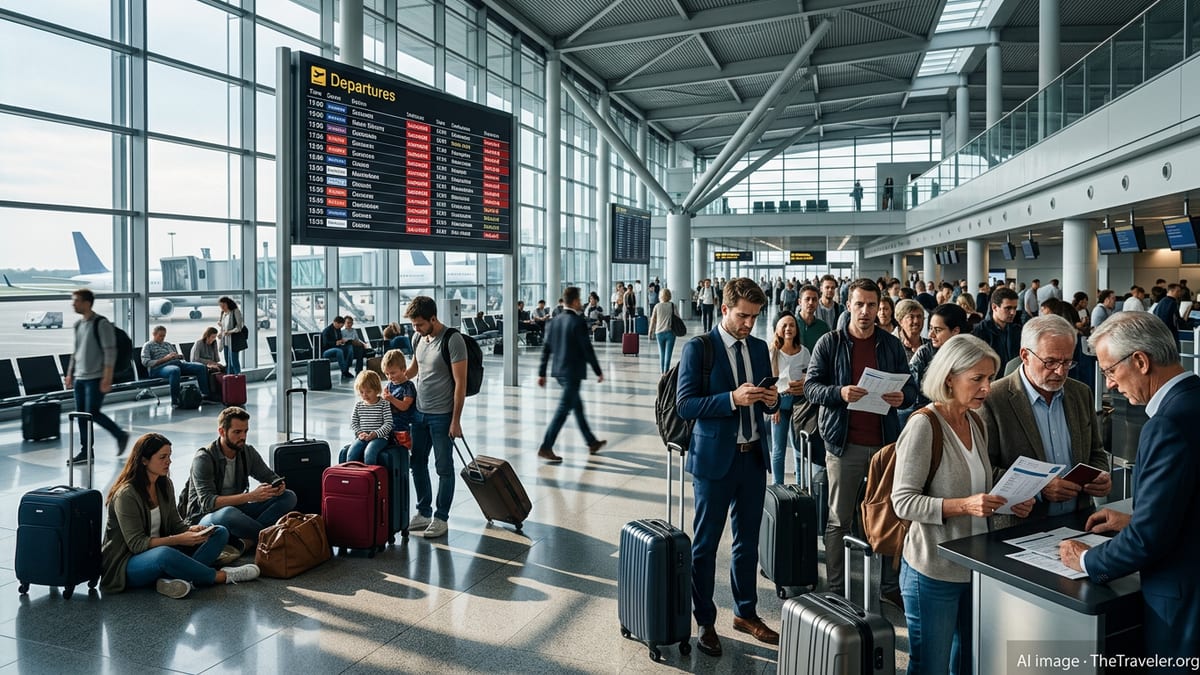
National strike alerts and impact on air travel
Publicly available strike calendars in Italy show a series of coordinated national actions affecting both public and private sectors in late October and November 2026, with air transport listed among the most exposed services. A general strike backed by major unions is set to cover the whole working day on Friday 30 October, with rail and aviation among the sectors flagged as at risk of disruption.
Separate listings highlight additional national strike calls on Friday 20 November, again covering public and private sectors, alongside a dedicated notice of nationwide industrial action by personnel of ENAV, Italy’s air navigation service provider, on Saturday 21 November. These actions are framed within a broader period of social unrest, in which unions have used high‑travel dates and long weekends to amplify visibility of their demands.
Reports monitoring strike activity caution that even where industrial action is limited to certain categories, such as air traffic control or ground handling, knock‑on effects can ripple across flight schedules throughout the day. Travelers are being advised to treat the key dates flagged by national registers as higher risk for cancellations, longer delays and missed connections.
Coverage in trade and consumer travel outlets has started to carry prominent advisories that journeys involving Italian airports around these strike days may require additional time and flexible planning, particularly for those connecting to long‑haul flights or cruising itineraries.
Four-hour nationwide air traffic control stoppage
The most aviation‑specific notice currently on the Italian transport ministry’s official register concerns a four‑hour nationwide strike by ENAV air traffic control staff on Saturday 21 November 2026. Summaries of the filing indicate that the stoppage is scheduled from 13:00 to 17:00 local time and applies to ENAV units across the country, effectively reducing available airspace capacity for the duration of the action.
Independent trackers that aggregate the ministry’s data describe the 21 November strike as one of the highest‑impact events for air transport this autumn, noting that it was moved from an earlier proposed date and coordinated with other national actions. While complete airspace closure is not anticipated, reductions in controlled capacity typically oblige airlines to thin out schedules in advance and accept flow restrictions issued by European air traffic management authorities.
Advisories drawing on previous ENAV strikes in 2024 and 2025 state that passengers can expect a combination of pre‑emptive cancellations and on‑the‑day delays as flights are sequenced through limited departure and arrival slots. Long‑haul services arriving from outside Europe may be held on the ground at their origin or rerouted to avoid congested Italian sectors during the strike window.
Travel information services point out that disruptions often continue beyond the four‑hour period itself, as aircraft and crews fall out of position. Late‑morning and late‑evening departures on the same day can be particularly exposed if aircraft are unable to operate earlier rotations on schedule.
General strikes and overlapping airport walkouts
In addition to the dedicated air traffic control action, national general strikes are scheduled to take place across Italy, most notably on Friday 30 October and Friday 20 November. Strike overviews indicate that these calls cover a broad range of sectors and may include aviation workers, with parallel notices for airport staff in Tuscany and other regions already filed for 30 October.
Specialist travel advisories note that the 30 October strike coincides with the run‑up to the All Saints public holiday, a period that Italian regulations generally protect from large‑scale transport walkouts. Earlier this week, the Ministry of Transport issued an order postponing part of the air‑transport component of the strike, but union statements suggest that some airport and ground‑handling groups still intend to proceed, raising the possibility of patchy but significant disruption.
For November, several sources draw attention to a sequence of actions that could compound difficulties for travelers. A nationwide general strike on 20 November is followed by the ENAV stoppage on 21 November and separate 24‑hour strikes at Milan Malpensa and airport security walkouts in Venice on Sunday 22 November. Taken together, these could create a three‑day period of heightened operational stress at Italian airports.
Observers of the Italian strike calendar recommend that travelers transiting through hubs such as Rome Fiumicino, Milan Malpensa, Venice and Florence pay particular attention to airline messages around those dates, as schedules may be thinned or retimed even where individual airports are not the formal focus of a walkout.
What protections and minimum services apply
Italy’s strike rules require minimum services to be maintained in the transport sector, including aviation, during industrial action. Publicly available guidance from European air traffic management bodies explains that in a national strike scenario, airports and air navigation authorities apply a combination of so‑called zero‑rate measures on certain flows and guaranteed traffic windows on others, with a proportion of planned flights required to operate within protected time bands.
Travel information sites that interpret these rules for passengers underline that flights scheduled in the early‑morning and early‑evening protection windows have historically been more likely to operate, even on days of extensive strikes. However, services outside those bands may be cancelled or consolidated, and some carriers choose to cut frequencies ahead of time to reduce operational risk.
At airport level, handling companies and security providers are also subject to minimum service obligations, typically ensuring that a share of check‑in desks, baggage operations and security lanes remain staffed. In practice, travelers can still face long queues, slower baggage delivery and reduced customer‑service capacity, particularly at peak times or in terminals heavily used by low‑cost carriers.
Consumer‑rights guidance reminds passengers that European air‑passenger regulations may entitle them to care and, in some cases, financial compensation when flights are cancelled or heavily delayed. However, the applicability of compensation can depend on whether the disruption is considered outside the airline’s control under the legislation of the country where the claim is pursued.
Practical advice for travelers heading to Italy
For travelers with imminent trips to Italy, specialist strike trackers and airline communications suggest taking a proactive approach to managing potential disruption. Passengers are encouraged to monitor their airline’s app or booking page closely in the days before departure and to sign up for text or email alerts where available, as carriers typically publish revised schedules and rebooking options as soon as operational plans are set.
Many airlines serving Italy have introduced limited change‑fee waivers around the most sensitive dates, allowing customers to bring trips forward or push them back by a few days without additional fare collection if the same cabin and routing are available. These waivers tend to be restricted to travel on specific dates and must usually be actioned before the originally scheduled flight time.
On the day of travel, passengers are being advised to arrive at the airport earlier than usual, especially if flying from or through Italian hubs affected by local walkouts. With public transport also targeted by some of the national strikes, there is a heightened risk of reduced bus, metro or train services to major airports, making contingency plans such as shared taxis or private transfers more important.
Travel planners also recommend building extra margin into itineraries that involve cruise departures, rail connections or separately ticketed onward flights. Where possible, scheduling at least one overnight buffer before time‑critical events, such as weddings, conferences or tours, can help ensure that strike‑related delays do not derail the overall trip.