


More news on this day
Germany’s Foreign Office has updated its travel and security advice for the Czech Republic, confirming on 20 November 2026 that visitors can continue to enter under existing Schengen rules while reminding them to expect temporary ID checks at the German–Czech land border and to be vigilant about petty crime and common scams.
Get the latest news straight to your inbox!
What Germany’s new advisory actually says
The Auswärtige Amt’s country page for the Czech Republic is now marked as unchanged since 20 November 2026, confirming a fresh review of the guidance rather than a shift to a higher warning level. The advisory continues to describe Czechia as generally safe for travel, but highlights day-to-day risks such as pickpocketing in busy areas, theft from parked vehicles and opportunistic fraud targeting tourists in major cities and holiday regions.
In the section on entry requirements, the Foreign Office reiterates that German and other EU nationals can enter Czechia with a valid identity card or passport, provided the document remains valid for the entire stay. There is no suggestion of new visa requirements or quarantine rules, and the Czech entry regime for short tourist visits remains aligned with standard Schengen practice.
The advisory also underlines that visitors are responsible for carrying proper documents and complying with local registration rules. Foreigners who are not staying in a hotel or pension may be required to register with the Czech foreign police within 30 days of arrival, and parents are advised to equip children traveling without them with written consent and copies of key documents.
Border checks: controls, not closures
The renewed travel advice sits against the backdrop of Germany’s temporary reintroduction of internal Schengen border controls. The Federal Police confirm that, on instruction from the Interior Ministry, controls have been in place at all German land borders since September 2024, building on earlier targeted checks introduced in 2023 at the frontiers with Czechia, Poland and Switzerland. These measures are notified to the European Commission under the Schengen Borders Code and are periodically prolonged.
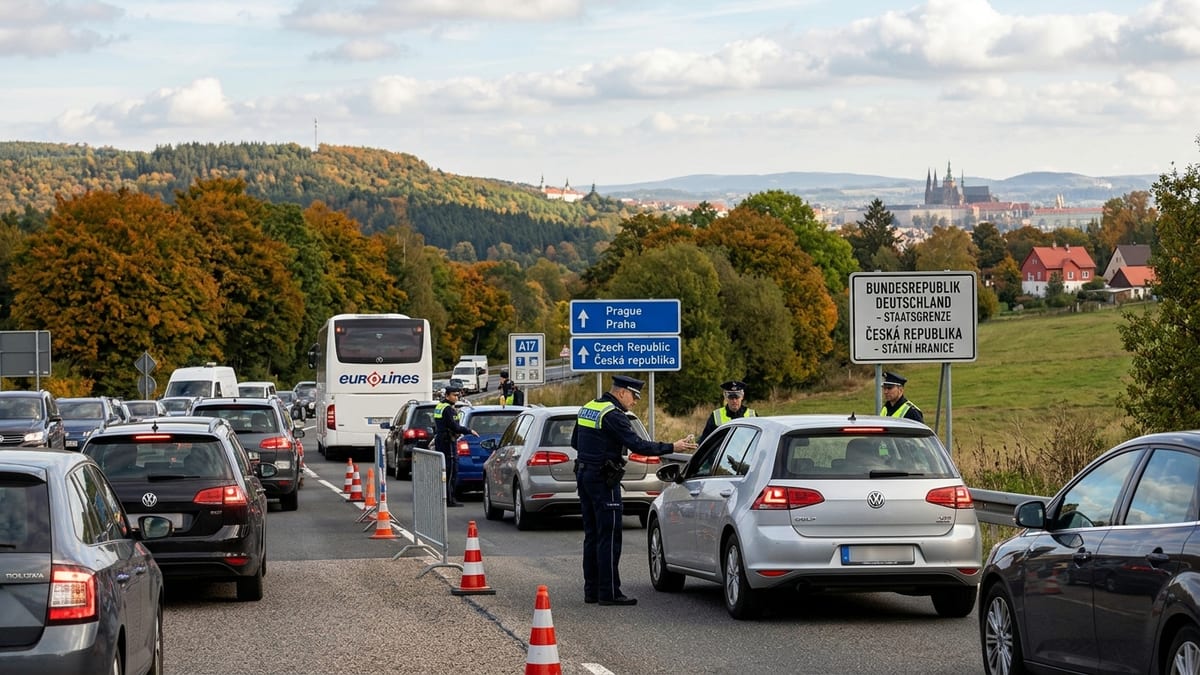
For the German–Czech frontier, this has meant visible checkpoints on key road corridors such as the A17 between Prague and Dresden, alongside mobile patrols on secondary routes and in the border region. Travelers can encounter brief queues at peak times when officers stop vehicles or coaches, but there is no general closure of the border and no change to who is allowed to cross, provided people meet the usual Schengen entry conditions.
Government explanations frame the controls as risk-based checks aimed at irregular migration and cross-border crime, not as a measure to restrict legitimate tourism or everyday cross-border movement. The pattern of spot checks rather than blanket screening across every crossing point means many journeys still proceed without delay, though motorists in particular are advised to allow extra time when planning trips through busy crossings.
Crime risks, police powers and common scams
Within Czechia, the updated German advisory draws attention to petty crime in tourist hotspots, notably crowded areas of Prague, major transport hubs and popular holiday destinations. Visitors are warned to watch bags and wallets in busy trams, metro stations and at major sights, and to avoid leaving valuables in parked cars, which are a known target for break-ins in some areas.
The Auswärtiges Amt also reminds travelers that legitimate Czech police checks can be relatively thorough. Officers can request identification, carry out pat-downs where justified and issue on-the-spot fines for certain offences. In such cases, travelers should receive an official receipt; anyone unsure about a demand for payment is advised to seek clarification from the local police station rather than handing over cash informally.
German federal crime-prevention material separately highlights global patterns of tourist fraud, including fake officers, dubious currency exchanges and unlicensed taxis. While these examples are not tied exclusively to Czechia, the refreshed advisory’s emphasis on vigilance reflects these broader concerns and encourages travelers to use official taxi ranks, verify credentials of anyone claiming to be police and report thefts or lost documents promptly to the Czech authorities.
What travelers should do now
For trips scheduled in late 2026 and early 2027, the main practical change for travelers is an increased likelihood of ID checks either at or near the German–Czech land border. Drivers and coach passengers should keep passports or ID cards accessible, expect occasional stops and factor potential waiting time into itineraries, especially on main motorway routes.
Once in Czechia, everyday travel remains largely unaffected. Public transport networks continue to operate normally, and there are no additional internal checkpoints linked to the German measures. Standard precautions apply: carrying a copy of key documents separately from the originals, using hotel safes where available and contacting the local police promptly in case of theft or document loss.
Because both the internal border controls and the German travel advisory are subject to periodic review, anyone planning a journey should recheck the Auswärtiges Amt’s Czech Republic page and current Interior Ministry or Federal Police communications shortly before departure. These sources will show whether the temporary controls at internal borders have been further extended, adjusted or allowed to lapse, and whether any new security or entry information has been added for Czechia.