


More news on this day
Lebanon’s long‑standing but niche ski industry delivered a rare bright spot for its troubled tourism sector in early 2026, with a snow‑driven rise in hotel occupancy in Beirut and Mount Lebanon now feeding into a broader push to market the country as a regional winter‑sports option alongside established Asian ski destinations.
Get the latest news straight to your inbox!
Winter rebound: what the 2026 numbers actually show
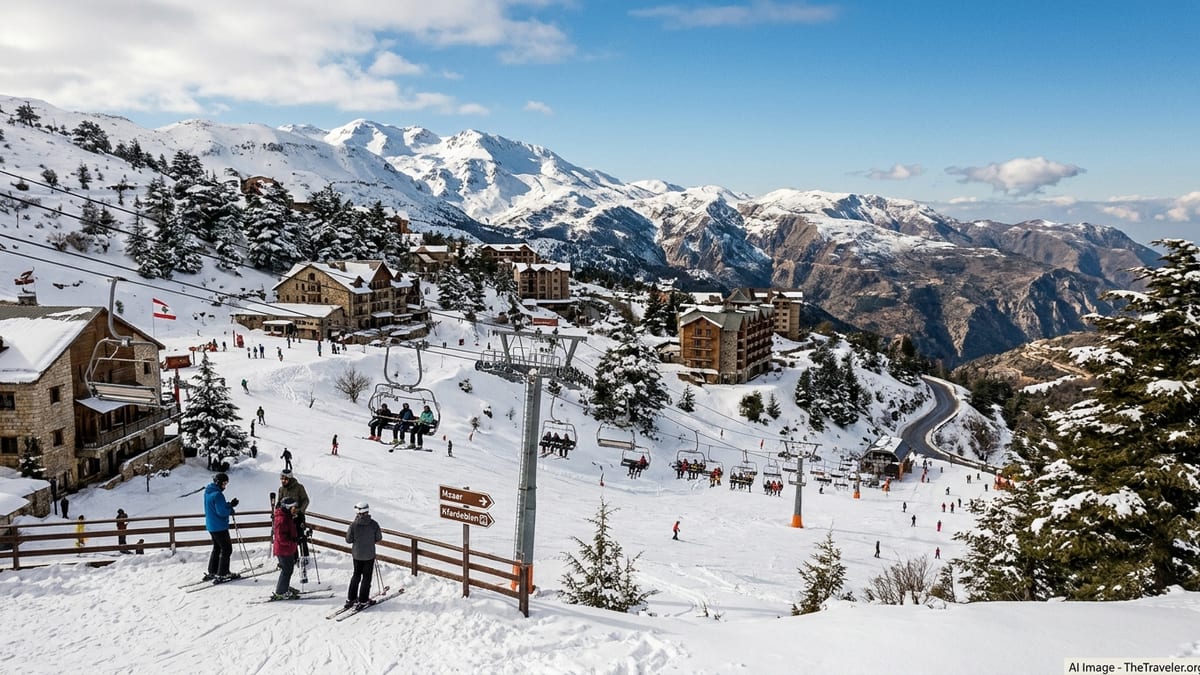
A February 9 report by Lebanese broadcaster LBCI, based on Lebanese Hotel Association figures and spot checks with properties, found that February 2026 hotel bookings had climbed to about 55 to 65 percent in Beirut and around 70 to 75 percent in higher Keserwan, including Kfardebian and the Mzaar area. That compared with much weaker occupancy during the 2024 winter, when conflict‑linked advisories and late snowfall depressed ski travel.
The same LBCI report highlighted sharp increases in arrivals between January 19 and February 4, 2026 from regional markets such as Kuwait, Qatar, Egypt and Iraq, in some cases up to three‑fold year on year. While the data do not isolate ski travelers, the timing and destinations point to renewed regional interest in Lebanon’s snow product after two disrupted winters.
Other recent assessments frame the winter boost as significant but limited. Lebanese economic and tourism reports for 2026 describe winter as one of the few periods when hotels in Beirut and the main mountain areas approached pre‑crisis occupancy, yet still note that overall tourism receipts and visitor numbers for the year remain below earlier peaks and have been hit by renewed conflict since March 2026.
Lebanon’s ski offer in a constrained tourism recovery
Lebanon is one of the few Arab countries with established alpine ski areas, anchored by Mzaar Kfardebian in the Keserwan district and The Cedars further north. Mzaar, generally regarded as the country’s largest resort, sits around 90 minutes from Beirut airport, with pistes between roughly 1,900 and 2,400 meters, and usually operates from early December into spring when conditions allow. The Cedars, higher again, offers a shorter lift network but a long local heritage in skiing.
Ministry of Tourism figures compiled by Lebanese banks show that total tourist arrivals reached about 1.13 million in 2024, down more than 30 percent on 2023 as the Gaza‑Lebanon front and regional instability deterred visitors. For 2025, incoming visitors rebounded to around 1.63 million, a rise of more than 40 percent year on year, with travel‑related revenues still below 2019 levels but improving. These headline numbers include diaspora travel and summer visits, yet they illustrate the broader recovery arc into which the 2026 winter bump fits.
Available breakdowns indicate that Asian visitors remain a small but growing share of Lebanon’s inbound market, hovering in the mid‑single digits of total arrivals in 2024. The 2025 and early‑2026 datasets published so far do not yet provide detailed origin splits by season or purpose of trip, so the specific contribution of Asian skiers to the 2026 ski rebound cannot be quantified and is likely to be modest compared with traffic from Arab Gulf states and Europe.
How Lebanon compares with Asia’s established and emerging ski nations
Across Asia, several destinations are expanding or promoting ski tourism on a far larger scale. Japan remains the region’s best‑known international ski market, with resorts such as Niseko in Hokkaido and Hakuba in Nagano offering long seasons, extensive lift networks and deep powder. Since 2024 the Japan National Tourism Organization has increased promotion in Gulf Cooperation Council states, including marketing that highlights winter and snow experiences beyond Tokyo and Osaka, and 2025 visitor data show continued growth from Middle Eastern markets.
South Korea and China have also invested heavily in winter‑sports infrastructure. South Korea’s Gangwon region, which hosted the Pyeongchang 2018 Winter Olympics, now markets itself as a year‑round outdoor destination, with ski resorts typically operating from late November into March and strong air access via Seoul. In China, authorities continue to back large ski and snow projects, including indoor ski centers in cities such as Shanghai and planned facilities around Shenzhen, as part of a long‑term strategy to expand domestic participation in winter sports and attract regional visitors.
Further west, India’s Gulmarg in Jammu and Kashmir, Kazakhstan’s Shymbulak near Almaty and emerging Uzbek resorts in the western Tien Shan mountains are trying to capture more regional and international skiers. These destinations often emphasize comparatively low costs, high‑altitude snow and, in some cases, easier access for travelers from Central and South Asia. Some national tourism boards and resort operators in these markets have, since around 2024, launched campaigns and trade partnerships that specifically target Middle Eastern or pan‑Asian skiers, though the scale of these efforts varies and most still rely mainly on domestic demand.
What the 2026 ski uptick means for travelers
For winter visitors from the Gulf and wider region, Lebanon’s 2026 numbers suggest that, when security allows and snow conditions are reliable, it can again function as a relatively short‑break ski destination. Beirut’s airport is reachable in a few hours from major Gulf hubs, and Mzaar and nearby areas are accessible by road in under two hours in normal conditions, enabling three‑ or four‑night stays that combine Beirut with one or two nights in the mountains. By contrast, trips to Japan, Korea or northern China typically require longer flights and week‑long itineraries to justify travel time and cost.
Safety and affordability remain key considerations. The same economic and labor‑market briefings that document tourism’s contribution to Lebanon’s GDP also underline the impact of the 2024 conflict and renewed fighting in 2026, including partial closures of establishments and ongoing uncertainty. Hotel and resort prices in Lebanon can undercut peak rates in Japanese or Korean flagship resorts, but travelers need to factor in potential volatility in security, power supply and local services, which is far less of an issue in the major East Asian ski markets.
For now, Lebanon’s winter tourism remains a minority slice of total tourism revenue and does not rival the volume handled by Asia’s main ski nations. The 2026 ski season appears to have provided a welcome seasonal lift rather than a full recovery of the sector. For travelers, that means shorter queues and a more limited but often less crowded infrastructure compared with leading Asian resorts, alongside a continued need to track local conditions closely.
Planning ahead: checks to make for 2026–27 and beyond
Looking toward the 2026–27 season, Lebanon’s main ski areas typically aim to open from early winter, but exact opening dates depend on snowfall and will need to be reconfirmed directly with resorts such as Mzaar Kfardebian and The Cedars closer to travel. As of late 2026, independent snow‑forecast services show no reliable long‑range pattern for the coming winter, reinforcing the importance of last‑minute checks for those prioritizing skiing over general winter mountain scenery.
Potential visitors should also verify the latest travel advisories, visa rules and flight schedules from their home countries and from key Gulf or Asian gateways, since route networks and entry conditions have shifted repeatedly since 2024. Any fresh winter promotions by Lebanon’s Ministry of Tourism, local tour operators or airlines, including bundled ski packages, have so far been limited or sporadically communicated, and should be confirmed at the time of booking rather than assumed.
For those comparing Lebanon with larger Asian ski destinations, the most practical approach is to weigh flight time, likely snow reliability for their preferred dates, and personal risk tolerance. Japan, South Korea and China currently offer greater resort choice and more stable operating conditions, while Lebanon and emerging Central and South Asian ski areas provide shorter journeys for some travelers and potentially lower costs but also more variable infrastructure and security conditions. In each case, up‑to‑date local information close to departure will matter more than historic averages.