


More news on this day
SalamAir has extended its suspension of flights between Oman and the Saudi cities of Riyadh and Dammam until at least 30 November 2026, citing ongoing regional security developments, while UAE-based low-cost carrier Air Arabia is maintaining a reduced Saudi schedule from Sharjah, creating a patchwork of options rather than a uniform shutdown for travellers heading to the kingdom.
Get the latest news straight to your inbox!
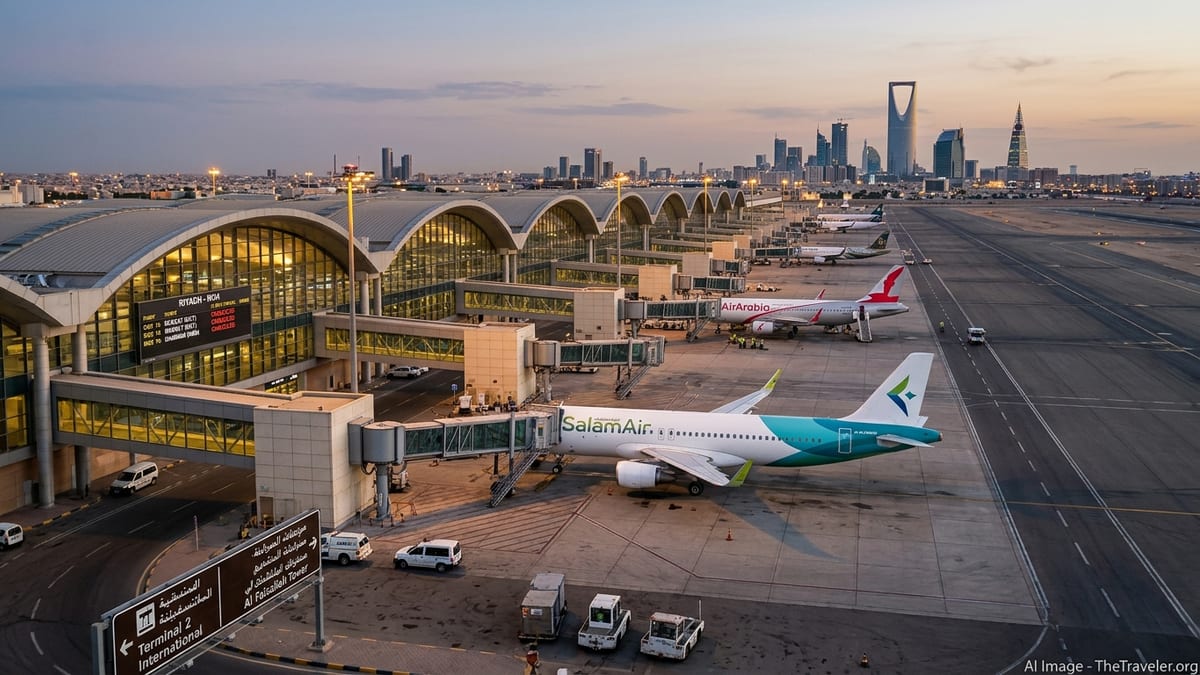
SalamAir prolongs Saudi route cancellations after October attacks
SalamAir’s latest travel advisory states that flights to and from Riyadh and Dammam remain cancelled until 30 November 2026, with the airline attributing the extension to “regional security developments” and noting that the situation is under constant review. Earlier iterations of the same notice covered narrower windows of disruption, initially listing cancellations through 8 November before being updated to the current, longer timeframe.
The Omani low cost carrier first suspended specific Saudi services shortly after the October attacks on Riyadh’s King Khalid International Airport, which closed from 10 October until a partial reopening on 25 October. Initial SalamAir updates highlighted cancelled services on defined October date ranges covering Dammam from 14 to 31 October, Riyadh from 18 to 31 October and a one day suspension to Abha on 15 October, before the scope was repeatedly widened into November.
SalamAir’s current advisory focuses on Riyadh and Dammam, which are key entry points for Omani and connecting passengers heading into central and eastern Saudi Arabia. The airline is offering rebooking and refunds in line with its disruption policy, but it has not given any indication of when a normal Saudi schedule might resume, beyond the stated cutoff of 30 November and the caveat that further extensions are possible.
Air Arabia runs partial Saudi schedule from Sharjah
In contrast, Air Arabia has opted to operate a partial Saudi network from its Sharjah hub. Recent UAE based travel updates and airline information show that services between Sharjah and Riyadh, Dammam and Taif have resumed or continued, giving passengers from the northern Oman border, the UAE and wider GCC an alternative set of low cost connections into the kingdom.
Not all of Air Arabia’s Saudi routes are currently available. Flights from Sharjah to Abha remain suspended, and some advisories also reference cancellations or schedule changes affecting other secondary points, underscoring that the airline is not yet back to its full Saudi network. Air Arabia has not published a comprehensive end date for these selective disruptions, instead instructing passengers to consult live schedules and booking tools.
The result is a mixed picture in which Air Arabia customers can still reach major Saudi gateways like Riyadh and Dammam via Sharjah, while those needing access to southern cities such as Abha must look to other carriers or routings, if any are available on their travel dates.
Riyadh airport is open, but airline policies now diverge
Riyadh’s King Khalid International Airport, the country’s primary international gateway, formally resumed partial operations on 25 October 2026 after being closed for around two weeks following the missile and drone attacks earlier in the month. Saudi authorities have not issued a blanket closure of national airspace, and domestic and international services by various carriers have been gradually returning, albeit with altered frequencies and routings.
That regulatory backdrop means the current pattern of service is being shaped less by government imposed closures and more by airline by airline risk assessments, commercial considerations and operational constraints. Some regional flag carriers, including Qatar Airways and others, have restarted daily flights to Riyadh and Dammam, while maintaining suspensions to more exposed airports such as Abha and Taif.
For travellers this divergence is significant: two airlines flying broadly similar regional networks may take very different positions on the same route, with one restoring service and another keeping aircraft away from particular cities for at least several more weeks. The absence of a single, overarching ban requires passengers to pay close attention to carrier specific updates rather than assuming that all flights to Saudi Arabia are either operating normally or cancelled.
What this means for Omani, Indian subcontinent and GCC travellers
Before October’s attacks, SalamAir’s low cost links from Muscat and other Omani points into Riyadh and Dammam were an important option for Omani residents, workers from the Indian subcontinent and GCC based travellers seeking affordable, short haul access to Saudi Arabia. With those routes suspended until at least 30 November, these passengers now face longer routings or higher fares on alternative airlines, and in some cases fewer viable options on their preferred travel dates.
Some travellers can compensate by connecting via the UAE, particularly through Sharjah on Air Arabia, which continues to serve Riyadh, Dammam and Taif, or by using other Gulf hubs that have restored selected Saudi operations. However, these workarounds introduce additional border crossings, potential visa considerations and more complex itineraries, which may be less convenient for short business trips, religious visits or family travel.
Southbound and regional traffic into southern Saudi cities faces even tighter constraints, as several carriers, including Air Arabia, continue to list Abha and certain other southern destinations as suspended. In practice, this may require travellers to route through still operating gateways such as Jeddah or Riyadh and complete journeys overland or on limited domestic services, provided those flights are operating on the intended day.
Booking advice: check live schedules and be ready to adjust
Given the fluid situation, practical booking advice has shifted from choosing a single preferred airline to monitoring multiple carriers and routes into Saudi Arabia. Travellers who previously defaulted to SalamAir for direct Oman to Saudi services should now cross check options via Sharjah, Doha, Dubai or other hubs, and factor in potential last minute schedule changes even on currently operating routes.
Passengers with existing tickets on affected SalamAir services to Riyadh or Dammam should review the airline’s latest travel updates and manage bookings through official channels, where options typically include free date changes or refunds for travel dates within the specified disruption window. Those booked on Air Arabia or other operating airlines should still confirm flight status close to departure, as ongoing regional security developments mean that additional cancellations or retimings remain possible at short notice.
Airports and airlines in the region continue to advise travellers to arrive early, use official flight status tools and keep contact details up to date in their bookings so that any changes can be communicated quickly. With no fixed timeline yet for a full restoration of pre October schedules, flexibility on dates, routings and even choice of Saudi arrival city can materially improve the chances of completing a planned trip.