


More news on this day
Indian carriers IndiGo, Air India and Air India Express have extended full suspensions of their scheduled flights between India and several Saudi Arabian cities into late November 2026, citing ongoing safety and security concerns linked to recent missile and drone activity affecting Saudi infrastructure and airspace.
Get the latest news straight to your inbox!
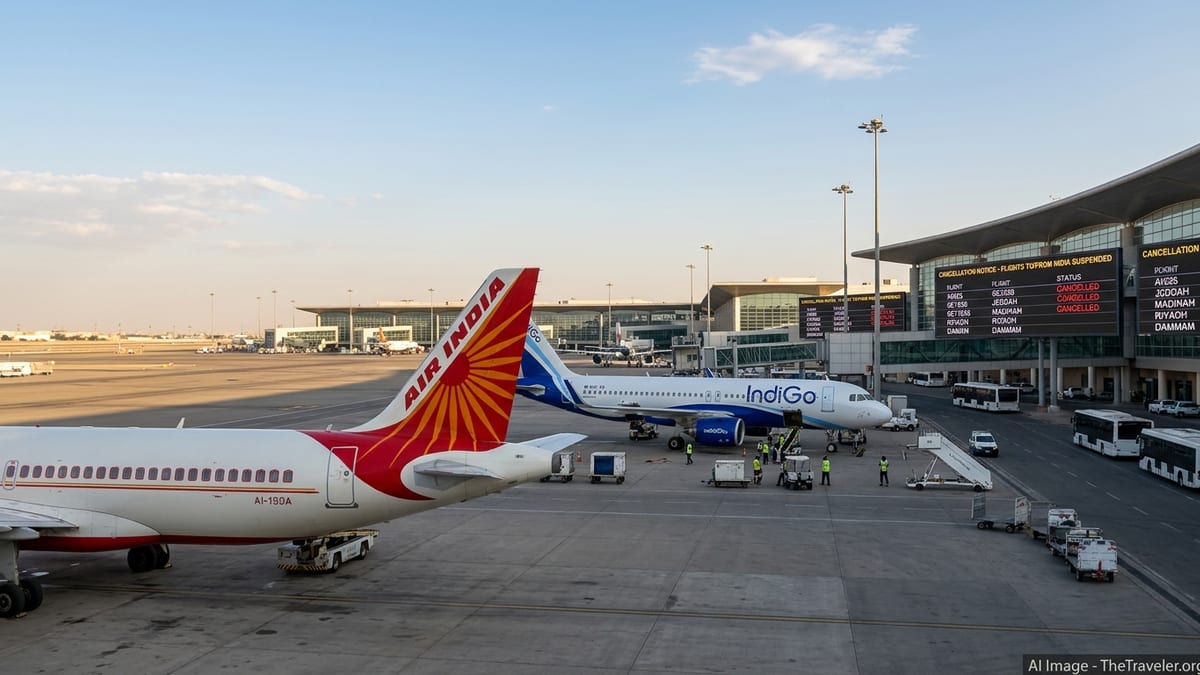
Which India–Saudi routes are currently suspended
According to recent advisories and consular alerts, IndiGo has now cancelled all its flights to and from Jeddah, Madinah, Riyadh and Dammam until 30 November 2026 inclusive, describing the move as a response to the prevailing security situation in Saudi Arabia and a careful assessment of safety and security considerations. These are full suspensions of scheduled services on the affected city pairs rather than limited schedule reductions or aircraft swaps.
For the Air India group, Air India and Air India Express advisories confirm that flights to and from Riyadh and Dammam are suspended until 30 November 2026, while Jeddah flights, initially paused until 21 November, have now been further extended in some notices to 24 November 2026. Operational timetables and recent public statements continue to describe these as suspensions of all regular services on the specified routes during the stated windows.
The suspensions cover India–Jeddah, India–Madinah, India–Riyadh and India–Dammam routes operated by these Indian carriers. Other airlines, including Saudi and Gulf-based carriers, remain on some of these city pairs, so the disruption is significant but not equivalent to a blanket grounding of all flights between India and Saudi Arabia.
Waiver policies and options for affected passengers
IndiGo and the Air India group are offering temporary waiver measures for customers booked on the suspended Saudi routes, with conditions tied to ticket issue dates and travel periods. Current advisories state that passengers holding IndiGo tickets issued before the latest cut-off dates for travel to or from Jeddah, Madinah, Riyadh or Dammam during the suspension window may choose either a one-time date change without change fees, or a full refund, subject to fare rules and any updated instructions at the time of rebooking.
Air India and Air India Express have published similar policies for their affected Saudi services. Travelers with tickets issued before the most recent advisory dates, and with original travel dates that fall within the suspension period, are generally allowed a single free change of travel date or a refund if they prefer not to travel. In some cases, Air India is also permitting rebooking to or from any currently operational Air India station in Saudi Arabia, while Air India Express is allowing rerouting to operational stations it serves in Saudi Arabia or Bahrain, again within specified validity windows.
Because these waivers are time-sensitive and have been updated several times as suspensions rolled from early to mid and now late November, travelers should verify the exact eligibility criteria on the airline’s official channels or with their travel agent before making changes. Relying on earlier October or early November advisories risks missing later adjustments to cut-off dates or the last acceptable date for completing revised travel.
Security backdrop: why airlines are reassessing Saudi routes
The latest extensions come against a backdrop of heightened security concerns in and around Saudi Arabia. In recent months, states and international organizations have reported repeated missile and drone attacks attributed to Yemen’s Houthi movement and other actors against Saudi infrastructure, including incidents affecting the vicinity of Riyadh’s King Khalid International Airport and energy facilities. Official accounts describe debris from some intercepted missiles falling in the capital area and acknowledge successful strikes on specific infrastructure targets.
On 13 November 2026, the European Union Aviation Safety Agency issued a revised Conflict Zone Information Bulletin for Saudi airspace that characterizes the regional security situation as highly volatile, citing significant kinetic military activity and an expanded geographic scope of attacks compared with earlier phases of the conflict. The bulletin notes that while southern and south-western sectors of Saudi airspace remain particularly exposed due to their proximity to Houthi-controlled areas, recent attacks have demonstrated both the ability and the intent of attackers to reach deeper inside the country, including areas around Riyadh and Medina.
These assessments are risk evaluations by governments, regulators and other official bodies rather than conclusions drawn by airlines alone. IndiGo, Air India and Air India Express explicitly frame their Saudi suspensions as precautionary steps rooted in ongoing safety and security reviews, rather than as a judgment that Saudi aviation as a whole is unsafe or that long-term access to the market is in doubt.
What the suspensions mean for India–Saudi travelers
The loss of IndiGo and Air India group nonstop capacity on the India–Jeddah, India–Madinah, India–Riyadh and India–Dammam corridors is particularly significant for religious travel and labor and family traffic. Jeddah and Madinah are key gateways for Umrah pilgrims from India, while Riyadh and Dammam handle substantial flows of Indian expatriate workers and visiting relatives. With Indian carriers temporarily out of these city pairs, many travelers will need to rebook via third countries or rely more heavily on Saudi and Gulf airlines that continue to operate.
In practice, that will often mean connecting itineraries through hubs in the United Arab Emirates, Qatar, Bahrain or Oman instead of flying directly between India and Saudi Arabia on Indian airlines. For many passengers, this is likely to translate into longer total journey times, less convenient schedules and potentially higher fares, particularly around peak religious periods or school holidays when remaining capacity is already under pressure.
Travelers with upcoming plans should monitor their booking status closely and avoid heading to the airport without a confirmed alternative itinerary. Those whose flights have been cancelled should first check whether they qualify under the latest waiver criteria, then decide whether to reschedule for dates after the current end of the suspension windows, reroute via an alternative hub, or seek a refund and reconsider their travel timing.
What to watch next
As of 21 November 2026, the most recent public guidance indicates that IndiGo’s Saudi suspensions run through 30 November 2026 inclusive for Jeddah, Madinah, Riyadh and Dammam, while Air India and Air India Express suspensions apply until 30 November 2026 for Riyadh and Dammam and at least 21 to 24 November 2026 for Jeddah, depending on the specific advisory. None of the airlines has committed publicly to plans beyond these dates, and any extension or early resumption is likely to depend on further security assessments and regulatory advice.
Passengers holding bookings in early December or beyond should treat current schedules as subject to change and recheck both flight status and any revised waiver provisions as their departure dates approach. Official advisories from the airlines, Indian consular posts in Saudi Arabia and aviation regulators will be the key reference points if the security picture shifts again or if additional conflict-zone guidance is issued for Saudi airspace.
Given how quickly the situation has evolved since the first Saudi suspensions in October, travelers and travel planners should assume that policies may be updated at short notice. Before locking in new dates or complex routings, it remains important to confirm that flights are operating as booked, that any voluntary changes will still be covered by current waivers, and that entry, visa and pilgrimage arrangements can accommodate revised travel plans if the suspensions are extended or lifted earlier than currently indicated.