


Glasgow is suddenly having a moment. Skyscanner reports searches for the city rising sharply year on year, with Glasgow highlighted among destinations showing around 77 percent growth in interest. For travellers weighing up a Scotland city break, that raises a very real question: if you have only a few days, should you spend them in Glasgow or Edinburgh? Both cities are easy to reach, rich in culture and close enough to combine, but the on-the-ground experience can feel very different.
Get the latest updates straight to your inbox!
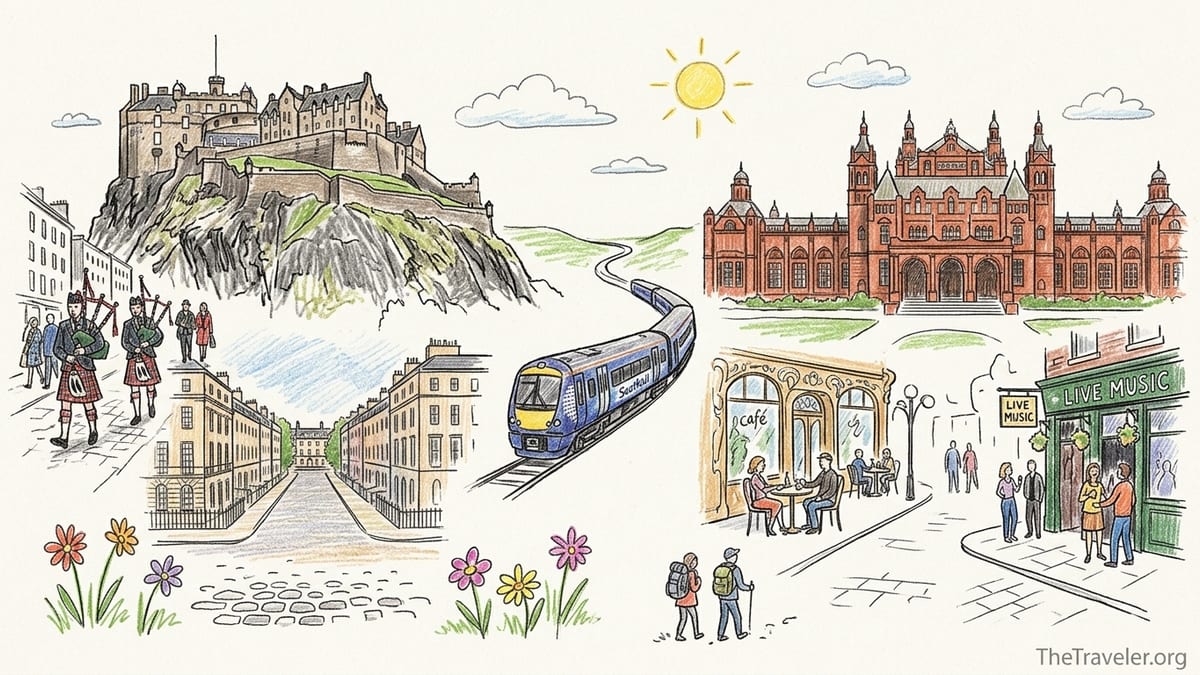
Big picture: two very different city break atmospheres
Edinburgh is Scotland’s classic postcard city, its skyline dominated by the medieval castle, the Royal Mile and elegant Georgian New Town. Walk from Waverley station up to the Old Town and you are surrounded by bagpipers, tartan shops and year-round crowds, with the summer festivals and August fringe season often pushing pavements to capacity. For many first-time visitors to Scotland, this is the city they have in mind.
Glasgow, Scotland’s largest city, has a more lived-in, local feel. It built its reputation on shipbuilding and heavy industry and today is known for bold Victorian and art nouveau architecture, contemporary culture and a famously down-to-earth nightlife and music scene. Visit Buchanan Street on a Friday evening or wander through Finnieston and the West End and you will hear as many Glaswegian accents as international ones, which can make a short break feel less like a stage set and more like dropping into a working city.
For a three or four night break, the choice often comes down to priorities. If you want a compact, immediately photogenic centre with major historic landmarks in walking distance, Edinburgh is hard to beat. If you are looking for value, live music, and neighbourhood exploring with plenty of free museums, Glasgow increasingly makes a persuasive case, especially as awareness rises through campaigns run by VisitScotland and Glasgow’s own tourism board that have helped drive that spike in Skyscanner searches.
Crucially, the two cities sit less than an hour apart by rail, so you do not have to think in either-or terms. Many visitors now base themselves in the cheaper city and use frequent trains to sample the other for a day, a tactic that can work particularly well if you are watching your budget.
Costs on the ground: hotels, eating out and daily budgets
Over the past couple of years, price data has shown a clear gap between the two cities in accommodation costs. Trade figures reported in the hotel industry press for autumn 2024 put Edinburgh’s average daily hotel rate at around £183, while Glasgow’s sat closer to £107 for the same period, highlighting how staying in Edinburgh can quickly inflate a weekend budget in peak seasons such as August and December.
More recent comparative snapshots echo that difference. One travel comparison site tracking mid-range, central hotels in early 2026 found the cheapest room within about one kilometre of the city centre at roughly €81 per night in Edinburgh, against about €53 in Glasgow. Another long-running travel budget site estimates an average double room for two in Edinburgh in the region of £140 to £150 per night. While exact figures vary by date, the direction of travel is consistent: Glasgow usually offers more bed for your pound, particularly in modern chains around the city centre and along the Clyde.
Food and drink tell a similar story. Bar prices in both cities have risen, but surveys of typical pub costs in 2025 and 2026 suggest a pint of beer in a central Glasgow bar often sits in the £4.50 to £6 range, compared with £5 to £7 in the heart of Edinburgh’s Old Town and New Town. A three-course dinner with wine in a mid-range Edinburgh restaurant frequently pushes well into three figures for two people, while in central Glasgow or the West End similar meals can be found in the £60 to £90 bracket, particularly outside the busiest Saturday nights.
For a practical daily budget, a couple staying in a mid-range hotel in Edinburgh, eating out once a day and visiting one paid attraction might easily spend £250 or more per day in high season. The same pattern in Glasgow, substituting free museums for some paid visits, can reduce that to nearer £170 to £200 depending on where and how you dine. Travellers who self-cater from supermarkets and choose budget hotels or guesthouses can cut both figures significantly, but the relative gap between the cities tends to remain.
Getting there and getting around: airports, trains and local transport
Both cities are well served by rail from the rest of the UK, with fast trains from London reaching Edinburgh in around four and a half hours and Glasgow in about five. London travellers often find more direct services to Edinburgh Waverley, while those coming from the north of England have abundant connections to both via operators running up the West and East Coast main lines.
For air arrivals, Edinburgh Airport is the busier of the two and offers a broad selection of European and domestic routes. The airport is linked to the city by an express tram and frequent buses, with a typical adult single from the airport to the centre sitting around £8 on the main airport bus in late 2026, and slightly more on the tram if you buy a ticket that covers the full airport zone. Glasgow Airport, west of the city, does not currently have a rail link but is served by a dedicated express bus to Buchanan Bus Station. Adult singles are generally priced just under £10, although multi-trip deals and open returns bring the per-journey cost down.
Between the two cities, the backbone connection is the Glasgow to Edinburgh rail corridor. Services from Glasgow Queen Street to Edinburgh Waverley via Falkirk High typically take about 50 minutes, with dozens of departures every day and journey planners often showing more than 250 trains on the route across a full weekday. Advance and off-peak single tickets can be found from roughly £11 when bought ahead, while flexible walk-up returns bought on the day are usually markedly higher, around the £30 mark once peak restrictions apply again after trial fare reductions.
Within each city, visitors will find compact historic centres that reward walking. Edinburgh’s Old Town and New Town are best explored on foot, although steep streets and cobbles mean good shoes are essential. A day ticket on Lothian Buses and city trams usually comes in around the cost of two or three single journeys, making it worthwhile if you plan to move between central sights, Leith’s waterfront and outer museums. In Glasgow, the distinctive orange Subway forms a simple loop connecting the centre with the West End, including the University of Glasgow and Kelvingrove Museum. Day passes are competitively priced, and combining the Subway with local buses keeps most visitor journeys in the low single digits per ride.
Headline attractions: castles, museums and experiences
Edinburgh’s single biggest ticketed attraction is Edinburgh Castle, perched on Castle Rock with sweeping views across the city. Historic Environment Scotland lists adult admission for standard tickets in 2024 and 2025 in the high teens in pounds, with family and concession options available. Advance booking online is strongly encouraged, partly to secure a time slot and partly because walk-up tickets can sell out on very busy days. Other paid highlights in the capital include immersive historical attractions on or just off the Royal Mile such as The Real Mary King’s Close and the Edinburgh Dungeon, where adult tickets in late summer 2026 are typically in the mid twenties for standard admission.
Glasgow has no castle on the same scale, but it counters with a cluster of major museums that are entirely free. Kelvingrove Art Gallery and Museum, a red sandstone landmark in the West End, charges no admission for its permanent collections, leaving you more room in the budget for coffee and cake in the on-site café. The Riverside Museum, home to historic vehicles and transport exhibits on the banks of the Clyde, and the Gallery of Modern Art in the city centre are also free to enter. For architecture fans, the medieval Glasgow Cathedral does not charge for general admission, making it one of the most rewarding free historic buildings to visit in Scotland.
In both cities, paid tickets concentrate around specialist or privately run attractions. In Edinburgh, Dynamic Earth near Holyrood Park, a hands-on science attraction, sells standard adult tickets in the low twenties and includes a 12-month return element, which is good value for repeat visitors. In Glasgow, attractions such as the Glasgow Science Centre on the south bank of the Clyde price adult day tickets around a similar level, with additional charges for the on-site planetarium and cinema.
An important distinction is how far your money goes without tickets. A visitor willing to walk in Edinburgh can enjoy grand architecture and panoramic viewpoints such as Calton Hill and Arthur’s Seat for free, but many indoor highlights around the Royal Mile and Old Town rely on paid entry. In Glasgow, a full weekend can be filled with free museum visits, Victorian parks, and contemporary art spaces before you need to consider a paid attraction, which helps explain the city’s reputation as the better-value option for culture-driven travellers.
Culture, nightlife and festivals
Edinburgh is globally famous for its festival season. Each August, the city hosts the Edinburgh International Festival, the Fringe, the Royal Edinburgh Military Tattoo and a raft of smaller events, turning the compact centre into a round-the-clock performance venue. Tickets for major shows vary from under £10 in tiny Fringe spaces to high double figures in prestigious venues, and hotel rates during this period can be several times higher than in November or March. The city also draws big crowds for its Hogmanay celebrations at New Year, where street party tickets typically go on sale months in advance.
Glasgow, by contrast, stretches its cultural calendar more evenly across the year. The city is recognised for its live music scene, with venues ranging from basement bars on Sauchiehall Street to the OVO Hydro arena on the Clyde, which attracts major international tours. On a given weekend, you might pay under £15 to see an up-and-coming band in a small venue, or considerably more for arena seats at a global act. The city also hosts festivals such as Celtic Connections in winter and various film, comedy and food events, often at prices lower than the peak weeks in Edinburgh.
When it comes to nightlife, visitors often find Glasgow the more relaxed and spontaneous option. Areas like Finnieston, Merchant City and the West End are dense with bars and restaurants that do not require advance booking outside Saturday evenings, and happy hours and midweek deals are common. Edinburgh’s Old Town and New Town have excellent cocktail bars and traditional pubs, but in busy months tables can be harder to secure without reservations, and drink prices around the most touristy streets are noticeably higher.
For daytime culture, Edinburgh’s flagship free institutions include the National Museum of Scotland and the National Galleries, all of which provide a welcome counterbalance to the city’s expensive dining scene. Glasgow’s equivalents, from Kelvingrove to the Burrell Collection in Pollok Country Park, are similarly free and set in generous green spaces, making them particularly appealing for families watching costs, since parents can dip in and out without feeling compelled to spend a full day to justify an entry fee.
Neighbourhoods and day trips: how far your base stretches
Whichever city you choose as your base, you will find distinct districts with different characters. In Edinburgh, first-time visitors usually stay in the Old Town, New Town or around Haymarket. The Old Town places you close to the castle, the Royal Mile and guided tours such as ghost walks and historical storytelling, many of which charge in the region of £15 to £25 for evening departures. New Town streets like George Street and Princes Street balance smart shops and restaurants with grand squares. Haymarket, slightly west, often has marginally lower hotel rates while still sitting within walking distance of the centre.
Glasgow’s most visitor-friendly neighbourhoods include the city centre around George Square and Buchanan Street, the West End around Byres Road and the University of Glasgow, and Finnieston near the Hydro. The West End combines tenement-lined lanes, record shops, vintage stores and cosy cafes, with independent restaurants where mains often start around £15 to £20. Finnieston, once an industrial area, has turned into one of Scotland’s trendiest dining strips, yet many of its small plates and informal menus remain competitive by UK big-city standards.
For day trips, Edinburgh has the advantage of quick access to coastal towns such as North Berwick, reached by train in about 30 minutes, where a return ticket is typically under £10 off-peak. The city is also a natural starting point for organised coach tours to the Highlands, Loch Ness and whisky distilleries, which often run in the £60 to £80 range for full-day excursions depending on inclusions. Glasgow, sitting closer to the west coast and the Highlands, is well placed for trips to Loch Lomond and Argyll, with local trains to Balloch costing well under £10 for a day return and coach tours to Glencoe or the isles generally priced similarly to those from Edinburgh.
Because the cities are linked so tightly by rail, many visitors now split their time, staying perhaps two nights in Glasgow and one in Edinburgh, or vice versa. Buying off-peak return rail tickets and avoiding the busiest commuter times helps keep inter-city travel affordable while allowing you to sample both atmospheres. This flexibility underlines how the “versus” question is less about outright winners and more about which city to make your base and which to treat as a day trip.
So which city break wins: Glasgow or Edinburgh?
If value for money is your overriding concern, Glasgow has the edge. Hotel data from recent years consistently places average room rates around a third lower than in Edinburgh, and the combination of free attractions, slightly cheaper pub and restaurant prices, and an easy-going nightlife scene means your daily budget simply stretches further. For travellers who enjoy contemporary culture, live music, design and a more local-feeling city centre, Glasgow rewards curiosity and leaves more room in the budget for experiences rather than basic costs.
If, however, you are visiting Scotland for the first time and have long dreamed of castle ramparts, medieval closes and sweeping panoramas, Edinburgh still delivers a uniquely dramatic setting. You will pay a premium for rooms with views of the castle, and you may find yourself booking tickets well ahead for headline shows or Hogmanay events, but for many visitors the combination of architecture, history and festival atmosphere justifies the extra spend, especially outside the very busiest summer weeks.
One pragmatic way to decide is to work backwards from your travel dates. If you are tied to August, New Year or a major rugby weekend, check hotel rates in both cities side by side. During those peaks, Edinburgh’s prices can climb so steeply that basing yourself in Glasgow and day-tripping east can cut hundreds of pounds from a long weekend. In shoulder seasons such as late September, October and early spring, the gap narrows, and it may make sense to stay in whichever city’s character appeals more strongly.
Ultimately, the surge in Skyscanner searches for Glasgow shows that travellers are starting to look beyond Scotland’s most famous postcard skyline. Rather than ask which city is objectively “better,” it is more useful to ask what kind of city break you want right now. If the answer is cobbled streets, castles and festival crowds, choose Edinburgh and accept the higher price tag. If it is free museums, music, friendly locals and space to breathe, Glasgow might be the smarter, and cheaper, Scottish city break to book next.