


More news on this day
Air travelers across Canada, the United States, China, Germany, Bahrain, Qatar, and Russia are facing another turbulent week as hundreds of cancellations and more than 300 delays reported on April 12 continue to ripple through airline networks, stranding thousands of passengers and extending a months-long pattern of global airport disruption.
Get the latest news straight to your inbox!
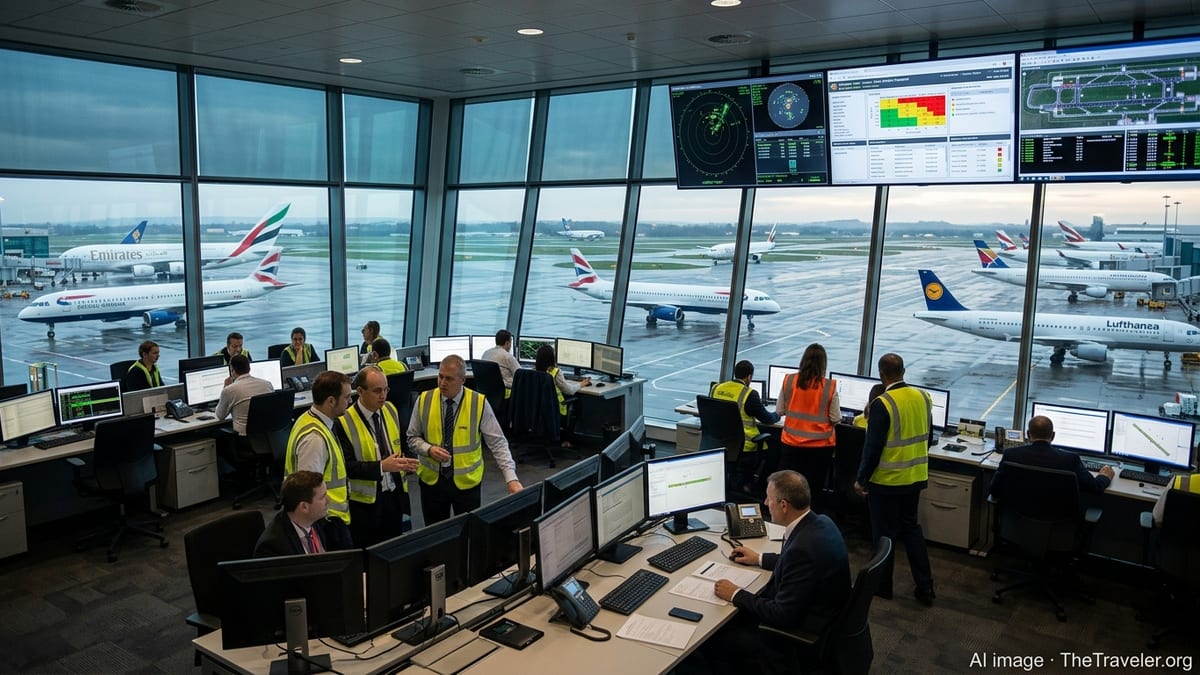
Fresh Wave of Disruptions on April 12 Reverberates Worldwide
Data compiled from public flight-status trackers and industry summaries for April 12, 2026, point to a sharp spike in operational problems across multiple continents, with reports highlighting at least 29 outright cancellations and 311 delays linked to routes touching Canada, the United States, China, Germany, Bahrain, Qatar, and Russia. While those figures capture only a portion of the global disruption, they underscore how even a relatively small number of canceled flights can cascade into widespread delays, missed connections, and overnight stranding at hubs worldwide.
In North America, reports indicate that Canadian airports experienced a cluster of late-arriving aircraft and crew-availability issues that rolled into the evening peak, causing knock-on delays for transborder and transatlantic services. In the United States, publicly available aggregates for the same period show more than one hundred domestic cancellations and over a thousand delays nationwide, with major hubs such as Chicago, Atlanta, Dallas, and New York again shouldering much of the pressure.
European and Asian gateways were not spared. Coverage from Germany points to a significant operational breakdown on April 12 involving Frankfurt, Munich, Berlin, Düsseldorf, and Hamburg, with nearly 600 combined cancellations and delays reported across the country’s primary hubs. In Asia, long-haul links between China and North America or Europe have remained vulnerable to schedule shocks, as airlines reroute around closed airspace or adjust timetables in response to broader geopolitical and weather-related uncertainties.
For individual travelers, the net result has been long queues at check-in and rebooking counters, congested customer-service hotlines, and difficulties securing last-minute hotel rooms near major airports, particularly for families and travelers without flexible tickets.
Middle East Airspace Closures Intensify Gulf and Transit Hub Chaos
The ongoing conflict involving Iran, the United States, and Israel has reshaped global flight patterns since late February, and the latest figures from April show the impact is still intensifying across Bahrain, Qatar, and surrounding states. Publicly available briefings from international organizations and corporate travel advisories describe continuing closures or severe restrictions in multiple Gulf airspaces, prompting airlines to suspend, divert, or reroute thousands of flights each day.
Hamad International Airport in Doha and Bahrain International Airport remain among the most affected, with many carriers either suspending services entirely or operating at sharply reduced frequencies. Travel industry coverage notes that airlines including major European and North American brands have extended suspensions on routes to Qatar and Bahrain, while some have shifted capacity toward alternative European or Asian markets to offset lost Gulf connectivity.
These closures have had an outsized effect on passengers far beyond the Middle East. For years, hubs in Doha, Manama, Dubai, and Abu Dhabi have served as critical connectors between Europe, Asia, Africa, and Oceania. With key Gulf corridors constrained, long-haul travelers seeking to move between Canada or the United States and parts of Asia now face longer routings, fewer available seats, and higher risk of missed connections when flights are consolidated or rescheduled at short notice.
Russia’s own airspace restrictions, introduced earlier in the wider geopolitical standoff, continue to force carriers in Europe and North America to operate longer transpolar or southerly routes to East Asia. Combined with Gulf closures, this has left airlines with fewer flexible options when disruptions arise, amplifying the consequences of any single cancellation or airport systems failure.
Weather, Staffing, and System Breakdowns Compound Airline Strains
While geopolitics dominate headlines in the Gulf, a mix of spring storms, staffing shortages, and infrastructure failures is driving much of the disruption in North America and Europe. Recent weather systems over the central and eastern United States have produced multiple rounds of ground stops and flow-control measures at airports such as Chicago O’Hare, Atlanta, Newark, and Dallas, according to aviation analytics cited by consumer-rights platforms. Those measures have triggered more than 2,000 delays and cancellations over recent weekends, creating residual disruption that carried into the work week.
In Germany, April 12 marked one of the most difficult days of the season across the country’s largest airports. Publicly available traffic tallies describe a breakdown in aircraft and crew rotations that left aircraft out of position and caused nearly 600 combined cancellations and delays. Reports emphasize that once a hub’s schedule becomes tightly compressed, minor late arrivals can quickly compound into hours-long delays as airlines struggle to reset aircraft and crews within legal duty-time limits.
Similar patterns are visible in Canada and China, where airports already running at near-capacity levels have limited slack to absorb disruptions. Any temporary outage in radar or baggage-handling systems, or a localized staffing gap at security or air traffic control, can lead to rolling delays that last for much of the day. Airline network planners frequently prioritize keeping long-haul departures operating, which can shift the burden of cancellations and extended holds onto short-haul domestic or regional routes.
As multiple stress factors converge, passenger-facing systems often lag behind operational decisions. Travelers report finding gate agents with limited information, apps and airport displays updating at different times, and automated notifications arriving long after a delay or cancellation has already been announced at the terminal.
Passenger Impact: Missed Connections, Extra Costs, and Uncertain Rights
The latest wave of disruptions has again highlighted how fragile many passengers’ travel plans are when flights are delayed or canceled at short notice. Public coverage from consumer-advocacy organizations describes travelers sleeping in terminals, scrambling to rebook itineraries that cross several disrupted hubs, and facing unexpected expenses for hotels, meals, and replacement tickets when airlines decline to provide support.
In North America, where compensation rules are looser than in the European Union, many passengers affected by weather-related or airspace-driven disruptions have discovered that they are not eligible for cash payments, even when delays stretch to several hours. Airlines may provide meal vouchers or hotel accommodation on a discretionary basis, but policies vary widely between carriers and even between stations of the same airline.
In contrast, European regulations such as EC 261 can offer compensation for certain cancellations or long delays departing from or arriving into the European Union when the cause is deemed within the airline’s control. However, publicly available guidance stresses that airspace closures, severe weather, and security crises are typically classified as extraordinary circumstances, often placing them outside mandatory compensation rules even though airlines must still provide re-routing or refunds.
For travelers transiting through Gulf hubs or affected Russian and Asian routes, the situation is especially complex. Multiple jurisdictions, overlapping contract-of-carriage terms, and evolving airspace restrictions mean that a single disrupted journey may involve several sets of rules. Travel advisors recommend keeping all receipts, documenting communications with airlines, and checking whether travel insurance or credit card protections can help recover some of the out-of-pocket costs.
Outlook: Prolonged Turbulence for Global Aviation Networks
With no swift resolution in sight for the conflict affecting Gulf airspace and a busy spring and summer travel period approaching in the Northern Hemisphere, analysts caution that further waves of cancellations and delays are likely. Economic assessments of the 2026 Iran war suggest that sustained airspace closures in the United Arab Emirates, Qatar, Bahrain, and neighboring states are already generating thousands of daily cancellations, with broad knock-on effects for cargo flows and tourism.
Airlines have begun trimming schedules, consolidating lightly booked services, and adding buffer time between flights to improve resilience. Some long-haul carriers are rebalancing capacity away from traditional Gulf connections toward nonstop links between Europe, North America, and Asia, in an attempt to bypass contested skies. Yet these moves can only partially offset the structural role that Gulf hubs have played in global connectivity over the past two decades.
For passengers in Canada, the United States, China, Germany, Bahrain, Qatar, and Russia, the practical message is that disruption risk will likely remain elevated through at least the coming months. Travel-planning platforms and civil-aviation briefings consistently advise building in longer connection times, avoiding itineraries that rely on tight self-transfers, and monitoring flight status frequently in the 24 hours before departure.
As the April 12 figures of dozens of cancellations and hundreds of delays continue to work their way through airline timetables, airport operations teams are focusing on clearing backlogs and restoring normal rotations. Whether those efforts can keep pace with new weather systems and an unsettled geopolitical backdrop will determine how long the current cycle of airport chaos persists for global travelers.