


More news on this day
Aer Lingus is set to widen Ireland’s global reach in summer 2026 with six new routes across Europe and North America, including the carrier’s latest transatlantic link between Dublin and Pittsburgh, in a move widely viewed as a fresh catalyst for the country’s tourism boom.
Get the latest news straight to your inbox!
Six New Routes Redraw Aer Lingus Network Map
According to the airline’s published schedule updates and corporate announcements, Aer Lingus will launch five new short-haul routes from Dublin and Cork alongside a new transatlantic service to Pittsburgh in time for the 2026 peak season. From Dublin, new services to Oslo in Norway, Asturias in northern Spain and Montpellier in southern France are planned, while Cork will gain direct links to Nice on the French Riviera and Santiago de Compostela in Spain’s Galicia region.
The long-haul centerpiece of the expansion is the Dublin to Pittsburgh route, scheduled to start on 25 May 2026. Publicly available information indicates the flight will operate four times weekly, providing direct connectivity between Ireland and western Pennsylvania at the height of the North Atlantic travel season. The new service adds to a rapidly growing Aer Lingus long-haul portfolio that has recently included routes to cities such as Nashville and Indianapolis.
Network data from Dublin Airport and Aer Lingus planning documents suggest that the 2026 additions will lift the airline’s North American offering to more than 20 destinations served from Ireland and select UK points. At the same time, the European leisure network from Dublin and Cork continues to tilt toward secondary cities and regional airports, reflecting strong demand for city breaks and coastal escapes across the continent.
Industry analysis notes that the mix of one new US city and five European destinations reflects Aer Lingus’s dual strategy of defending its position as a transatlantic connector while deepening its short-haul holiday offering. The airline is adding capacity in markets where Irish outbound travel is robust, but where there is also clear potential to attract inbound tourists to Ireland via convenient connections.
Pittsburgh Becomes Latest US Gateway to Ireland
Pittsburgh will become Aer Lingus’s newest North American destination when Dublin flights commence in late May 2026. Airport board presentations and regional media reports show that the service is scheduled four times weekly on Mondays, Wednesdays, Fridays and Sundays, offering year-round business and leisure travelers a direct link between western Pennsylvania and Ireland.
Local coverage in Pennsylvania highlights that Pittsburgh International Airport has undergone a significant terminal redevelopment in recent years, positioning the facility to compete more effectively for long-haul routes. The Aer Lingus service will give Pittsburgh a new nonstop option to Europe and connect the city to an extensive onward network throughout the UK and continental Europe via Dublin.
Publicly available traffic forecasts prepared for the Pittsburgh route point to a combination of visiting-friends-and-relatives travel, tourism and business demand. The region’s strong Irish heritage, along with corporate links between firms in Pittsburgh and Ireland, is expected to underpin year-round traffic. Dublin’s US preclearance facilities, which allow passengers to complete American immigration and customs formalities before departure, are also being promoted as a convenience advantage for travelers returning to the United States.
Tourism analysts suggest that the Pittsburgh link could help broaden Ireland’s visitor base beyond traditional US gateway cities on the East Coast. Direct connectivity from a mid-sized American market tends to stimulate first-time travel in both directions, opening Ireland to new segments of US travelers while offering Irish passengers easier access to the wider Appalachian and Great Lakes regions.
Scandinavia, the Atlantic Coast and New City-Break Hotspots
On the European side, the new Dublin to Oslo route will return a direct Irish connection to Norway’s capital, a destination that has been highlighted in Aer Lingus’s own travel content as a high-potential city-break market. Oslo offers Irish travelers easy access to fjord excursions, outdoor activities and Nordic cultural attractions, while the link is also expected to support inbound Scandinavian tourism to Ireland.
The route to Asturias from Dublin will bring direct service to one of Spain’s lesser-known Atlantic regions, whose coastal towns, green landscapes and culinary reputation have been attracting growing attention in European travel publications. Industry observers note that Asturias can complement Ireland’s own “wild Atlantic” brand, with tourism marketers likely to package two-coast itineraries that combine northern Spain with Ireland’s west coast.
Cork’s new connection to Santiago de Compostela will build on a well-established pilgrimage and walking-trail market associated with the Camino de Santiago. Travel trade reports indicate solid demand from Irish and British walkers seeking convenient access to the Camino’s Galician sections. At the same time, tourism agencies view the route as an opportunity to attract Spanish visitors into Ireland via Cork Airport, particularly to the south and southwest regions.
The addition of Nice and Montpellier reflects ongoing Irish appetite for Mediterranean sun destinations as climate-conscious travelers favor medium-haul flights over ultra-long-haul trips. These routes align with a broader European trend in which airlines are increasing capacity into secondary coastal cities that offer a blend of beaches, food culture and access to nearby countryside and wine regions.
Boost for Ireland’s Tourism Growth Strategy
The enlarged Aer Lingus network arrives as Ireland continues to report strong tourism performance, with government statistics and industry summaries pointing to visitor numbers approaching or surpassing pre-pandemic levels in many source markets. North American arrivals in particular have proved resilient, supported by favorable exchange rates at various points and by dense air connectivity into Dublin, Shannon and Cork.
Tourism bodies have for several years pursued a strategy of spreading visitor benefits beyond Dublin and the main summer months, and the latest Aer Lingus routes dovetail with that objective. Direct services into regional airports such as Cork, coupled with increased access to northern and western Spain, are expected to encourage itineraries that include Ireland’s Wild Atlantic Way, Ireland’s Ancient East and lesser-known rural areas.
Travel trade commentary notes that city pairs such as Pittsburgh–Dublin or Cork–Santiago de Compostela can help reduce the need for connecting flights through major hubs, lowering total travel time and often making Ireland more competitive as a short-break destination. Improved access is particularly relevant for repeat visitors, who may be more inclined to add a few Irish nights to broader European journeys when flights are straightforward.
At the same time, the expansion strengthens Dublin’s role as a connecting hub between North America and Europe. As Aer Lingus layers more short-haul destinations onto its transatlantic services, the airline can capture connecting traffic from US regional cities that might otherwise travel via mainland European or UK hubs, reinforcing Ireland’s position within the North Atlantic aviation market.
Capacity Shifts and Competitive Pressures
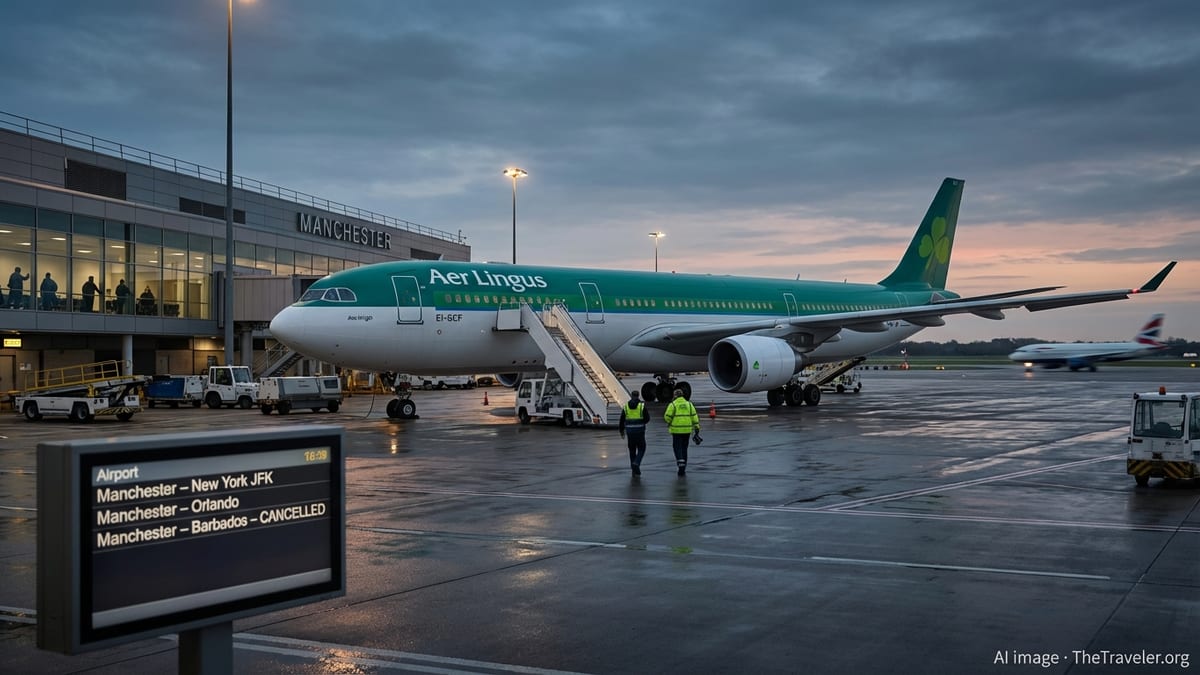
The 2026 growth plan is also taking shape against a backdrop of shifting capacity within Aer Lingus’s network. Company statements and aviation forum reports show that the airline is withdrawing its Manchester-based transatlantic operation by spring 2026, consolidating widebody and long-haul narrowbody flying back onto Ireland as the primary hub.
Analysts interpret this consolidation as a sign that Aer Lingus is prioritizing markets where it can combine strong local demand with connecting flows, rather than sustaining isolated long-haul bases. Concentrating transatlantic flying in Dublin allows for more efficient aircraft use and better connectivity with the expanded European network, including the new routes to Oslo and Asturias.
The competitive landscape over the North Atlantic remains intense, with US and European carriers all adding new seasonal and secondary-city routes. Aer Lingus’s latest moves are seen as an effort to defend market share while capitalizing on the flexibility of new-generation aircraft optimized for mid-sized long-haul markets. The Pittsburgh route in particular is viewed as emblematic of a wider trend in which airlines connect medium-tier US cities directly with European hubs.
For travelers, the net effect is greater choice of nonstop routes and more options for tailoring multi-country trips. For Ireland, the Aer Lingus expansion underscores how aviation strategy is increasingly intertwined with tourism policy, with each new city pair offering another entry point into the island’s growing visitor economy.