


More news on this day
Argentina’s key Antarctic gateway is entering a period of renewed uncertainty, as port workers in Ushuaia warn that ongoing federal intervention and labor conflict could undermine operational reliability for the 2026-27 cruise season.
Get the latest news straight to your inbox!
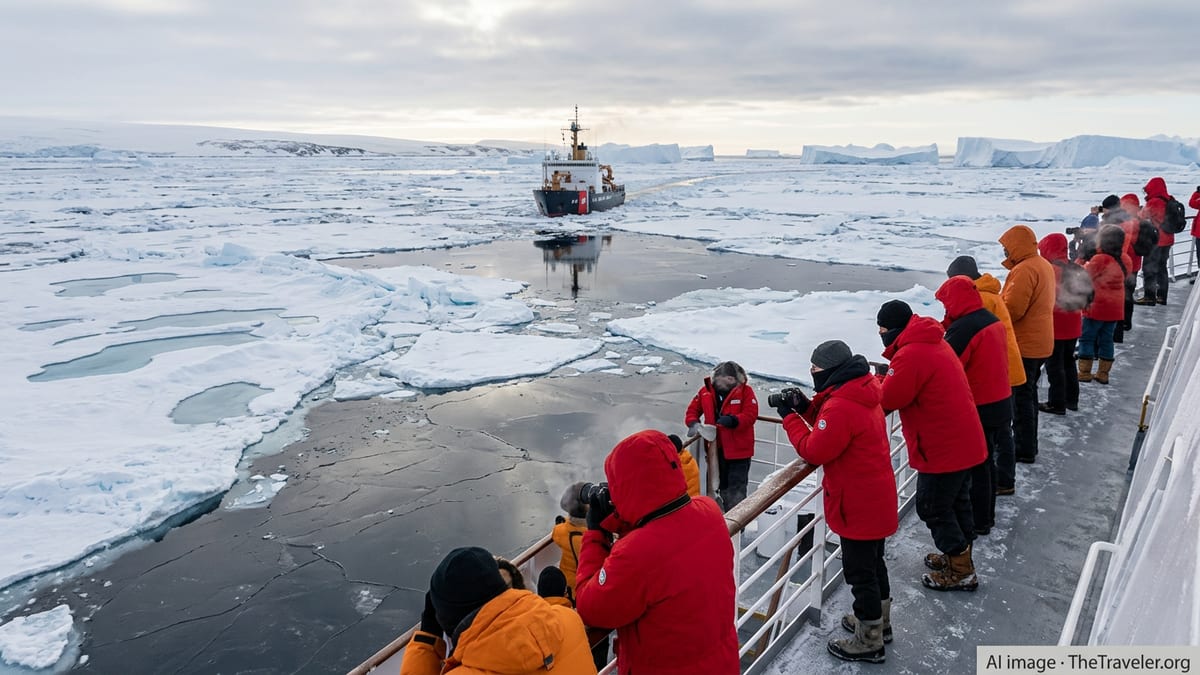
Workers Warn of Risks to Upcoming Antarctic Season
A recently published open letter from employees of Ushuaia’s Provincial Port Directorate warns that guarantees for the 2026-27 Antarctic cruise season “can no longer be assured” amid an unresolved dispute over the federal government’s management of the port. The workers describe a loss of operational reliability at one of the world’s most important departure points for Antarctic expeditions, raising alarms across the cruise and tourism sectors.
The letter follows the intervention of Argentina’s National Ports and Navigation Agency in January 2026, which effectively displaced the provincial authority that had overseen Ushuaia’s steady growth as an expedition hub. Reports indicate that more than 140 workers have been locked out of their posts since January 22, leaving experienced local staff sidelined while a national-appointed administration takes charge of daily operations.
Port employees argue that, while they upheld a commitment not to disrupt the recently concluded 2025-26 cruise season, maintaining that stance into 2026-27 will be difficult if the lockout and management conflict persist. The warning has immediate implications for cruise lines planning itineraries and for travelers already booking Antarctic voyages up to two years in advance.
Publicly available information suggests that, under the current scenario, Ushuaia’s reputation as a dependable turnaround port is under pressure, with workers cautioning that “normal functioning” could be placed at “real risk” if the situation is not resolved before the next austral summer.
Federal Takeover Exposes Deeper Governance Dispute
The turmoil at the Port of Ushuaia traces back to the federal intervention ordered in January 2026 following allegations of financial irregularities and underinvestment in critical infrastructure. National authorities pointed to the use of port surpluses to support provincial accounts, arguing that regulations require those revenues to be reinvested in port operations and upgrades.
According to published coverage, the National Ports and Navigation Agency has claimed that a significant share of Ushuaia’s budget had been diverted away from port improvements, while only a small fraction was allocated to projects aimed at raising operational quality. This narrative has been used to justify tighter central control and the redirection of port income into a national account.
Workers, however, contend that the intervention has created more uncertainty than stability. Their open letter criticizes the lack of transparency over how new revenues are being handled and questions who audits the funds now deposited at the federal level. Regional political leaders have also pushed back, characterizing the measure as unfounded and warning about its impact on a strategic maritime asset tied to Argentina’s Antarctic presence.
The dispute highlights a broader tension between national oversight and provincial autonomy in managing infrastructure that is both commercially vital and geopolitically symbolic. For cruise and tourism stakeholders, the key concern is less about jurisdiction and more about whether the governance shake-up will compromise day-to-day reliability during peak sailing months.
Record Passenger Numbers Underscore What Is at Stake
The warning over the 2026-27 season comes on the heels of record volumes at Ushuaia. Recent data released by Argentina’s port agency shows that the 2025-26 cruise season closed in April with approximately 495 vessel calls and more than 135,000 passengers moving through the terminal, a figure that reinforces Ushuaia’s status as a premier Antarctic gateway.
Tourism reports note that the province had projected even higher activity for upcoming seasons, with more than 500 calls and a growing share of polar expedition itineraries embarking or disembarking in the city. International operators ranging from small expedition specialists to larger cruise brands have built multi-year schedules around Ushuaia’s infrastructure, air links and technical services.
The port’s importance extends beyond leisure travel. The facility is also used by logistics vessels supporting national Antarctic campaigns, scientific missions and regional supply routes, which adds another layer of sensitivity to any disruption. A reliable, well-coordinated port is seen as essential to sustaining both tourism growth and Argentina’s long-term Antarctic strategy.
Against this backdrop of expansion, the prospect of operational instability has heightened concern among local businesses that depend on cruise traffic, from hotels and tour operators to outfitters and transport providers. Any significant reduction in calls or last-minute itinerary shifts could have ripple effects throughout Tierra del Fuego’s visitor economy.
Health Scare Highlights Operational Coordination Challenges
The recent hantavirus outbreak linked to the expedition vessel Hondius, which departed Ushuaia on April 1, has further sharpened attention on the port’s governance and incident response capacity. According to widely reported accounts, provincial health authorities faced difficulties accessing the port and obtaining passenger information during the investigation.
Local media coverage in Tierra del Fuego indicates that health officials were initially denied direct access to port facilities under federal control and had to request passenger manifests via national immigration channels instead. While the episode unfolded primarily as a public health matter, it exposed potential coordination gaps in emergency procedures at a time when the port’s administrative structure is in flux.
For cruise operators, the incident underscores how clear lines of responsibility and swift information sharing are critical when managing any health or safety issue involving international passengers. Expedition voyages to remote regions such as Antarctica already carry heightened medical and logistical challenges, making efficient cooperation between port authorities, health agencies and ship operators particularly important.
The combination of a serious health event and a contested intervention has added urgency to calls for a stable framework at Ushuaia before the next major season begins. Industry observers note that confidence in the port’s capacity to manage complex operations is as important as physical infrastructure when itineraries involve remote, weather-sensitive destinations.
Cruise Lines and Travelers Weigh Their Options
Most Antarctic voyages for 2025-26 and 2026-27 are already on sale, with brochures and schedules from a wide range of operators continuing to feature Ushuaia as a primary embarkation and disembarkation point. Several expedition brands have also programmed partial seasons from alternative ports such as Puerto Madryn, Punta Arenas and the Falkland Islands, providing some flexibility if conditions at Ushuaia deteriorate.
Travel industry reporting suggests that, for now, cruise companies are closely monitoring developments while keeping published itineraries in place. Contracts with port agents, hotels and charter flight providers in Argentina are typically arranged seasons in advance, making sudden large-scale switches costly and complex.
For travelers planning high-value Antarctic trips, the situation reinforces long-standing advice to build in generous buffers around embarkation and disembarkation dates, particularly in Argentina’s far south where weather and domestic transport disruptions are already common. Recent online discussions among travelers have cited union actions and flight cancellations as additional reasons to arrive in Ushuaia at least one or two days before sailing.
As the southern summer of 2026-27 approaches, the focus will increasingly fall on whether national authorities and port workers can reach an arrangement that restores full staffing and clarifies responsibilities. The outcome will help determine if Ushuaia can maintain its role as a reliable, high-capacity gateway to Antarctica or if cruise operators begin to accelerate a gradual diversification toward other embarkation points in the region.