


More news on this day
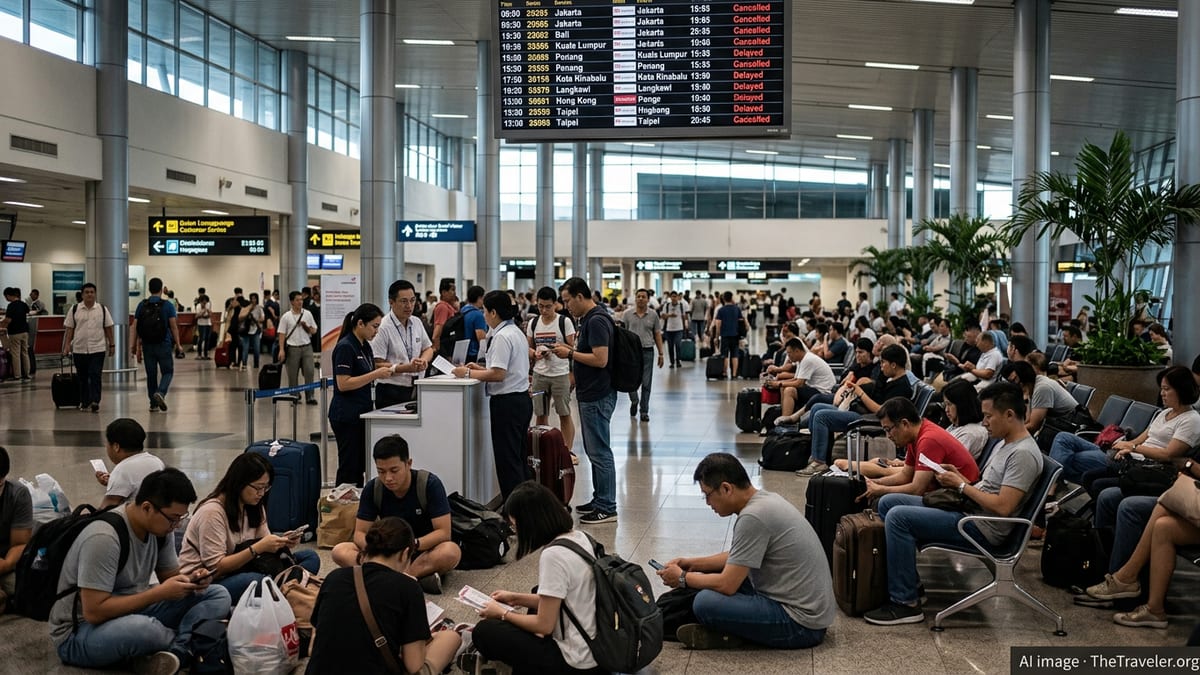
Flight operations at Doha’s Hamad International Airport faced fresh disruption on May 12, with publicly available tracking data indicating 21 delayed services and at least two cancellations affecting Qatar Airways, Air Arabia, Air India Express and other carriers on routes connecting Doha with Mumbai, Delhi, Kathmandu and additional regional hubs.
Get the latest news straight to your inbox!
Targeted Disruptions Across Key South Asian Routes
The latest operational hiccups at Hamad International appear concentrated on high-demand South Asian corridors, including services to and from Mumbai, Delhi and Kathmandu. These routes form part of Doha’s broader role as a connecting hub between Asia, Europe and the Americas, meaning localized delays can ripple rapidly across multiple time zones and onward connections.
Tracking platforms show that among the affected flights is an Air India Express service between Mumbai and Doha, recorded as cancelled on May 12, alongside a mix of short and medium delays on other services. Additional disruptions are visible on schedules linking Doha with major Indian gateways, as well as select services into Nepal and other nearby markets, indicating that the issue is not confined to a single carrier or route pair.
Qatar Airways, which uses Hamad International as its primary hub, features prominently in the disrupted schedule, although the carrier continues to operate the majority of its planned flights. Regional competitors and partner airlines, including Air Arabia, are also listed among those experiencing timetable changes, underscoring how even a relatively small cluster of delays and cancellations can affect a cross-section of operators using the airport.
For passengers, the impact has ranged from modest departure pushbacks to missed onward connections, particularly for those transiting through Doha on longer itineraries. Social media posts and online travel forums suggest that some travelers have had to accept rebookings via alternate hubs, while others have seen trips reduced to simple schedule shifts of one to several hours.
Disruption Set Against Months of Volatile Operations
Monday’s pattern of 21 delays and two cancellations comes after a period of heightened operational volatility for Hamad International. Since late February 2026, the airport has repeatedly featured in regional disruption coverage after airspace closures and security concerns prompted widespread flight suspensions and re-routings across parts of the Middle East.
Published analyses of the wider situation describe how earlier airspace shutdowns led to hundreds of cancellations and a sharply reduced schedule at Doha, forcing airlines to operate limited services focused on evacuating stranded travelers and maintaining critical connections. In that context, the latest figures at Hamad International represent a smaller, but still notable, echo of the larger shock that has affected the hub in recent months.
Industry-focused reporting has highlighted that even as airspace restrictions have eased and more flights have been restored, overall capacity at Hamad International remains below pre-disruption levels. Airlines operating through Doha continue to adjust schedules, fleet assignments and routings in response to changing permissions and demand, leaving the network more vulnerable than usual to knock-on delays and selective cancellations.
Data-driven performance summaries published earlier this year portrayed Hamad International as a generally reliable hub with comparatively low cancellation rates. The current cycle of instability, however, has tested that reputation and reinforced how external political and security dynamics can quickly transform the operating environment for even the most efficient airports.
Knock-On Effects For Qatar Airways And Partner Airlines
The new wave of disruptions has specific consequences for Qatar Airways, which relies on tightly timed connecting banks at Hamad International to feed traffic across its long-haul network. When departures to or from key feeders such as Mumbai, Delhi or Kathmandu run late or are cancelled, subsequent connections to Europe, North America, Africa or East Asia can be affected as crews, aircraft and passengers fall out of sequence.
Publicly available information on Qatar Airways’ recent operations indicates that the carrier has already spent weeks reshaping its timetable to account for regional constraints. Flight consolidation, retimed departures and additional stopovers have all been used at various points to keep the network functioning, and any fresh irregularities add complexity to that balancing act.
Other airlines using Doha as a spoke or secondary hub, such as Air Arabia and Air India Express, face their own operational challenges. Point to point services between Gulf cities and South Asian destinations have been in high demand, and carriers seeking to preserve schedule integrity must decide whether to absorb short delays or proactively cancel selected rotations to protect broader network reliability.
Travel-industry commentary suggests that some carriers have preferred to combine passenger loads onto fewer flights when demand and operational capacity are mismatched, rather than running multiple lightly loaded services vulnerable to further disruption. The visible mix of delays and isolated cancellations at Hamad International on May 12 aligns with that pattern of selective trimming and tactical adjustments.
Passenger Experience: From Minor Delays To Rebooked Journeys
For travelers passing through Hamad International on Monday, the situation translated into a patchwork of experiences. Many flights continued to operate close to schedule, while others incurred modest delays that primarily affected arrival times rather than broader travel plans. A smaller subset of passengers, especially those booked on the two cancelled services or on tight connections, encountered more substantial changes.
Reports circulating on travel forums describe passengers arriving into Doha only to find onward legs rescheduled, retimed or rerouted via different hubs. Others detail extended layovers after missed connections, with rebookings offered on subsequent services as airlines worked within limited spare capacity. For those originating in cities such as Mumbai or Delhi, the main inconvenience has often been later departures and late-night or early-morning arrival shifts.
Consumer advocates note that the uneven pattern of disruption can cause particular frustration, as some travelers complete near-normal journeys while others face significant detours or overnight waits. Publicly available guidance generally advises passengers to monitor airline apps and airport departure boards closely, given that same-day schedule changes remain more common than in more stable periods.
At Hamad International itself, recent imagery and first-hand accounts have depicted terminals that are busy but less congested than during the peak of the earlier mass-cancellation phase. Check-in and transfer desks remain focal points for queues whenever a cluster of flights is delayed or scrubbed, but there are also signs that processes introduced over the past two months are helping to clear backlogs more efficiently.
What Travelers Should Watch In The Coming Days
Although Monday’s tally of 21 delays and two cancellations is modest in comparison with recent large-scale shutdowns, the pattern underscores that operations at Hamad International remain in a delicate recovery phase. Airlines continue to rebuild schedules on top of infrastructure and airspace conditions that can shift rapidly, and even minor disruptions can cascade through tightly timed connection banks.
Travelers with upcoming itineraries through Doha, particularly those connecting between South Asia and long-haul destinations, may wish to allow additional buffer time and consider more conservative connection windows. Industry guidance generally favors booking longer layovers during volatile periods, both to reduce the risk of misconnection and to provide more options if a flight is retimed on short notice.
Observers tracking the situation suggest that the next few weeks will be critical in determining whether Hamad International can consolidate a return to more predictable operations. If regional security conditions stabilize and airspace access remains consistent, airlines may be able to restore more frequencies and reduce the level of tactical schedule changes that currently characterize operations.
For now, the latest disruptions serve as a reminder that passengers transiting major Middle Eastern hubs remain exposed to a more fragile operating environment than usual. Even as Hamad International and its resident carriers work to normalize schedules, isolated days like May 12, with a noticeable cluster of delays and cancellations focused on key routes, show that the path back to full stability is still a work in progress.