


More news on this day
KLM Royal Dutch Airlines flight KL643 from Amsterdam to New York John F. Kennedy Airport performed an emergency return to Amsterdam Airport Schiphol after turning back over the North Atlantic, according to live flight tracking data and airport information, with the incident prompting an unscheduled landing and follow up schedule adjustments on the busy transatlantic route.
Get the latest news straight to your inbox!
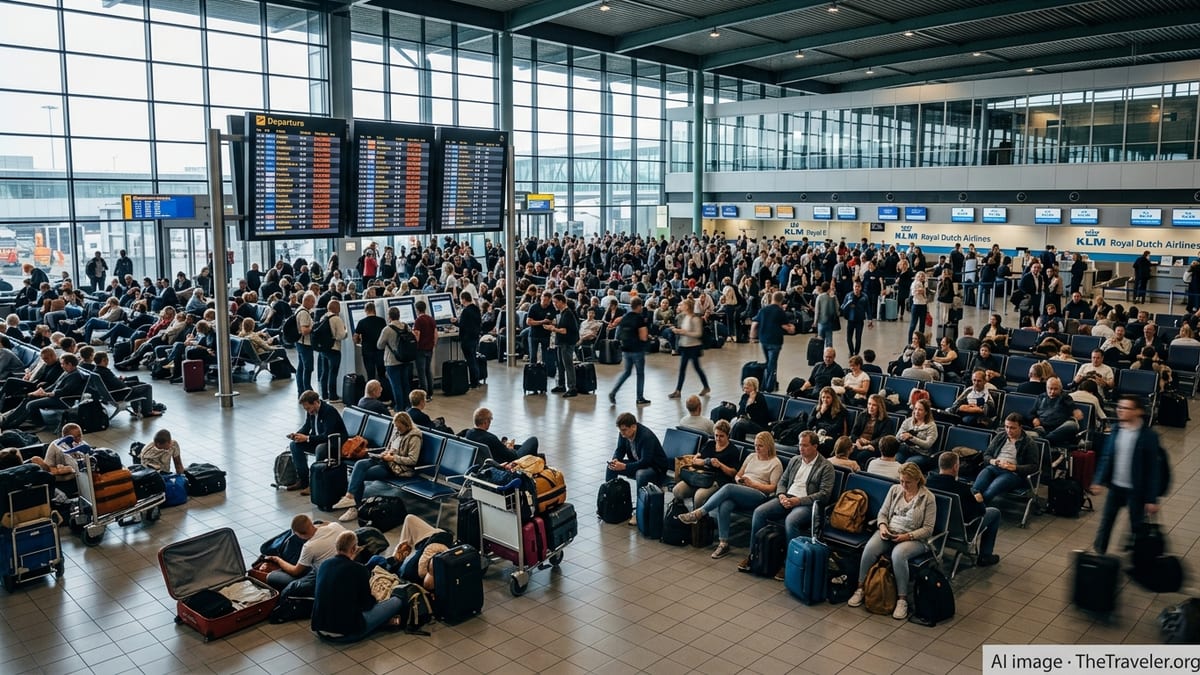
North Atlantic Turnback Ends in Safe Return to Schiphol
Publicly available flight tracking data for KLM Royal Dutch Airlines flight KL643 on the Amsterdam to New York John F. Kennedy route shows that the aircraft departed Amsterdam Airport Schiphol and initially followed its standard westbound track toward the Atlantic before performing a turnback and returning to the Netherlands. The track indicates a reversal of course while the flight was already underway rather than a simple return shortly after takeoff.
After the change in course, the aircraft followed a controlled path back to Amsterdam and carried out a landing at Schiphol. Reports from aviation tracking platforms describe the arrival as safe, with the aircraft returning to the gate for inspection and onward handling. There are no publicly available indications of injuries among passengers or crew members.
Although the precise technical cause has not yet been detailed in airline or regulator summaries, the pattern of the flight path and the diversion back to the departure airport are consistent with a precautionary or emergency return. Aviation incident coverage typically notes that such returns can be linked to technical alerts, irregular cockpit indications or performance concerns, even when these do not ultimately result in visible damage or operational loss.
Operational Impact on the Amsterdam to New York Corridor
The KL643 routing between Amsterdam and New York is one of KLM’s flagship long haul services, operating alongside a mix of codeshare and partner flights on the same city pair. Schiphol’s live departure information shows multiple KLM coded services to New York, including flights that continue to operate on the Amsterdam to JFK corridor, which suggests that the airline is maintaining overall capacity on the route despite the disruption.
According to information from airport departure boards and independent flight status aggregators, at least one later KLM coded service between Amsterdam and New York is scheduled to depart as normal, indicating that the disruption is concentrated on the specific rotation affected by the emergency return. In such cases, airlines typically reposition aircraft, consolidate passengers onto alternate services or work with alliance partners to accommodate travelers.
Travel platforms that monitor real time status for KLM flights list the Amsterdam to JFK operation as running with a combination of mainline and codeshare services, which can provide flexibility after an unscheduled event. For passengers booked on KL643 and related onward connections, that flexibility often translates into rebooking options, overnight stays in Amsterdam or rerouting via other North American gateways, depending on individual itineraries.
What Passengers Can Expect After an Emergency Return
KLM’s travel alerts pages for different country markets describe general procedures for handling major disruptions, including the ability for affected passengers to rebook through online self service tools such as the carrier’s trip management portal and mobile app. The airline states in its public guidance that customers on canceled or significantly delayed flights are typically offered the choice of changing their travel date or seeking alternative arrangements on available services.
Following an emergency diversion or precautionary landing, it is common for aircraft to be taken out of rotation temporarily for engineering checks, which can ripple through the schedule. In those circumstances, travelers may experience missed connections, changes to routing or overnight delays, especially at major hubs such as Amsterdam. Recent traveler accounts shared on public forums in other disruption scenarios describe cases where passengers were moved to different routings through partner hubs when KLM adjusted its Amsterdam schedule.
For those currently booked on upcoming KL643 departures, publicly available schedules still show services operating on the Amsterdam to JFK route. Even so, travel advisers routinely recommend monitoring flight status closely on the day of departure and allowing additional time at the airport whenever an aircraft type or flight number has recently been associated with an irregular operation.
Safety Context and KLM’s Recent Operational Record
The emergency landing of KL643 follows other recent operational events involving KLM aircraft, including a Boeing 777 service that reported a hydraulic system issue on approach to Amsterdam earlier in May and landed safely after coordination with ground emergency services. Aviation incident reports note that the aircraft involved in that separate case was inspected on the ground after crew members reported abnormal hydraulic quantity indications.
Industry observers point out that precautionary returns and diversions, while unsettling for passengers, are a feature of modern commercial aviation’s conservative safety culture. Aircraft systems are designed to provide early warnings, prompting crews to discontinue a flight rather than proceed across an ocean with unresolved technical questions. Public databases of air safety events emphasize that in the vast majority of such cases, flights conclude without injuries.
KLM’s online newsroom in recent weeks has focused on topics such as public health issues on specific flights and broader policy questions like changes to the Dutch air passenger tax, underlining the complex operating environment in which European carriers are currently working. The combination of evolving health considerations, infrastructure constraints at major hubs and routine technical checks contributes to a challenging backdrop for maintaining schedule reliability.
Guidance for Travelers Using Amsterdam as a Transatlantic Hub
Amsterdam Airport Schiphol functions as a major connecting gateway for travelers between Europe, North America, Africa and Asia, and the KL643 service is a key component of that network for passengers heading to or from New York. After an incident such as the emergency return of KL643, travel experts typically encourage passengers with tight connections through Schiphol to reassess minimum connection times and consider building in additional buffer where possible.
Information from Schiphol’s departure and arrival boards shows that, despite periodic disruptions, the airport continues to handle a high volume of long haul and European services. That environment can help stranded passengers after a disruption, since multiple daily departures to major hubs create opportunities for same day rerouting when aircraft or crews are unexpectedly out of position.
Travelers planning to fly on KL643 or other KLM services in the coming days may wish to verify their booking reference in the airline’s online tools and sign up for notification services offered by both the carrier and the airport. While the emergency landing of KL643 appears to have concluded safely, it highlights how quickly conditions can change on even the most familiar long haul routes and underscores the value of real time information for international passengers.