


More news on this day
A rapid rebound in tourism to Greece is colliding with capacity constraints in the country’s airports and air traffic system, driving a rise in flight delays that is rippling across Europe’s already stretched summer aviation network.
Get the latest news straight to your inbox!
Record Passenger Volumes Intensify Airport Bottlenecks
Newly released traffic data for Athens International Airport show a strong increase in passenger numbers through the first five months of 2026, with total traffic up more than 5 percent compared with the same period in 2025. Domestic flows have grown even faster than international volumes, underscoring how Greece’s main hub is handling both a resurgent tourism market and heavier local demand.
By May 2026, Athens had processed more than 12.2 million passengers for the year, surpassing previous records and reinforcing its position among Europe’s busiest airports. Similar growth trends are reported at key island gateways such as Heraklion, Rhodes and Mykonos, where low-cost carriers and charter operators have added capacity to capture strong leisure demand.
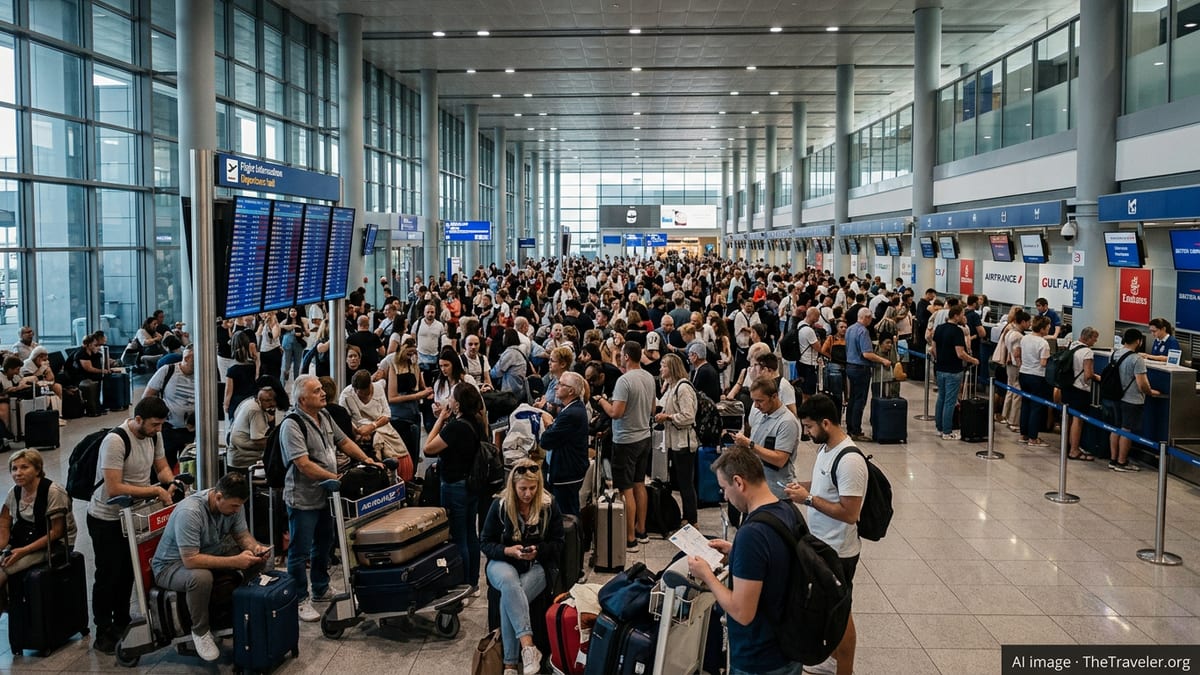
This surge is occurring during the traditional high season from June to August, when airport infrastructure, staffing and airspace are typically most constrained. Travelers have shared reports of long queues at check-in, security and passport control at Athens and several island airports, describing waits of up to several hours at peak times, particularly in early morning and late evening departure waves.
The combination of record throughput and limited terminal and runway capacity is contributing to longer turnaround times on the ground. That, in turn, is feeding into departure delays that propagate throughout daily flight schedules, especially where aircraft are operating multiple sectors across the Mediterranean and central Europe.
Network Strain Spreads Across Europe’s Busy Summer Skies
Operational planning documents from Eurocontrol, which oversees network coordination in European airspace, highlight Greece among a group of southern states facing elevated congestion risk in summer 2026. Rolling plans for the season flag the eastern Mediterranean as a key growth region in terms of traffic, with flights to and from Greece interacting with some of the continent’s busiest en route sectors.
Past network reports indicate that when traffic surges in and out of Greece, knock-on effects are often felt well beyond its borders. Routes linking Greek destinations with hubs in Germany, Italy, France and the United Kingdom pass through air traffic control centers that already operate near capacity during summer peaks. Any delays at departure in Greece can therefore compound existing bottlenecks in central European airspace, contributing to a rise in average minutes of delay per flight for the wider network.
Preliminary figures for 2026, together with anecdotal accounts from airlines and passengers, point to a similar pattern this year. Heavier flows to Greek resorts are adding pressure on an aviation system still managing staffing constraints, airspace restrictions linked to regional conflicts and a backlog of aircraft maintenance and deliveries. As a result, even relatively small disruptions like short-lived weather events or local technical issues can quickly lead to missed slots and extended departure queues.
Industry data from recent summers show that en route air traffic flow management delays tend to peak on Fridays and weekends, when holidaymakers are most likely to travel. With Greece now attracting larger visitor volumes earlier in the season, from late May onward, that peak period is stretching in duration, leaving less recovery time within the daily and weekly operating cycle.
Tourism Boom Outpaces Infrastructure and Staffing
Greece’s tourism sector has been one of Europe’s strongest performers in 2026, according to regional travel and economic analyses. Higher arrivals and increased spending per visitor underline the country’s importance as a Mediterranean destination, particularly for travelers from northern Europe seeking sun and sea holidays.
Yet the strength of demand is exposing structural limits in aviation infrastructure and staffing. Investments in new terminal space, apron capacity and baggage-handling systems have not fully kept pace with the rapid growth in passenger numbers at several Greek airports. At the same time, the wider European industry continues to contend with shortages of skilled workers in roles ranging from ground handling and security to air traffic control.
Publicly available commentary from travel industry observers notes that some Greek airports, while aware of peak-season pressures, have been slow to deploy additional support or streamline passenger flows. This can lead to inconsistent experiences: some travelers report clearing procedures in under half an hour, while others describe severe congestion on busy days when multiple large aircraft arrive or depart in the same time window.
Local communities and tourism businesses are also grappling with the consequences. While higher visitor numbers support jobs and tax revenue, the strains at key gateways raise concerns about the long-term sustainability of growth. Tourism advocates have argued for measures such as better staggering of charter arrivals, more robust staffing plans and targeted infrastructure upgrades at airports most exposed to seasonal peaks.
Airlines Adjust Schedules as Disruptions Mount
Airlines serving Greece have responded to the operational pressures with a mix of schedule adjustments and contingency planning. Some carriers have padded block times on routes into and out of Athens and popular islands, effectively building extra minutes into the timetable to absorb expected hold-ups on the ground or in the air.
Others have shifted certain flights to off-peak hours, aiming to avoid the most congested early-morning departure banks and late-night arrivals. This can help reduce the likelihood of missing air traffic control slots or facing extended waits for stand availability. However, such changes may be less convenient for passengers and can limit same-day connections via larger European hubs.
Low-cost carriers and leisure airlines operating tight aircraft rotations are particularly exposed to delays in Greece, as a single late departure in the morning can cascade into multiple delayed legs throughout the day. Industry tracking services show that once a delay of more than an hour arises on a short-haul network, recovery within the same operating day can be challenging without cancelling or swapping flights.
Passengers are increasingly turning to compensation rules and consumer-protection frameworks when disruptions exceed certain thresholds. Guidance from travel forums and consumer groups encourages travelers to document delays carefully, retain boarding passes and keep records of out-of-pocket expenses, especially when journeys involve missed connections or overnight stays.
What Travelers Can Expect for the Rest of Summer
With the peak August holiday period under way and strong booking trends reported into September, operational pressures across Greece’s airports are likely to remain elevated in the coming weeks. Network planning updates for Europe suggest that traffic levels will stay high through late summer, particularly on leisure routes linking northern Europe with Mediterranean destinations.
Travelers heading to or transiting through Greece are therefore likely to face a higher-than-usual risk of delays, especially during busy Friday-to-Sunday travel windows. Industry guidance commonly recommends arriving earlier at the airport than in previous years, allowing extra time for check-in, security screening and border controls, particularly at Athens, Heraklion, Rhodes and other major tourist gateways.
Aviation analysts note that while some of this disruption reflects a system under strain, it also signals a robust recovery in travel demand after years of volatility. How effectively Greece and its European partners manage this summer’s bottlenecks may shape decisions on future investments in airspace modernization, terminal expansion and staffing strategies.
For now, passengers are advised to monitor flight status closely, build in buffer time for connections and be prepared for crowded terminals as Greece’s tourism boom continues to test the limits of Europe’s summer aviation network.