


More news on this day
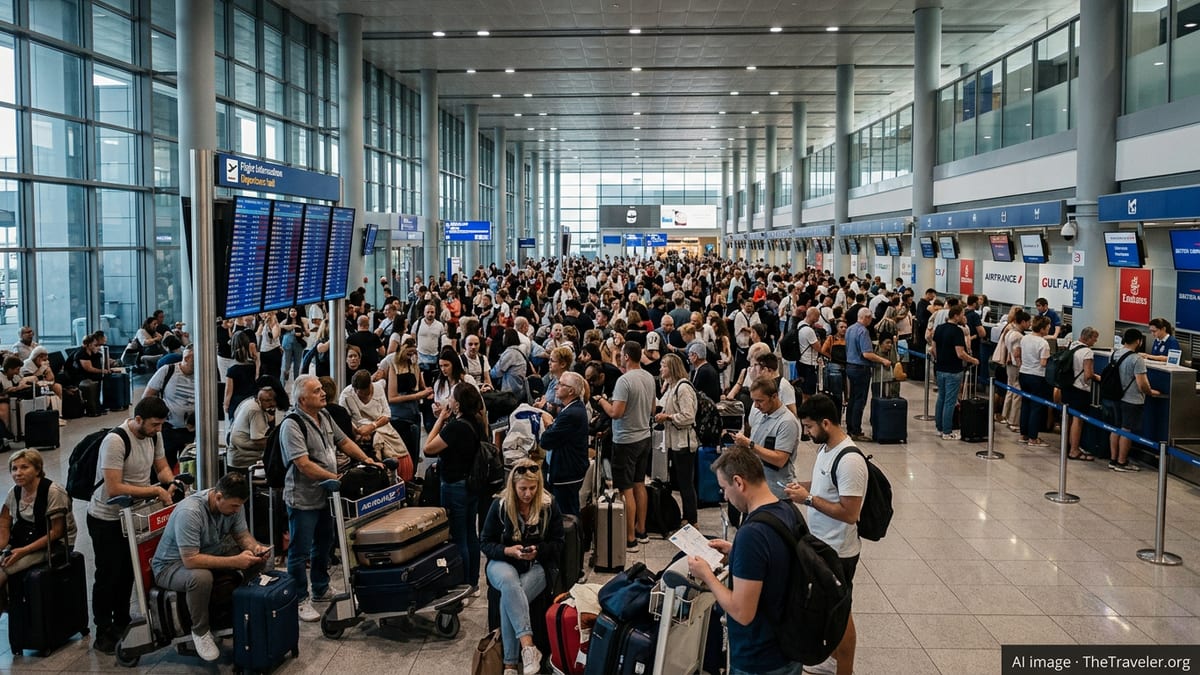
Holidaymakers heading to Greece this summer are being warned to expect longer waits at airports, as rising passenger traffic, capacity constraints and extreme heat combine to push flight delays higher across the country’s busiest hubs.
Get the latest news straight to your inbox!
Record traffic puts pressure on Greek airport networks
Greece entered the 2026 summer season after several years of sustained growth in air travel, leaving key airports operating close to capacity on peak days. Publicly available aviation data shows that total passenger traffic at Greek airports reached new highs in 2024, driven largely by tourism demand for Athens and the islands. Figures from the Hellenic Civil Aviation Authority and Fraport Greece indicate that nationwide passenger numbers exceeded 79 million in 2024, up from around 72.6 million a year earlier, underscoring the rapid expansion of traffic through the country’s terminals.
The 14 regional airports operated by Fraport Greece, including popular gateways such as Santorini, Mykonos, Corfu and Rhodes, handled roughly 36 million passengers in 2024, a year-on-year increase of about 6 percent. At several island airports, passenger throughput has already surpassed pre-pandemic levels, with published statistics showing double-digit growth compared with 2019. This sharp rise in seasonal traffic is now colliding with infrastructure and staffing limits that are more difficult to expand quickly.
Athens International Airport, the country’s main hub, is also facing heavier schedules as airlines add frequencies to match demand for connecting and point-to-point services. Eurocontrol network overviews for 2024 and 2025 describe Greece as one of the fastest growing air traffic markets in southeastern Europe, with flight volumes significantly above 2019 on busy summer days. As departures and arrivals compress into a relatively narrow midday and evening window, even small disruptions can rapidly translate into longer delays across the system.
Industry analysis suggests that this combination of record demand and finite runway, apron and terminal capacity is now a central factor behind the growing incidence of flight delays, particularly in July and August when holiday traffic peaks.
Network data points to worsening summer punctuality
Across Europe, aviation performance reports have highlighted a deterioration in on-time operations during recent summer seasons, and Greece has been part of that wider trend. Eurocontrol’s all-causes delay reports for 2024 point to higher average delays per flight during the core holiday months, with July and August standing out as challenging periods for the network as a whole. The organisation’s network operations reviews describe elevated air traffic flow management restrictions in southeastern Europe, including Greek airspace, as traffic exceeded initially forecast levels.
In July 2024, Eurocontrol reported that flights across the European network were running at around 97 percent of 2019 levels, but with significantly higher en-route and airport delays. Greece was among the states seeing traffic growth of around 20 percent compared with 2019 on some days, placing added pressure on air navigation services and airport operations. Subsequent network reports for 2025 continue to list Greek airspace sectors and certain approach areas among locations where staffing and weather can trigger flow restrictions that ripple across schedules.
While the data aggregates performance at regional and national level rather than singling out individual services, the overall picture is of a network where summer peaks are increasingly difficult to manage without knock-on delays. For passengers using Athens, Heraklion or island gateways such as Santorini and Mykonos, this often shows up as longer waits on the ground before departure, extended turnaround times and crowded gates in the late afternoon and evening.
Travel forums and passenger reports from the 2024 and 2025 seasons also describe a pattern of short-haul domestic and island flights leaving behind schedule, sometimes by one to three hours, particularly when aircraft are operating multiple rotations in a single day. Although such anecdotal accounts do not represent formal statistics, they mirror the trend of tighter schedules coming under strain when any disruption occurs.
Heatwaves, staffing and infrastructure constraints deepen delays
Operational challenges at Greek airports are being amplified by extreme summer weather and the physical limits of infrastructure designed for lower traffic volumes. Meteorological records show that Greece experienced severe and prolonged heatwaves in 2024, with some locations on the mainland and Crete enduring record-breaking stretches of high temperatures. Similar conditions have reappeared in subsequent summers, raising concerns about the impact of sustained heat on aircraft performance, ground operations and worker safety.
High temperatures can require payload restrictions on certain aircraft types and can slow down turnaround processes as ground staff rotate more frequently to avoid heat stress. Airport operator updates and industry commentary have highlighted the need for adjusted working patterns, shaded equipment areas and additional cooling measures during heatwaves, all of which can lengthen the time it takes to service an aircraft between flights. On small island airports with limited stands and aprons, any delay to one aircraft can quickly affect subsequent movements.
Staffing is another pressure point. Eurocontrol’s most recent annual network operations report notes that several air traffic control centres in southeastern Europe, including those responsible for parts of Greek airspace, continue to record delays linked to staffing shortfalls and capacity constraints during peak periods. At the airport level, recruitment and training for security screening, ground handling and check-in have struggled to keep pace with the rebound in traffic after the pandemic, particularly in seasonal destinations where operations intensify over a few key months.
Physical infrastructure also remains a limiting factor at some Greek gateways. Despite significant investment in recent years at Athens and the privatised regional airports, many island facilities still operate with single runways, compact terminal buildings and constrained landside access. During busy hours, this can translate into queues at check-in and security, crowded departure halls and slower boarding, all of which feed into departure delays, especially when multiple charter and low-cost services are scheduled back-to-back.
Island hotspots and peak travel windows most affected
The impact of these pressures is not evenly distributed across the country. Analysis of traffic flows and seasonal patterns indicates that the sharpest delays and congestion tend to occur at island airports handling intensive charter and leisure operations during a limited window from late June to early September. Locations such as Santorini, Mykonos, Rhodes, Corfu and Chania see daily traffic surge far beyond off-season levels, with many flights concentrated in mid-morning to early evening slots.
Because these airports often serve as the arrival and departure point for entire holiday packages, a single delayed inbound flight can ripple through the day’s schedule. Turnarounds are tightly timed to maximise aircraft utilisation, but late arrivals, constrained apron space and passenger processing bottlenecks can make it difficult to recover punctuality once delays accumulate. Reports from travel advisers and tour operators for recent seasons suggest that late-evening departures from island airports back to Athens or other European hubs are especially vulnerable to knock-on delays built up earlier in the day.
Domestic connections linking islands to Athens also feel the strain. Travel advice published for the 2024 and 2025 seasons increasingly recommends leaving generous buffers for international connections in Athens, reflecting the risk that an afternoon island flight could arrive late and compress transfer times. Passengers who schedule tight same-day links from island airports to long-haul departures out of Athens are being urged to consider either earlier flights or overnight stays in the capital to reduce the risk of missed connections.
Outside the peak summer weeks and core weekend travel days, performance is generally more stable. However, the combination of school holidays in key source markets, large cruise ship turnarounds and local events can quickly tip certain days into heavy-traffic territory, producing delay spikes even in what might otherwise be considered shoulder periods.
What summer travelers can expect at Greek airports
For the current season, aviation data and recent experience suggest that travelers using Greek airports should prepare for busier terminals and a higher probability of delays, particularly in July and August. While airlines and airport operators have added capacity and refined operations since the post-pandemic restart, the underlying dynamics of strong demand, weather volatility and infrastructure constraints remain in place.
Published guidance from airlines, travel associations and consumer groups increasingly stresses the importance of allowing extra time for check-in and security, especially at island airports where facilities are compact and multiple flights may depart in quick succession. Morning departures are often viewed as a lower-risk option for on-time performance, as schedules have not yet absorbed the knock-on effects of earlier disruptions.
Travel experts also highlight the value of flexible itineraries. For passengers planning to connect through Athens onto long-haul flights, booking earlier domestic legs or overnighting in the city is now commonly recommended during the heart of the summer. For island hoppers using a mix of flights and ferries, guidance stresses planning generous buffers between modes, as both air and sea operations can be affected by high winds, heat and congestion.
Despite the challenges, Greece remains one of Europe’s most sought-after summer destinations, and the vast majority of flights ultimately operate, even if some run behind schedule. For travelers prepared for crowds, heat and the possibility of disrupted timings, industry observers note that Greek airports continue to offer access to the country’s islands and mainland resorts on a scale that has expanded markedly over the past decade, albeit at the cost of growing strain on punctuality during the busiest weeks of the year.