


More news on this day
International fans booking trips to FIFA World Cup 2026 matches at Miami’s Hard Rock Stadium are being warned to brace for potential turbulence on the ground, as new flight performance analysis places Miami-area airports at the top of the risk table for delays among U.S. host cities, overtaking World Cup gateways in Dallas, Kansas City, New York and Philadelphia.
Get the latest news straight to your inbox!
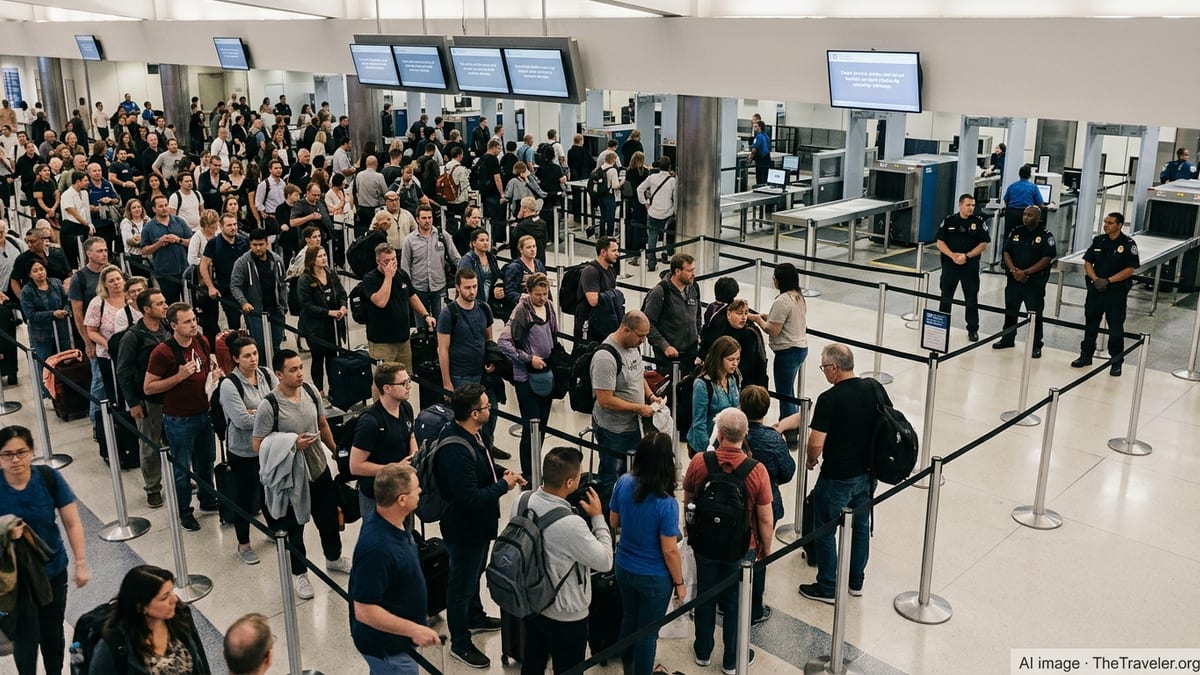
Fresh rankings put Miami at the top of the World Cup delay list
A recent synthesis of federal on-time performance data and independent disruption studies compiled through early 2026 identifies Miami International Airport as the highest-risk World Cup gateway for late departures and arrivals among host cities in the United States. The ranking focuses on airports expected to carry the bulk of international and long-haul traffic for World Cup venues and weighs overall delay rates, the share of long delays and historic congestion patterns around peak travel windows.
Research drawing on Bureau of Transportation Statistics on-time tables and third-party “flight delay index” models shows Miami consistently underperforming the national average for on-time departures in late 2023 and into 2024, with nearly one in four flights leaving behind schedule during some peak months. Publicly available aviation performance dashboards cited in recent travel-industry coverage place Miami ahead of Dallas/Fort Worth, Kansas City International, New York’s major hubs and Philadelphia when the metrics are limited to airports feeding World Cup stadiums.
At the same time, analysis of long-delay events, where passengers are held up for three hours or more, indicates that Miami has climbed into the upper tier of U.S. airports for severe disruption. A 2025 review of protracted delays across dozens of major hubs highlights Miami as facing elevated rates of 180-minute-plus interruptions compared with several rival World Cup gateways, adding further weight to concerns for fans planning tight connections or same-day arrivals for matches.
These findings suggest that, while Miami is a premier international gateway and one of the country’s busiest airports, its congestion and operating constraints now translate into a higher-than-average chance that World Cup travellers will encounter schedule difficulties on arrival or departure days.
What is driving Miami’s congestion ahead of 2026
Underlying traffic trends help explain why Miami has emerged as a delay hotspot just as the region prepares to host the world’s biggest tournament. Airport traffic reports from Miami-Dade County show that Miami International has logged consecutive record years for passenger volume, topping the mid-50-million mark in 2024 and continuing to climb in 2025, even before World Cup demand is factored in. The airport has also cemented its role as a top U.S. cargo gateway, adding further pressure on runway and taxiway use.
Federal aviation performance data compiled in recent “air traffic by the numbers” releases list Miami among the top 10 U.S. airports for total delay counts in the most recent fiscal years, with delay incidents rising sharply compared with pre-pandemic norms. Construction and capacity reports indicate that the airport has been operating through phases of airfield and terminal works flagged as likely to reduce capacity and heighten delay risk, particularly during busy periods and bad-weather days.
Regional factors further complicate the picture. Miami’s coastal location exposes airport operations to frequent convective storms in the summer season, as well as occasional tropical systems, both of which can trigger ground stops and extended flow-control measures. With World Cup matches in Miami scheduled for the North American summer of 2026, aviation planners and travel analysts are factoring seasonal weather volatility into their assessments of likely disruption for inbound supporters.
Against this backdrop, the Federal Aviation Administration has outlined a World Cup airspace plan that anticipates “exceptionally busy” skies over each host city. The agency’s guidance highlights the potential use of ground delay programs and other traffic-management tools when demand spikes, measures that could add further minutes or hours to already stretched schedules at airports like Miami that routinely operate near capacity.
How Miami compares with Dallas, Kansas City, New York and Philadelphia
The same datasets used to flag Miami as the highest-risk World Cup gateway also track conditions at other key airports serving U.S. host stadiums. In Texas, Dallas/Fort Worth International has long featured in national delay tables, but recent World Cup-focused analysis that isolates performance in 2024 and 2025 finds that Dallas hubs have modestly improved relative to previous years, reducing their relative risk compared with Miami.
Kansas City International, newly rebuilt and significantly less congested than the largest coastal hubs, shows a lower proportion of both overall delays and extreme, 180-minute-plus disruptions in recent year-long reviews. While weather events still affect Midwestern operations, publicly available performance summaries suggest that Kansas City’s combination of modern facilities and lighter traffic has left it better positioned than Miami to absorb peaks in tournament demand.
In the Northeast corridor, New York’s primary international gateways and Philadelphia International historically rank among the most delay-prone airports in North America. However, several recent assessments of U.S. airport punctuality through early 2026 identify Newark and certain New York-area airports as leading national delay statistics, but not all of these hubs directly anchor World Cup stadiums. When analysts narrow the scope to airports most closely linked to individual venues, Miami’s combination of growth, weather exposure and current construction-related constraints nudges it ahead of New York and Philadelphia in World Cup-specific risk rankings.
For international travellers comparing options, this means that airports traditionally viewed as challenging, including Philadelphia and some New York-area fields, no longer represent the worst-case scenario for World Cup travel in 2026. Instead, fans heading to South Florida face the largest modeled probability of encountering significant schedule disruption in the days surrounding their matches.
Implications for fans flying to Hard Rock Stadium
The link between airport reliability and match-day experience is likely to be especially strong in Miami, where Hard Rock Stadium sits within convenient reach of Miami International and Fort Lauderdale-Hollywood International. Both airports feature prominently in recent delay statistics, and tournament-focused travel pieces have flagged South Florida as a pressure point where late-running flights could ripple into ground transport congestion and missed kickoffs.
Because Hard Rock Stadium will host high-demand fixtures and knockout matches, analysts expect many supporters to attempt same-day or near-same-day arrivals, compressing risk into a narrow window. Any late-afternoon storms over South Florida or airspace flow restrictions under the Federal Aviation Administration’s World Cup traffic plan could trigger stacks of delayed arrivals just as shuttles, rideshares and rail links are attempting to move fans toward the stadium.
Travel planners studying these patterns are urging fans to treat Miami differently from some other World Cup hubs. Suggested mitigations in recent public guidance include building in at least one buffer day before must-see matches, avoiding tight connections at Miami where possible, and routing via alternative hubs with stronger on-time records before continuing to South Florida on earlier flights.
Within the region, some analyses point to Fort Lauderdale as a potential alternative for certain itineraries, although its own delay metrics trail the best-performing U.S. airports. Regardless of the final choice of gateway, the overarching message for fans is that the Miami area’s air travel system will be under unusually heavy strain, and that the margin for error on match days will be significantly tighter than in most other World Cup host cities.
Can Miami improve its record before kickoff
Whether Miami can shed its new status as the World Cup’s most delay-prone gateway will depend on how quickly current infrastructure projects and operational changes translate into smoother flows. Airport planning documents show continued expansion and modernization works aimed at increasing gate capacity, upgrading people-mover systems and enhancing baggage and security processing, all of which could reduce bottlenecks by 2026.
Industry coverage notes that airlines serving Miami have also been refining schedules, fleet deployment and crew planning as they prepare for the tournament, with some carriers reallocating widebody aircraft and adjusting departure banks to spread demand more evenly across the day. If these changes align with the Federal Aviation Administration’s traffic-management strategies, they may help stabilize on-time performance even under World Cup conditions.
However, recent history suggests that sustained improvements at heavily utilized hubs are difficult to achieve quickly. Miami’s climb to record passenger volumes in 2024 and 2025, combined with its role as a crucial bridge between North and South America, means that organic growth could offset some gains from new infrastructure. Seasonal storm patterns are another fixed variable that planners cannot eliminate.
For now, public-facing data and independent rankings leave little doubt that Miami carries the greatest forecast delay risk among U.S. World Cup host-city airports. Unless performance indicators shift markedly in the next two years, World Cup supporters heading for Hard Rock Stadium may need to treat their flight plans as carefully as their match tickets.