


More news on this day
Europe’s latest extreme heatwave has pushed Paris and the wider Île-de-France region into unprecedented “red” heat alerts, with temperatures topping 40°C and triggering severe disruption to air, rail and tourist activity across one of the continent’s busiest summer gateways.
Get the latest news straight to your inbox!
Heat Dome Locks Paris Into Prolonged 40°C Emergency
Publicly available bulletins from Météo-France show that an exceptional and long-lasting heatwave has settled over most of France, with the national forecaster activating its highest “vigilance rouge” canicule extreme alert across the entire Île-de-France region from 20 June onward as temperatures climbed toward 40°C and beyond. Official alert maps compiled in recent days indicate that more than 70 departments are now on red heat warning, an all-time record coverage for mainland France, and that over 90 percent of the national population has been exposed to extreme temperatures at some point in the episode.
Analyses reported by French and international media describe the event as both unusually early in the summer and unusually persistent, with daytime highs near or above 40°C combining with so-called “tropical nights,” when temperatures remain above 20°C, to keep urban areas in chronic overheating. Paris recorded around 40.3°C at the peak of the episode, making it only the fourth time in 150 years of observations that the city has crossed the 40°C threshold, and adding to a sequence of back-to-back heatwaves since late May.
According to climate scientists cited in European press coverage, the pattern driving the event resembles a classic heat dome, with a strong, quasi-stationary high-pressure system parked over western Europe that traps hot air and inhibits cloud formation or cooling winds. This has created a contiguous “red zone” of extreme heat stretching from Spain through France and into Germany and the Low Countries, with several countries either testing or breaking June temperature records. Commentators note that Europe is warming faster than the global average, which is increasing both the frequency and severity of such stagnant heat domes.
Health surveillance updates for Île-de-France compiled by public health agencies highlight mounting strain on emergency services, as prolonged high temperatures elevate risks for dehydrated tourists, older residents and unhoused people who have limited access to air conditioning. Municipalities around Paris have extended opening hours for cooling centres, shaded parks and public pools, while reminding visitors to limit outdoor activity during afternoon peak heat.
Air Travel Into Paris Hit by Heat-Driven Delays and Tarmac Strain
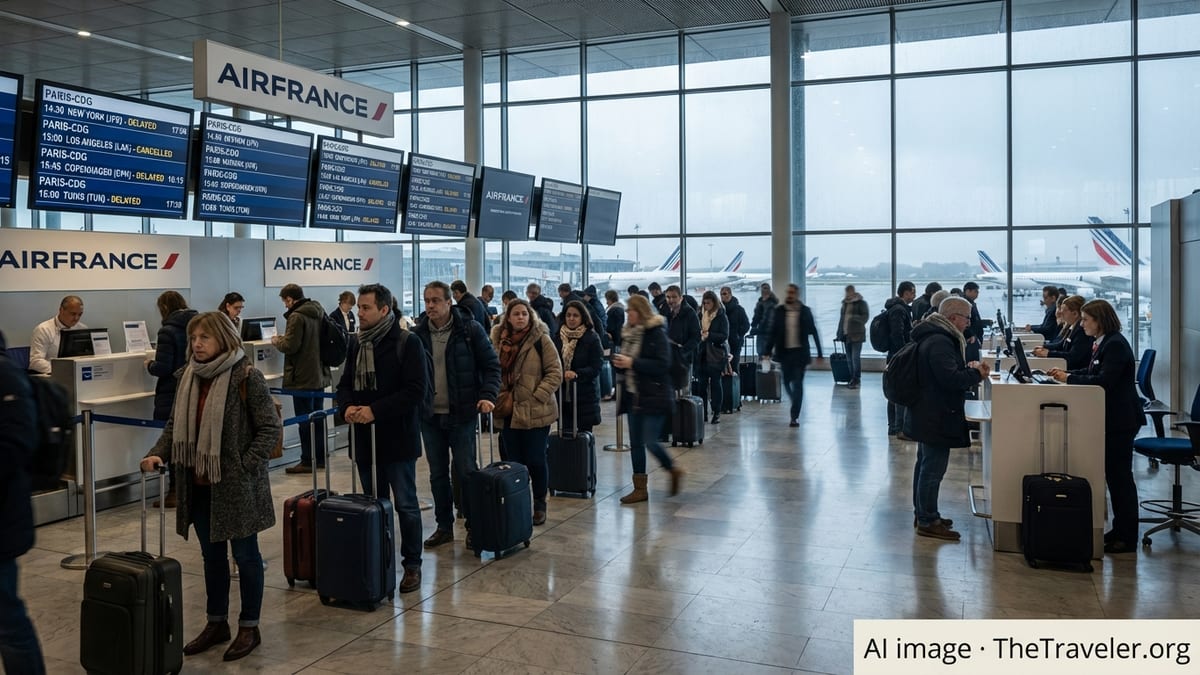
Paris Charles de Gaulle and Orly airports, which together handled nearly 9.5 million passengers in May according to the latest traffic data from Groupe ADP, are now grappling with the operational consequences of temperatures approaching and sometimes exceeding 40°C across the apron. Aviation advisories and flight-tracking data monitored over the weekend point to rolling delays on intra-European and transatlantic departures as crews work within tighter safety margins for aircraft performance on hot runways and as ground handling teams reduce pace to protect staff from heat stress.
While neither airport has reported a complete shutdown, observers note a visible accumulation of delayed flights, longer turnaround times and occasional last-minute equipment swaps on routes sensitive to weight and performance limits during extreme heat. At times, carriers have been asking passengers to check more hand luggage or accept rebooking in order to reduce payloads on affected departures, particularly during the hottest mid-afternoon window when tarmac temperatures surpass measured air readings.
Publicly available information from airline operations desks indicates that the combination of heat-related constraints and high summer demand is leaving little slack in the system. Disruptions at Paris also ripple outward across European networks, leading to missed connections and tighter transfer windows at other hubs. Travel analysts warn that any additional stressors, such as late-arriving aircraft from storm-affected regions or staffing gaps caused by the heat, could further magnify knock-on delays in the coming days.
Passenger advocacy groups are reminding travelers that European air passenger regulations still apply when flights are delayed or cancelled, but that rebooking options may be limited at the peak of the school holiday getaway. For visitors departing Paris at the height of the heatwave, the practical advice circulating on travel forums is to build in additional time at the airport, stay hydrated in relatively warm terminals and monitor airline apps closely for gate or time changes.
Eurostar Services Between Paris and London Squeezed by Extreme Temperatures
The cross-Channel rail link has not been spared. Eurostar’s own traffic updates indicate that several services between Paris Gare du Nord and London St Pancras have been cancelled or consolidated between 25 and 30 June because of what the operator describes as an exceptional heatwave affecting its network. The company is urging passengers booked during the peak alert window to postpone non-essential journeys or switch dates without penalty where space allows.
In addition to full cancellations, live status pages show significant delays on a number of Paris-originating trains, sometimes linked to late incoming stock and speed restrictions imposed on sections of line where high rail temperatures can increase the risk of infrastructure damage. Images and accounts shared on social platforms depict crowded concourses at Gare du Nord, with departing travelers facing long queues at check-in and security as train slots are re-assigned throughout the day.
Travel industry reports suggest that the disruption is occurring at a particularly sensitive moment, as Paris welcomes large numbers of British and European visitors for late June city breaks and major cultural events. Eurostar had already been operating near capacity on many peak departures, and the added weather-related cancellations have sharply reduced available seats. Some travelers report bringing forward their return journeys to escape the hottest days in the French capital, while others have struggled to find alternative rail or air options at short notice.
Rail specialists point out that high-speed rolling stock is technically capable of operating in elevated temperatures, but trackside equipment, power systems and signalling electronics are often more vulnerable, especially on legacy infrastructure. Network managers across Europe are increasingly introducing pre-emptive slowdowns and timetable thinning during heatwaves, a strategy that protects safety but also concentrates disruption into already crowded travel windows.
Tourist Hotspots Scale Back Hours as Paris Swelters
Across central Paris and the wider Île-de-France region, the record heat is reshaping the visitor experience. Publicly accessible announcements from museums, monuments and city authorities show a patchwork of shortened opening hours, temporary closures of exposed outdoor areas and cancellations of afternoon walking tours as operators seek to limit guests’ exposure to the worst of the heat. In some cases, venues that are heavily reliant on outdoor queuing have paused ticket sales during mid-afternoon peaks, effectively creating partial “tourist shutdowns” at the hottest times of day.
Popular riverside promenades along the Seine and canals, normally packed with picnickers at the end of June, are instead seeing more visitors retreating indoors to air-conditioned galleries, shopping centres and hotel lobbies. Reports from international media describe tourist groups being diverted toward cooler morning and evening time slots for major attractions, with guides carrying extra water supplies and adjusting routes to maximise shade. Night-time cruises and late-opening museum sessions, where available, are proving particularly attractive to heat-weary travelers.
Local hospitality operators are also adapting. Restaurants with outdoor terraces are installing extra misting fans and shading, while some smaller cafés without sufficient cooling are closing through the hottest hours and focusing on breakfast and late dinner service. Short-notice changes can be difficult for visitors to track, and tourism boards are encouraging travelers to check venue announcements on the day and to prioritise flexible, cancellable bookings.
Beyond Paris, similar patterns are emerging in other European cities caught under the same heat dome, from Madrid to Milan and Berlin. Urban planners and tourism experts argue that the current episode is a stark preview of how peak summer travel in Europe is likely to change, with early morning and shoulder-season trips becoming more attractive and midday sightseeing during July and August increasingly seen as unsafe.
Travelers Confront a New Climate Reality in Europe
Commentary across European and international outlets frames the Paris heat emergency as part of a broader shift in the continent’s climate risk profile. Successive record-breaking summers since 2019 have already raised questions about the viability of traditional July and August city breaks in southern and western Europe, and this year’s June heat dome is underlining how much earlier extreme conditions can now arrive. Analysts note that while infrastructure has gradually adapted to previous heatwaves, the pace of change in temperatures is outstripping the retrofitting of rail lines, airport terminals and older building stock.
For air and rail networks, the immediate priority is operational resilience: more shaded and cooled spaces for staff and passengers, greater flexibility in timetables, and investment in materials and systems that can withstand longer periods above 35°C. However, travel industry observers also see a reputational challenge. Images of stranded Eurostar passengers, departure boards full of delays at Charles de Gaulle and shuttered Paris landmarks risk undermining Europe’s image as a reliable, comfortable summer destination.
Some tourism experts argue that the sector will need to accelerate a shift toward promoting spring and autumn travel windows, alongside clearer communication about heat risks and protective measures in major cities. For now, visitors already in Paris and across Île-de-France are advised, in widely circulated public guidance, to treat the heatwave as a serious safety concern: avoid midday exertion, stay hydrated, seek out cooled indoor spaces and be prepared for last-minute changes to flights, trains and attraction schedules as the heat dome persists.